What Portable Moving Containers Are
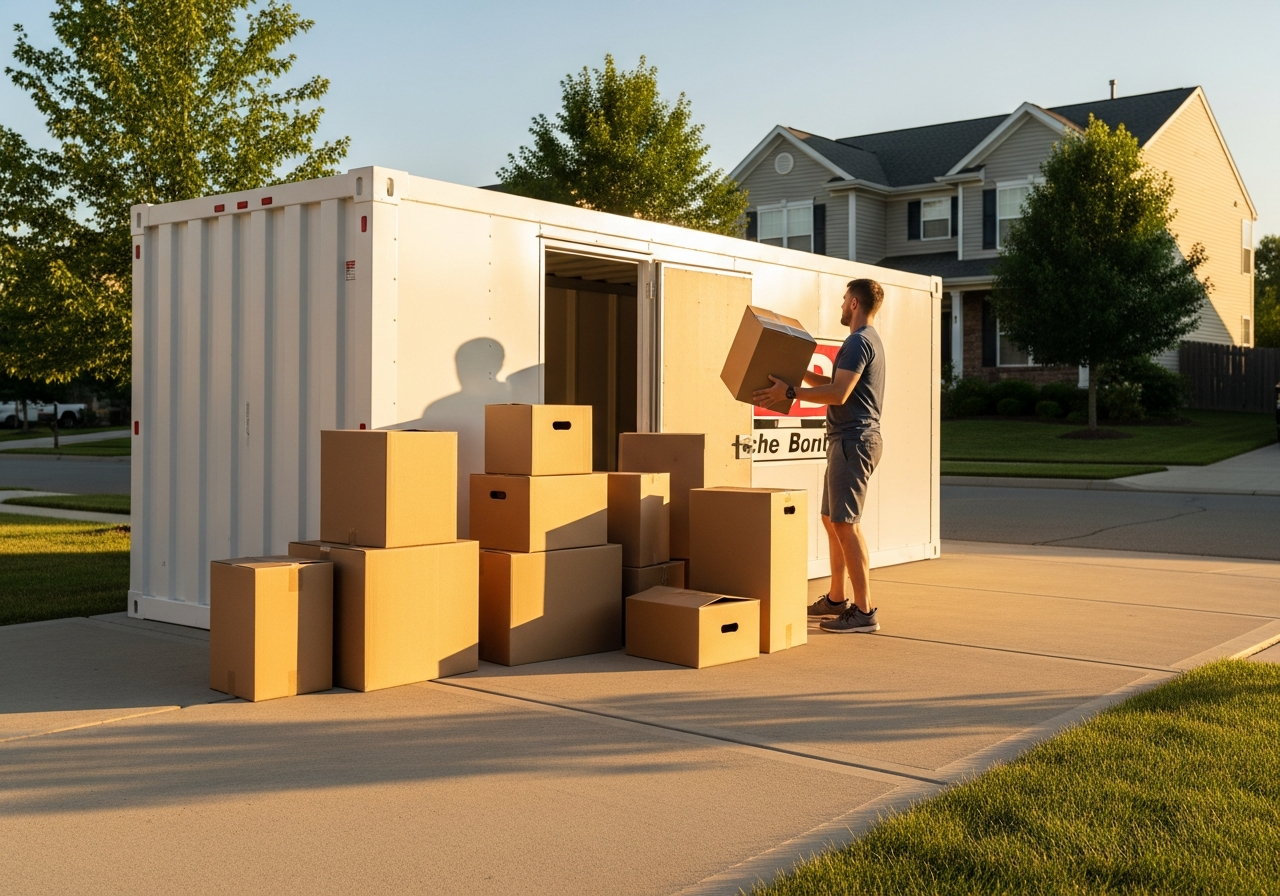
Portable moving containers — often called pods after one popular brand — are weatherproof storage units that a company drops off at your home. You load them at your own pace, and the company then transports the loaded container to your new city, or to a storage warehouse, before delivering it to your destination address. They sit in the middle ground between a do-it-yourself rental truck and a full-service moving company.
The appeal is flexibility. Instead of cramming all your loading into one frantic day, you get the container in your driveway for several days or even weeks. You load on your own schedule, lock it up, and the company handles the long-haul driving. For a cross-Canada move, that removes the daunting prospect of driving a large truck through mountain passes and across the prairies yourself.
Key Takeaway: Moving containers let you do your own packing and loading while a company handles the cross-country driving and optional storage — a hybrid between DIY and full service.
Containers are not always the cheapest or the best option, though. Whether they make sense depends on your budget, timeline, how much you are moving, and how much labour you are willing to do yourself. This guide breaks down exactly how container moving works, what it costs in 2026, and how it compares to the alternatives, so you can decide if it is right for your move. If you are still weighing approaches, our guide to the cheapest way to move across Canada puts containers in context.
How Container and Pod Moving Works

The container moving process is simple in concept and follows a consistent sequence regardless of which company you choose.
- Quote and scheduling. You provide origin, destination, and home size. The company recommends a container size (or multiple containers) and schedules a drop-off.
- Drop-off. The empty container is placed at your home — in your driveway or on the street with a permit.
- Loading. You load over the days or weeks you have arranged, then lock the container.
- Pickup and transport. The company collects the loaded container and transports it toward your destination, often with optional warehouse storage in between.
- Delivery. The container is delivered to your new home, where you unload at your own pace before it is collected empty.
💡 Pro Tip: Confirm your municipality's rules on placing a container on the street. Many Canadian cities require a permit for a container that occupies a public roadway or blocks a sidewalk, and fines for non-compliance add up quickly.
Because you handle the loading and unloading, the labour is on you — unless you hire help separately. Some people hire local labour just for the heavy-lifting portions, which combines container flexibility with professional muscle. This is one reason container moving sits so close to the DIY versus professional moving decision.
What Container Moving Costs in 2026

Container moving pricing depends on distance, the number and size of containers, and how long you keep them. Here are realistic 2026 ranges for cross-Canada container moves.
- One to two bedrooms (one container): roughly $3,000 to $5,500 cross-country
- Three bedrooms (two containers): roughly $5,500 to $9,000 cross-country
- Four-plus bedrooms (two to three containers): roughly $8,000 to $13,000 cross-country
These figures are for transport only — you still pay for packing supplies, any hired loading labour, and added storage time beyond the included window. Long distances like Toronto to Vancouver sit at the higher end, while shorter hauls like Toronto to Halifax cost less.
⚠️ Watch the extras: Headline container quotes often exclude street permits, extended storage, additional containers if you underestimate your volume, and insurance. Ask for an all-in price before booking.
Container moving usually lands below full-service moving but above a pure rental-truck DIY move. To see how these numbers fit into the full picture, compare them against the detailed breakdown in our guide to the cheapest ways to move across Canada. When you weigh the labour you will personally provide, full service from a long distance moving company sometimes wins on value despite a higher sticker price.
Pods vs Full-Service Movers
The most important comparison is container moving versus hiring a full-service mover. The difference comes down to who does the work.
What Full-Service Movers Do
A full-service mover handles loading, driving, and unloading — and often packing too. The crew arrives, wraps and protects your furniture, loads efficiently, transports your goods, and unloads at the destination. You barely lift a box. Coverage is built in through carrier valuation, and the entire chain of custody stays under one inventory.
What Container Moving Leaves to You
With a container, you do all the loading and unloading. You wrap your own furniture, build the load so nothing shifts over thousands of kilometres, and unload at the other end. The company only handles the driving and storage.
The real comparison is not just dollars — it is dollars plus your time and physical effort. Loading a three-bedroom home into containers can take two full days of hard labour. Factor that into the comparison when you read our guide to DIY versus professional long distance moving.
For families with heavy furniture, tight timelines, or anyone who cannot safely do days of lifting, the value of a full-service professional long distance movers crew often outweighs the savings of a container. For budget-focused movers with time and able bodies, containers can be a smart middle path.
Pods vs Rental Trucks
Containers also compete with the traditional DIY option: renting a truck and driving it yourself. Each has distinct trade-offs for a cross-country move.
Rental Truck
Renting a truck is usually the cheapest option on paper, but it means you drive thousands of kilometres yourself — through mountain passes, across the prairies, and potentially in winter conditions. You pay for fuel (a large truck is thirsty), one-way drop fees, and several days of your time, plus the stress and risk of driving an unfamiliar large vehicle.
Container
A container costs more than a rental truck but removes all the driving. You load at your own pace and skip the long-haul drive entirely, flying to your destination instead. For long routes, this trade-off is appealing — many people will pay extra to avoid a multi-day drive through challenging terrain.
💡 Pro Tip: Calculate the true cost of a rental truck including fuel, one-way fees, hotels, meals, and the value of several days of driving. Once you add it all up, a container is often closer in price than the base rental rate suggests.
The choice between a container and a rental truck often comes down to whether you want to do the driving. If the idea of piloting a loaded truck across the Rockies in shoulder season gives you pause, a container — or full service from a cross-country moving company — is worth the premium.
The Pros of Moving Containers
Container moving has genuine advantages that make it the right call for many cross-country moves. Here is what it does well.
- Flexible loading schedule. Load over days or weeks instead of one stressful day.
- No long-distance driving. The company drives; you fly to your destination.
- Built-in storage option. Containers can be warehoused during a gap between homes, bridging mismatched closing dates.
- Predictable, often lower cost than full service. You save on labour by doing the loading yourself.
- Weatherproof and secure. Quality containers are sealed against the elements and lock for security.
- Self-paced unloading. Unload gradually at the destination rather than directing a crew on a clock.
The flexibility of self-paced loading and built-in storage is the container's killer feature, especially when your move involves a gap between homes — a scenario also handled by storage-in-transit with a full-service mover.
If you value control over your timeline and are comfortable doing the physical work, containers deliver a compelling blend of flexibility and cost savings. A reputable nationwide moving company can even combine container-style flexibility with professional loading help if you want the best of both worlds.
The Cons and Hidden Catches
Containers are not a perfect solution, and the downsides catch people who only look at the headline price. Know these before you commit.
- You do all the heavy lifting. Loading and unloading a full household is exhausting, multi-day work.
- Loading skill matters. A poorly loaded container means shifted, damaged goods after thousands of kilometres of highway vibration.
- Driveway and permit issues. You need space for the container and possibly a city permit; not every urban home can accommodate one.
- Limited insurance. Container companies offer protection, but it often does not match full-service carrier valuation. Damage from your own loading is typically not covered.
- Delivery windows. Cross-country container delivery can take one to three weeks, with windows rather than firm dates.
- Underestimating volume. Ordering too few containers means a scramble and added cost.
⚠️ Insurance gap: If you load the container yourself and something inside is damaged in transit, the company may not cover it because they did not pack it. Review coverage carefully and consider third-party transit insurance.
These catches do not make containers a bad choice — they just mean you must go in with eyes open. For households with valuable or fragile furniture, the protection and accountability of a full-service long distance moving services provider may be worth more than the container savings.
Loading a Container Like a Pro
If you choose a container, loading it well is the single biggest factor in whether your goods arrive intact. Highway vibration over thousands of kilometres is relentless, so load like a professional.
- Load heaviest items first and low. Appliances and heavy furniture go on the floor, distributed evenly.
- Build tight, vertical tiers. Fill from floor to ceiling in solid walls so nothing has room to shift.
- Use every gap. Stuff soft items, blankets, and pillows into voids to lock the load in place.
- Protect furniture. Wrap in moving blankets and use furniture pads on corners and surfaces.
- Strap as you go. Use the container's tie-down points to secure each tier before building the next.
- Distribute weight evenly. Avoid loading all the heavy items at one end.
💡 Pro Tip: Disassemble large furniture and pack the hardware in a labelled bag taped to the piece. Disassembled furniture loads tighter and is far less likely to be damaged in transit.
If loading sounds daunting, consider hiring local labour just for the loading and unloading. This hybrid approach gives you container flexibility with professional muscle on the hardest part. Many professional long distance movers offer labour-only services that pair perfectly with a container, and our guide to DIY versus professional moving explores when that hybrid makes sense.
Container Storage and Flexible Timelines
One of the container's strongest features is how it handles timing gaps. If your new home is not ready, the loaded container can be warehoused until you are.
This built-in storage works much like a moving company's storage-in-transit, but with the convenience that your goods are already sealed in a container you loaded yourself. When your home is ready, the company simply delivers the container. You avoid the double-handling of loading into storage and then reloading for delivery.
Container storage is ideal for staggered moves, delayed closings, or downsizing transitions. For a deeper look at how warehousing fits into a cross-country move, see our guide to storage-in-transit for cross-country moves.
Be sure to confirm the included storage period and the monthly rate beyond it, as well as how much notice the company needs to schedule final delivery. Climate control matters too — if your container will be stored over a Canadian winter, ask whether the warehouse is climate-controlled to protect wood furniture and electronics.
Key Takeaway: The combination of self-paced loading and built-in storage makes containers especially well-suited to moves with uncertain or staggered timelines.
If your timeline is unpredictable, the container's storage flexibility can be the deciding factor in its favour — though a full-service cross-Canada movers crew with storage-in-transit offers similar flexibility with the added benefit of professional loading.
Is a Moving Container Worth It for Your Move?
So, are containers worth it? The honest answer is: it depends on your specific situation. Here is a framework to decide.
Containers Make Sense If You...
- Are comfortable doing days of physical loading and unloading
- Want to avoid driving a truck across the country
- Have a flexible or staggered timeline that benefits from storage
- Have driveway space or can get a street permit
- Are moving a modest volume and want to save versus full service
Full Service Makes More Sense If You...
- Cannot or should not do heavy lifting for days
- Have valuable, heavy, or fragile furniture needing professional handling
- Want full carrier valuation and single-point accountability
- Value your time more than the labour savings
- Have a tight, firm timeline with no margin for delivery windows
The smartest move is to get quotes for both approaches and compare total cost including your own time and effort. Request a free moving quote for full service so you have a real number to weigh against container pricing.
For many cross-country movers, the decision lands on value rather than sticker price. A full-service long distance moving company that loads, drives, and unloads your home — with insurance built in — often delivers better overall value than a container once you account for two days of your own back-breaking labour. Run the numbers honestly, and the right answer for your move will become clear.
Permits, Placement, and Site Logistics
Before a container ever arrives, you need somewhere legal and safe to put it — and that single detail derails more container moves than any other. Placement rules vary by municipality, property type, and season, so sort this out the moment you book.
Municipal Permits
If the container will sit on your private driveway, most Canadian cities require no permit. The moment it occupies a public street, lane, or sidewalk, you usually need a temporary occupancy or right-of-way permit from your municipality. Costs commonly range from about $25 to $150 depending on the city and the number of days, and approval can take several business days — so apply at least a week ahead. Failing to permit a street-placed container can mean fines or a forced removal mid-load.
Driveway and Surface Considerations
- A loaded 16-foot container can weigh several thousand kilograms; fresh asphalt in summer heat can dent under the feet, and interlock can crack.
- Confirm overhead clearance — low branches, eaves, and wires can block the delivery truck's tilt-and-lift placement.
- Ensure at least 12 to 14 feet of width and a level surface for safe drop-off and pickup.
⚠️ Condo and strata rules: Townhouse complexes, condos, and HOA-style communities often restrict or prohibit containers, or limit how many days one can sit. Get written approval from your property manager before booking to avoid a last-minute cancellation.
Winter Placement
From December through March, a container parked in your driveway can block snow clearing, and ice can make loading ramps treacherous. Some municipalities also tighten street-placement rules during declared snow events to keep plows moving. If you are moving in winter, plan for sand or salt on the loading approach and a shorter daily loading window of usable daylight.
Remember that once your loaded container hits the highway, it travels on commercial carriers bound by federal load-securement and safety standards published by Transport Canada — another reason to load and brace your goods tightly so they survive thousands of kilometres of road vibration.
Key Takeaway: Sort out placement first: use a driveway when you can, permit any street placement a week ahead, clear condo or strata approval in writing, and account for snow and surface limits in winter.
Frequently Asked Questions
How much does a moving container cost across Canada?
In 2026, expect roughly $3,000 to $5,500 for a one-to-two-bedroom move, $5,500 to $9,000 for a three-bedroom move with two containers, and $8,000 to $13,000 for larger homes. Long routes like Toronto to Vancouver sit at the higher end.
Are moving containers cheaper than full-service movers?
Usually yes on sticker price, because you do the loading and unloading yourself. But once you factor in two days of hard labour, possible hired help, and limited insurance, full service can offer better overall value, especially for heavy or fragile households.
How long can I keep a moving container?
Most companies include a loading window of several days to a couple of weeks, plus optional warehouse storage billed monthly. Confirm the included period and the monthly rate beyond it before booking.
Do I need a permit to put a container on the street?
Often yes. Many Canadian municipalities require a permit for a container that occupies a public roadway or blocks a sidewalk. Check your city's rules to avoid fines.
Is my stuff insured in a moving container?
Container companies offer protection plans, but coverage is often more limited than full-service carrier valuation, and damage from your own loading is typically not covered. Consider third-party transit insurance for valuable items.
How long does container delivery take across Canada?
Cross-country container transport typically takes one to three weeks, depending on distance and whether storage is involved. Companies usually provide a delivery window rather than a firm date.
Can I hire help to load a container?
Yes. Many people hire local labour-only crews to load and unload, combining container flexibility with professional muscle. Some moving companies also offer labour-only services that pair well with containers.