The DIY vs Professional Decision
Moving across Canada forces an early, fundamental choice: do you rent a truck and move yourself, or hire professionals to do it for you? On a haul of 1,800 to 4,650 kilometres, this decision shapes your budget, your timeline, your stress level, and the safety of everything you own. The right answer is not the same for everyone — it depends on your home size, route, budget, and how much physical work you can realistically take on.

Many people assume DIY is automatically cheaper, but the true cost of a cross-country DIY move includes far more than the truck rental sticker price. Fuel for a heavy truck over thousands of kilometres, one-way drop fees, accommodation, meals, equipment, insurance, and the value of your own time and risk all add up. Sometimes DIY saves meaningful money; sometimes the gap is much smaller than expected.
This guide compares DIY and professional long distance moving honestly on cost, time, risk, and convenience. It complements our look at full-service vs self-pack moving, which compares service levels within professional moving. Whether you go fully DIY or hire a long distance moving company, understanding the real trade-offs lets you choose with clear eyes instead of assumptions.
Key Takeaway: DIY is not automatically cheaper once fuel, fees, lodging, equipment, and risk are counted. Compare the true total cost, not just the truck rental price.
What a DIY Cross-Canada Move Looks Like
A DIY long distance move means you take on the roles a moving company would normally fill: packer, loader, driver, and unloader. It offers maximum control but demands significant time, planning, and physical effort.
What DIY involves
- Renting a truck: Booking a one-way rental large enough for your household, plus a tow dolly if you are bringing a car.
- Packing everything: Sourcing materials and boxing your entire home.
- Loading and securing: Loading the truck so nothing shifts over thousands of kilometres.
- Driving the route: Operating a large, heavy truck across provinces, mountain passes, and through weather.
- Unloading at destination: Carrying everything into the new home, often without help.
DIY appeals to those with small loads, tight budgets, time to spare, and confidence driving a large vehicle. It also requires you to plan fuel stops, overnight accommodation, and the logistics of a multi-day drive. Packing well is critical, since you are responsible for how your goods survive the trip — our guide on the cheapest way to move across Canada explores how to keep DIY costs down. Even committed DIY movers sometimes hire a long distance moving services provider for just the long-haul transport while doing everything else themselves.
⚠️ Driving reality check: A loaded 26-foot truck handles nothing like a car. Mountain passes, crosswinds on the Prairies, and winter roads demand experience and caution.
What Professional Movers Handle
Hiring professionals shifts the burden of the move onto trained crews and experienced drivers. You trade money for convenience, expertise, and a dramatic reduction in physical work and risk.
What professionals take care of
- Packing options: Full-service, self-pack, or partial-pack to suit your budget.
- Professional loading: Crews load trailers to prevent shifting and damage over long hauls.
- Experienced long-haul driving: Professional drivers navigate the route, weather, and weigh stations.
- Insurance and valuation: Coverage that protects your belongings in transit.
- Logistics management: Delivery windows, tracking, and storage-in-transit if needed.
The key benefits are that you avoid the physical labour, the long drive, and most of the risk. Professionals also bring equipment and skills — air-ride trailers, custom crating, and trained loaders — that DIY simply cannot match. The differences in service level are detailed in our guide on full-service vs self-pack moving, and the option of moving containers sits between the two, as explained in our guide to moving containers and pods across Canada. A reputable professional long distance movers team turns a daunting cross-country move into a managed service with a clear plan and accountability.
The True Cost of DIY Moving
DIY looks cheapest at first glance because the rental price is the headline number. But the true cost of a cross-Canada DIY move includes many expenses that are easy to overlook.
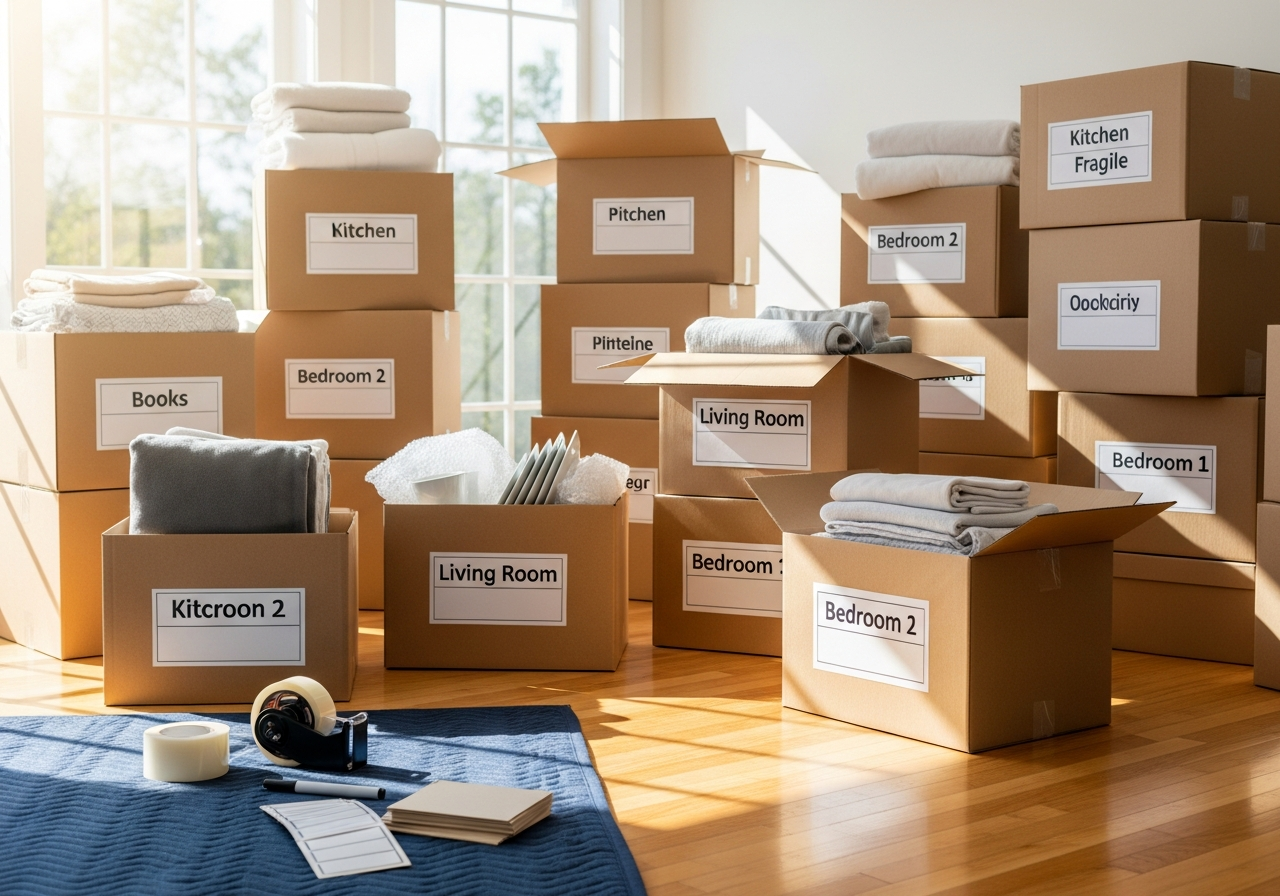
The real DIY cost stack
- Truck rental: One-way long distance rentals carry significant base and per-kilometre charges.
- Fuel: A large truck burns far more fuel than a car; over 4,000 kilometres this is a major cost.
- One-way drop fees: Returning a truck in a different province often adds substantial fees.
- Accommodation and meals: Multi-day drives mean hotels and restaurant meals along the way.
- Equipment: Dollies, blankets, straps, and packing materials.
- Rental insurance: Coverage for the truck and, separately, your belongings.
- Car transport: A tow dolly or separate shipping if you are not driving two vehicles.
When these are totalled, a long-distance DIY move can cost far more than the rental price suggests, and the gap with professional service narrows — especially for larger homes. Strategies for trimming these costs are covered in our guide on the cheapest way to move across Canada. Before assuming DIY wins, get a professional quote from a cross-Canada movers company to compare against your fully loaded DIY estimate; the result often surprises people.
💡 Pro Tip: Build a complete DIY spreadsheet — rental, fuel, drop fee, hotels, meals, equipment, insurance, and car transport — before comparing. The honest total is the only fair benchmark against a mover's quote.
The Cost of Professional Moving
Professional moving has a higher upfront price, but that price bundles labour, equipment, expertise, insurance, and logistics into one figure. Understanding what is included helps you judge the value rather than just the number.
What you pay for with professionals
- Trained labour: Crews to pack, load, and unload so you do not lift a thing.
- Specialized equipment: Air-ride trailers, dollies, and custom crating built for long hauls.
- Professional driving: Experienced drivers handle the route, weather, and weigh stations.
- Insurance: Valuation coverage that protects your belongings in transit.
- Time savings: Your days are freed for work, family, and settling in.
Professional costs scale with home size, distance, and service level, and the gap with DIY shrinks the larger and farther your move is — at some point, professional service can even cost less than a poorly planned DIY move once every DIY expense is counted. The complete pricing picture is broken down in our guide on full-service vs self-pack costs. When comparing, ensure the quote is binding or binding not-to-exceed so the price is reliable. A transparent nationwide moving company itemizes its quote so you can weigh the all-in professional cost against your true DIY total.
Time, Labour and Physical Demands
Money aside, DIY and professional moving differ enormously in how much of your time and body they consume. This is often the deciding factor once people honestly account for it.
The effort comparison
- DIY: Days of packing, hours of loading, multiple days of driving, and more hours unloading — all on your shoulders.
- Professional: Crews handle the heavy work; you supervise and travel separately, often by a short flight.
- Physical risk: Lifting heavy furniture and driving a large truck across the country carry real injury and accident risks.
A cross-country DIY move can consume one to two weeks of your life when packing, driving, and unpacking are combined, plus recovery from the physical toll. For working professionals, parents, seniors, or anyone with physical limitations, that cost is significant. Professionals compress the hands-on burden to a day or two of supervision. The planning effort either way benefits from a structured timeline like the one in our budget moving guide. A flexible interprovincial moving company can absorb as much or as little of the labour as you want, from full-service down to transport-only.
⚠️ Injury risk is real: Improper lifting of heavy furniture is a leading cause of moving injuries. Factor your physical ability honestly into the DIY decision.
Risk, Safety and Hidden Pitfalls
The biggest unaccounted-for cost of DIY is risk. When you move yourself, you absorb every risk that a professional mover would otherwise carry — to your goods, your safety, and your schedule.
DIY risks to weigh
- Driving a heavy truck: Loaded rental trucks handle very differently from cars, especially on mountain passes and in winter.
- Damage to belongings: Improper loading and packing lead to shifting and breakage over thousands of kilometres.
- Weather and road closures: Winter routes through the Rockies and Prairies can close, stranding a DIY move.
- Breakdowns and delays: A mechanical issue far from home becomes your problem to solve.
- Limited insurance: Rental coverage may not fully protect your belongings the way professional valuation does.
Professionals mitigate these risks with experienced drivers, proper equipment, insurance, and logistics support. Before driving in difficult conditions, DIY movers should check official sources such as DriveBC and 511 Alberta for road and weather updates, and review Transport Canada guidance for operating larger vehicles. A long distance moving company builds these contingencies into its plan, which is part of what the higher price buys.
When DIY Makes Sense
DIY is the right call in specific situations. If your move fits the following profile, renting a truck can genuinely save money and give you control.
DIY works well when you
- Have a small load: A studio or one-bedroom with few heavy items keeps truck size, fuel, and effort manageable.
- Are comfortable driving large vehicles: You have experience or confidence handling a loaded truck on long routes.
- Have time and helpers: Several days of lead time and friends or family to share the loading and driving.
- Are on a tight budget: Saving money outweighs the time and physical cost for your situation.
- Are moving in good weather: Summer and fall routes avoid the worst winter driving risks.
Even in these cases, run a full true-cost comparison first, because the savings can be smaller than expected once fuel, drop fees, and lodging are counted. Strategies to maximize DIY savings — including containers and consolidated shipping — are covered in our guides on moving cheaply across Canada and moving containers and pods across Canada. If your move outgrows these conditions, a long distance moving services provider is usually the better value.
💡 Pro Tip: A hybrid approach — renting a container or hiring transport-only while you pack and load — can capture much of the DIY savings without the cross-country drive.
When to Hire Professionals
For many cross-Canada moves, professionals are the smarter choice once you weigh time, risk, and the true cost of DIY. Hire movers when your situation matches the following.
Choose professionals when you
- Have a larger home: Two or more bedrooms make DIY exhausting and the cost gap narrow.
- Own valuable or fragile items: Art, antiques, pianos, and electronics need expert handling and coverage.
- Are short on time: A tight deadline or demanding job makes the days saved worth the cost.
- Cannot do heavy lifting: Physical limits, seniors, or health considerations make DIY unsafe.
- Are moving in winter: Difficult driving conditions raise DIY risk significantly.
- Want insurance and accountability: Professional valuation and a single responsible party give peace of mind.
When you decide to hire, vet carefully using our guides on choosing a service level, and request a free moving quote so you can compare a binding professional price against your DIY total. A trustworthy cross-country moving company will give you a clear, itemized quote that makes the value of professional service easy to judge against the alternative.
Making the Smart Choice
The DIY-versus-professional decision is ultimately about matching the move to your resources. There is no universally correct answer — only the right answer for your home size, route, budget, timeline, and physical situation.

A simple decision framework
- Small load, tight budget, time and help available, good weather: DIY can win — verify with a true-cost comparison.
- Larger home, valuables, tight schedule, winter, or physical limits: Professionals are usually the better value and far safer.
- Somewhere in between: Consider a hybrid — containers, transport-only, or self-pack with professional driving.
Whatever you choose, build an honest budget and a realistic schedule before committing. Compare your fully loaded DIY total against a binding professional quote, and factor in time, risk, and your own well-being — not just dollars. Handle destination admin through official channels like the Canada Post mail forwarding service. With a clear-eyed comparison and, if you hire, a verified professional long distance movers team, you can make a confident, cost-effective choice for your cross-Canada move.
Key Takeaway: Compare the true DIY total against a binding professional quote, then weigh time, risk, and physical demand. The smart choice is the one that fits your whole situation, not just your budget.
How Your Route and Season Tip the Decision
The DIY-versus-professional math is not fixed — it swings dramatically depending on which corridor you drive and what month you move. Two identical households can reach opposite conclusions simply because one is moving Calgary to Vancouver in July and the other is moving Toronto to St. John's in January.
Routes that punish DIY
- Through the Rockies: The Coquihalla and Rogers Pass demand low gears, chain-up readiness in winter, and steady nerves in a loaded 26-foot truck — conditions where professional drivers earn their fee.
- To Newfoundland: A DIY move to the island means booking the Marine Atlantic ferry from North Sydney, where a large rental truck plus passengers can add several hundred dollars and a required sailing reservation to your plan.
- Across the Prairies: Long, exposed stretches with fierce crosswinds and few service points test both the driver and the truck over hundreds of kilometres.
Distance scales the gap too. On a short interprovincial DIY move of 1,500 to 2,000 km, a one-way rental, fuel, and a single overnight might total $1,800 to $3,000 CAD — often well below a professional quote. But stretch that to a 4,400 km Toronto to Vancouver haul and DIY fuel alone for a heavy truck can run $1,200 to $1,800, with one-way drop fees of several hundred dollars, three to four nights of lodging, and a week of your time — narrowing or erasing the savings versus a mover.
Season swings the risk
Summer DIY is manageable; winter DIY across mountains or the Prairies is a different undertaking entirely. Snow, ice, and sudden closures can strand a self-driven move for days, turning a budget choice into an expensive, stressful ordeal. From December through March, the safety and schedule certainty of professionals often justify the higher price on long, mountainous, or ferry-dependent routes, where a single closed pass can cost you days of unplanned hotel nights.
Before committing to DIY on a tough corridor, weigh it against the service-level options in our guide on full-service vs self-pack moving. The honest question is not just "what does DIY cost" but "what does DIY cost on this route, in this season, for my truck-driving comfort level."
Key Takeaway: DIY savings shrink on long, mountainous, or ferry-dependent routes and in winter. Always run the comparison for your actual corridor and month, not a generic average.
Frequently Asked Questions
Is DIY moving always cheaper than hiring professionals?
No. DIY looks cheaper because the truck rental is the headline number, but fuel, one-way drop fees, accommodation, meals, equipment, insurance, and car transport add up quickly over thousands of kilometres. For larger homes, the gap with professional service narrows and can even disappear once every DIY cost is counted.
What are the hidden costs of a DIY cross-Canada move?
Beyond the rental price, expect significant fuel costs for a heavy truck, one-way drop fees for returning it in another province, hotels and meals for a multi-day drive, equipment like dollies and blankets, rental and goods insurance, and car-transport costs. Build a full spreadsheet before comparing to a professional quote.
When does DIY moving make the most sense?
DIY works best for small loads (a studio or one-bedroom), tight budgets, when you are comfortable driving a large truck, have time and helpers, and are moving in good weather. Even then, run a true-cost comparison, because the savings are often smaller than expected.
When should I hire professional movers instead?
Hire professionals for larger homes, valuable or fragile items, tight schedules, winter moves, or when you cannot do heavy lifting. Professionals bring trained crews, proper equipment, experienced drivers, insurance, and accountability, which often makes them the better value and far safer choice on long hauls.
Is it safe to drive a rental moving truck across Canada?
It can be, but a loaded truck handles very differently from a car, especially on mountain passes and in winter. Check road conditions through sources like DriveBC and 511 Alberta, review Transport Canada guidance, drive cautiously, and avoid difficult weather. If you are not confident, professional drivers eliminate this risk.
Is there a middle option between DIY and full professional moving?
Yes. Hybrid options include renting a moving container or pod that you load while professionals transport it, or hiring transport-only service while you pack and load. These capture much of the DIY savings without the cross-country drive and physical risk of doing everything yourself.
How do I compare DIY and professional moving fairly?
Build a complete DIY budget including rental, fuel, drop fees, lodging, meals, equipment, insurance, and car transport, then get a binding or binding not-to-exceed professional quote for the same move. Compare the all-in totals and also weigh time, physical effort, and risk, not just the dollar figures.