Two Ways to Move Across Canada
When you book a long distance move, one of the biggest decisions is how much of the work you hand to professionals. At one end is full-service moving, where the company packs, loads, transports, and unpacks everything. At the other is self-pack, where you box up your own belongings and the movers handle only the heavy lifting and transport. The right choice depends on your budget, your timeline, and how much physical work you want to take on.
This decision matters more on a cross-Canada move than on a local one. Your belongings travel thousands of kilometres and endure days of highway vibration, so packing quality directly affects whether items arrive intact. Cost differences are larger too, because professional packing labour and materials add up across a full household.
This guide compares full-service and self-pack moving on cost, time, risk, and convenience so you can choose the level that fits your move. It pairs well with our broader comparison of DIY vs professional long distance moving, which looks at the truck-rental end of the spectrum. Whichever route you choose, a reputable long distance moving company can tailor the service level to your needs and budget.
Key Takeaway: Full-service buys convenience and lower risk; self-pack saves money in exchange for your time and effort. The best choice balances all three for your specific move.
What Full-Service Moving Includes
Full-service moving is the most comprehensive option. The company manages your relocation end to end so you can focus on the rest of your move rather than on boxes and tape.
Typical full-service inclusions
- Professional packing: Crews pack every room with proper materials, from dishes to wardrobes.
- All materials supplied: Boxes, paper, bubble wrap, tape, and specialty cartons are included.
- Furniture disassembly and reassembly: Beds, tables, and large items are taken apart and rebuilt.
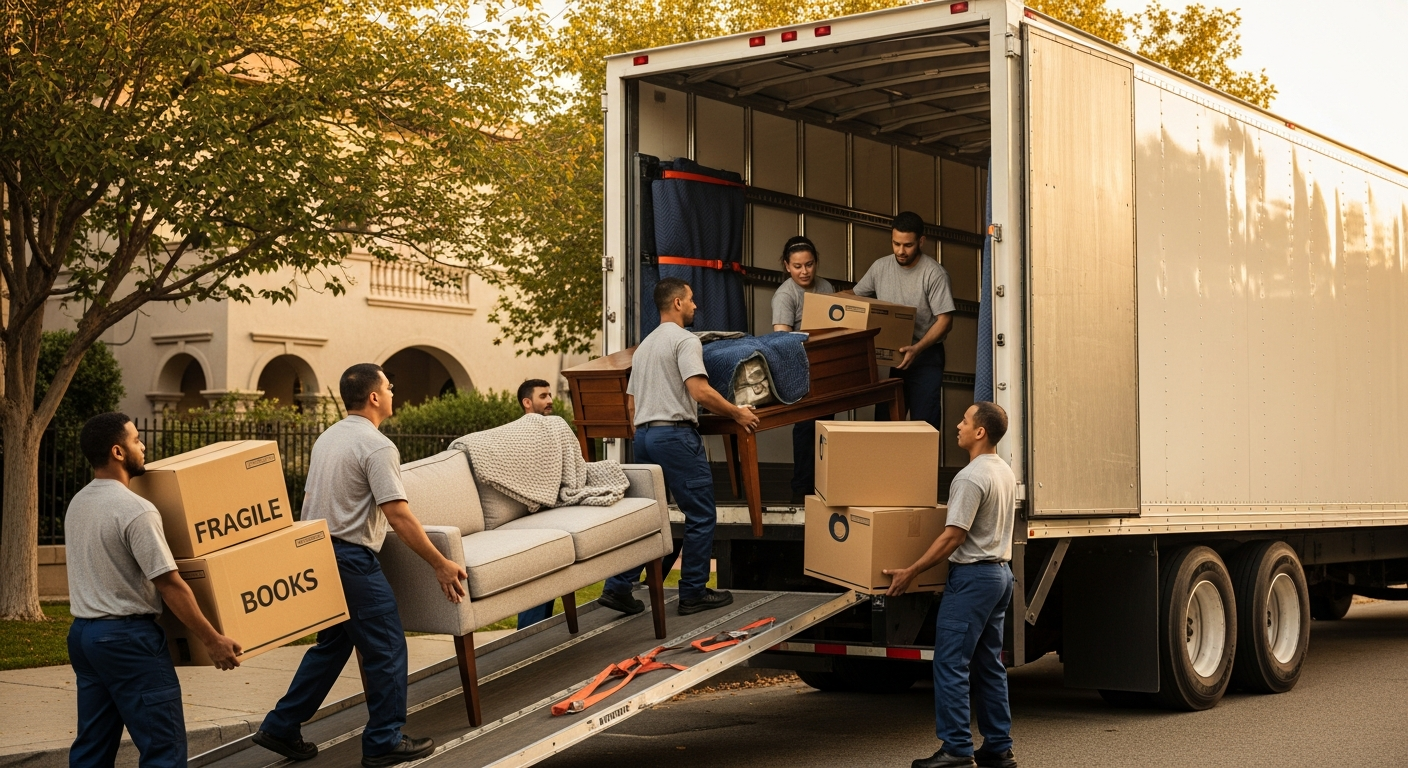
- Loading and transport: Trained crews load the trailer for long-haul stability.
- Unpacking and debris removal: Optional unpacking and removal of used materials at destination.
The biggest advantages are convenience and protection. Professional packers know how to cushion fragile items for thousands of kilometres, and professionally packed goods are generally better covered under the mover's valuation. The skills involved in packing for a long haul are detailed in our guide on how to pack for a long distance move. A capable professional long distance movers team turns a multi-week packing ordeal into a service that takes a day or two, which is why full-service appeals to busy professionals and families.
💡 Pro Tip: Even with full-service, pack a personal "essentials box" of documents, medication, chargers, and a few days of clothing to keep with you during transit.
What Self-Pack Moving Involves
With self-pack moving, you do the packing and the movers handle the loading, transport, and unloading. It is the most popular middle-ground option for budget-conscious households that still want professional transport across the country.
What you take on with self-pack
- Sourcing materials: Buying or gathering boxes, tape, and protective wrap.
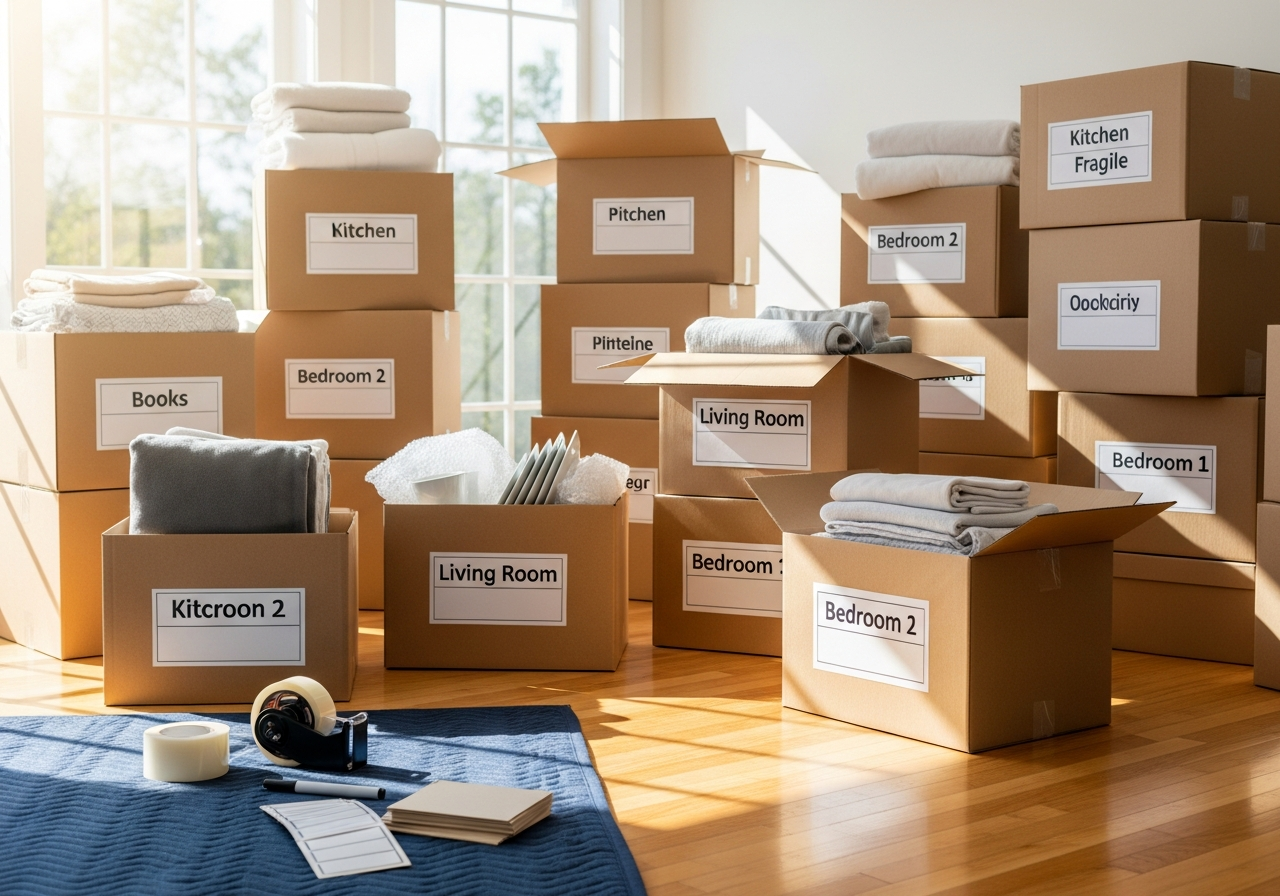
- Packing every item: Boxing and cushioning belongings room by room.
- Labelling and organizing: Marking boxes by room and contents for an efficient unload.
- Preparing for transit: Ensuring boxes are packed tightly enough to survive a long haul.
The main benefit is cost savings, since professional packing labour and materials are a significant share of a full-service bill. The trade-off is time and risk: packing a household takes many hours over several weeks, and improperly packed boxes are more likely to be damaged in transit — and may be less protected under insurance. Choosing the right supplies makes a big difference, which is why we cover materials in depth in our guide on packing for a long distance move. A good long distance moving services provider will still load and transport your self-packed boxes with the same care as a full-service shipment, provided they are packed well.
⚠️ Packing quality matters: On a cross-Canada haul, weak or half-empty boxes crush and shift. If you self-pack, pack as if every box will be stacked and driven 4,000 kilometres — because it will be.
Cost Comparison: Full-Service vs Self-Pack
Cost is usually the deciding factor. While exact figures depend on home size, distance, and season, the relationship between the two options is consistent: full-service costs more because you are paying for professional labour and materials.
Rough cost relationship
- Self-pack: You pay for transport plus your own materials. Packing materials for a typical household run a few hundred dollars; your labour is free but time-consuming.
- Full-service: Adds professional packing labour and materials — often a meaningful percentage on top of the transport cost, depending on home size.
- Partial-pack: A middle cost where pros handle only fragile or bulky items.
The larger your home, the bigger the dollar gap between the two, because professional packing scales with the number of rooms and fragile items. To understand how packing choices fit into the total picture of a cross-country move, see our detailed guide on how much long distance moving costs in Canada. When comparing quotes, make sure each is the same service level so you are comparing fairly. A transparent cross-country moving company will itemize packing separately so you can see exactly what full-service adds and decide whether the convenience is worth the premium for your budget.
Time and Effort Trade-Offs
Money is only one currency in a move; time and energy are the other. Self-pack saves dollars but spends weeks of your evenings and weekends. Full-service reverses that equation.

How the time commitment compares
- Self-pack: Packing a full household typically takes 20 to 40+ hours spread over two to four weeks, depending on home size and how much you own.
- Full-service: Professional crews pack the same home in one to two days, and you spend that time supervising rather than labouring.
- Energy and stress: Self-pack adds physical fatigue on top of the emotional load of relocating; full-service removes most of it.
Consider your circumstances honestly. If you are working full time, managing children, relocating on a tight deadline, or physically unable to pack a household, the hours you save with full-service may be worth far more than the dollars it costs. If you have weeks of lead time and want to save money, self-pack is realistic. Either way, build a schedule using our packing timeline and method. A flexible interprovincial moving company can scale its involvement up or down to match how much time you genuinely have.
💡 Pro Tip: Be realistic about your available hours. Many self-packers underestimate the time required and end up rushing the final boxes — exactly the ones most likely to be damaged.
Risk, Damage and Insurance
On a long haul, how items are packed has a direct effect on whether they survive and on how a damage claim is handled. This is where full-service and self-pack differ in ways that go beyond convenience.
Key risk differences
- Packing expertise: Professional packers cushion fragile items for thousands of kilometres of vibration, reducing breakage.
- Insurance implications: Movers often provide broader coverage for items they packed themselves. Self-packed boxes may carry more limited liability for internal damage.
- Accountability: With full-service, the mover is responsible for the entire chain; with self-pack, the line between your packing and their handling can complicate claims.
This distinction matters most for high-value, fragile, and sentimental items. If a self-packed box is damaged, proving the cause can be harder than with a professionally packed carton. The full picture of coverage levels is explained in our guide to long distance moving costs and protection, and you should always confirm full value protection regardless of who packs. A reputable nationwide moving company will clearly explain how valuation applies to self-packed versus professionally packed goods so there are no surprises if you need to file a claim.
⚠️ Read the valuation fine print: Confirm in writing how your mover handles claims for items you packed yourself before you decide to self-pack fragile valuables.
Hybrid and Partial-Pack Options
The choice is not strictly all-or-nothing. Many households get the best value from a hybrid approach, paying professionals to pack only the items that benefit most while handling the rest themselves.
How partial-pack works
- Pros pack the hard stuff: Kitchens, glassware, art, electronics, and lamps — the items most likely to break.
- You pack the easy stuff: Books, linens, clothing, and non-fragile items that are simple to box.
- Fragile-only service: Some movers offer a dedicated fragile-pack tier for dishes and breakables.
A hybrid approach captures much of the safety of full-service while keeping costs closer to self-pack. It is especially smart for households with valuable kitchens, art collections, or specialty items but plenty of straightforward boxes to handle alone. The items worth leaving to professionals are exactly the ones covered in our guide on packing fragile items for a long distance move. When you request quotes, ask whether partial-pack tiers are available and how they are priced. A flexible long distance moving company will happily build a custom service level around the items you most want protected.
Partial-pack is often the sweet spot: professionals handle the breakables and disassembly, you handle the books and linens, and your total cost lands between the two extremes.
Which Option Fits Your Situation
The right service level depends on who you are and what your move looks like. Match your circumstances to the option that fits.
Choose full-service if you
- Are short on time or relocating on a tight deadline
- Have a large home, many fragile items, or valuable possessions
- Are physically unable to pack, or are moving seniors or those with mobility limits
- Value convenience and lower risk over maximum savings
Choose self-pack if you
- Have several weeks of lead time and reasonable physical ability
- Want to minimize cost and are comfortable doing the work
- Own mostly non-fragile, easy-to-box belongings
Choose a hybrid if you
- Want professionals on fragile and bulky items but can handle the rest
- Are balancing a budget against protecting specific valuables
Your decision also interacts with the bigger question of whether to hire pros at all versus renting a truck, which we cover in DIY vs professional long distance moving in Canada. Whatever your situation, a good cross-Canada movers company will help you match the service level to your timeline, budget, and the value of your belongings.
How to Get Accurate Quotes
Once you know which service level you are leaning toward, get quotes that reflect it accurately so you can compare fairly. Vague quotes lead to surprises; detailed quotes let you decide with confidence.
Steps for accurate quotes
- Request a visual survey: An in-home or video walkthrough so the mover sees what is being packed and moved.
- Specify the service level: Ask for full-service, self-pack, and partial-pack pricing so you can see the differences.
- Get a labelled, written quote: Binding or binding not-to-exceed, with packing itemized separately.
- Confirm insurance: Full value protection and how it applies to self-packed boxes.
- Compare apples to apples: Ensure each quote covers the same service level and inventory.
Asking for all three service tiers on one quote makes the trade-offs concrete — you can see exactly what full-service adds and decide whether it is worth it. When you are ready, start a free moving quote with your chosen company. The detailed cost framework in our guide on long distance moving costs will help you interpret the numbers. A transparent professional long distance movers team will break down each service level so the choice is clear.
Making Your Final Decision
By now you have weighed cost, time, risk, and convenience. The final decision comes down to which currency you can most afford to spend — money or time — and how much risk you are comfortable carrying on a multi-thousand-kilometre haul.
A simple decision framework
- Tight on money, rich in time: Self-pack, packing carefully and well in advance.
- Tight on time, prioritizing protection: Full-service for convenience and the best coverage.
- Balancing both: Partial-pack, with professionals on breakables and you on the simple boxes.
Whatever you choose, the quality of the mover matters more than the service tier. A great company doing self-pack transport will protect your goods better than a poor company doing full-service. Use the vetting steps in our guides on choosing and evaluating movers, and confirm destination admin through official channels like the Canada Post mail forwarding service. With the right service level and a verified long distance moving services provider, your cross-Canada move can be both affordable and stress-free.
Key Takeaway: Decide based on whether money or time is scarcer for you, then book a quality mover. The service tier matters less than the company you choose to carry your goods.
Timing, Seasonality, and Settling In
Beyond cost and risk, your service-level choice shapes your timeline — both the packing lead time before the truck arrives and how quickly you can function in the new home afterward. Lining the decision up with the calendar and your settling-in tasks keeps the whole move on schedule.
Lead time before pickup
- Self-pack: Plan to start 3 to 4 weeks out, packing a few boxes each evening so the final days are not a panic.
- Full-service: Packing happens in a single 1 to 2 day session right before loading, so your lead time is mostly decluttering and decisions, not boxing.
- Partial-pack: You pre-pack the easy items over a couple of weeks and the crew handles fragiles on pack day.
Season affects price here as well. Packing labour is part of the peak-season premium — from late June through August, full-service packing crews are in highest demand and quotes climb 20 to 30 percent above winter rates. If your dates are flexible, scheduling a full-service pack in the off-season (October to April) can noticeably narrow the cost gap with self-pack while still buying you the convenience. On a three-bedroom household, professional packing alone often adds roughly $1,000 to $2,500 CAD depending on fragile-item volume, so the season you choose has a real dollar impact.
Settling in at the other end
The service level also changes your first week. Full-service with unpacking can have your kitchen and beds usable within a day; self-pack means you are opening boxes for a week or more around work and family. Either way, reserve time for destination admin that nobody else can do for you — updating your driver's licence and health card within the provincial deadline (often 30 days of establishing residency), transferring utilities, and filing your CRA change of address so benefits and tax documents follow you to the new province.
To slot the right service level into a complete plan, pair this with the DIY-versus-professional trade-offs in our guide on DIY vs professional long distance moving. Matching your service tier to both the season and your settling-in needs turns a chaotic arrival into a manageable one — and can save real money without sacrificing convenience.
💡 Pro Tip: If your dates are flexible, request full-service packing quotes for both a summer and an off-season date — the difference can be enough to upgrade your service tier for the same budget.
Frequently Asked Questions
What is the difference between full-service and self-pack moving?
With full-service moving, the company packs, loads, transports, and optionally unpacks everything using their own materials and trained crews. With self-pack, you box up your own belongings and the movers handle only loading, transport, and unloading. Full-service costs more but saves time and reduces risk; self-pack saves money in exchange for your labour.
How much can I save by packing myself for a long distance move?
Self-packing removes professional packing labour and materials from the bill, which can be a meaningful percentage of a full-service quote — and the savings grow with home size. You will still pay for transport plus a few hundred dollars in your own materials. Request both quotes to see the exact gap for your move.
Is full-service moving safer for fragile items?
Generally, yes. Professional packers cushion fragile items for thousands of kilometres of highway vibration, and movers often provide broader coverage for goods they packed themselves. Self-packed boxes can be more vulnerable to internal damage and may carry more limited liability, so fragile valuables are good candidates for professional or partial packing.
What is a hybrid or partial-pack move?
A partial-pack move has professionals pack the difficult items — kitchens, glassware, art, electronics, and bulky furniture — while you handle easy items like books, linens, and clothing. It captures much of the safety of full-service at a cost closer to self-pack, making it a popular middle ground.
Does insurance work differently for self-packed boxes?
Often, yes. Movers may offer broader coverage for items they packed, while self-packed cartons can have more limited liability for internal damage because the cause is harder to verify. Always confirm in writing how full value protection applies to self-packed goods before deciding to pack fragile valuables yourself.
How do I decide between full-service and self-pack?
Weigh which is scarcer for you: money or time. If you have weeks of lead time and want savings, self-pack. If you are on a tight deadline, have a large or fragile household, or face physical limits, full-service is worth the premium. Partial-pack is ideal when you want to balance both.
Can I get one quote that shows all the service levels?
Yes. Ask the mover for full-service, self-pack, and partial-pack pricing on the same inventory after a visual survey. Seeing all three side by side makes the trade-offs concrete and helps you choose the level that best fits your budget and timeline.