Why Packing for a Long Distance Move Is Different
Packing for a long distance move across Canada is fundamentally different from packing for a move across town. When your belongings travel 3,000 to 4,400 kilometres over four to eight transit days, they endure highway vibration, multiple loading and unloading events, possible storage-in-transit, temperature swings between provinces, and sometimes consolidation with other shipments on a shared trailer. A box that survives a 20-minute drive across Ottawa can easily collapse on a multi-day cross-country haul.
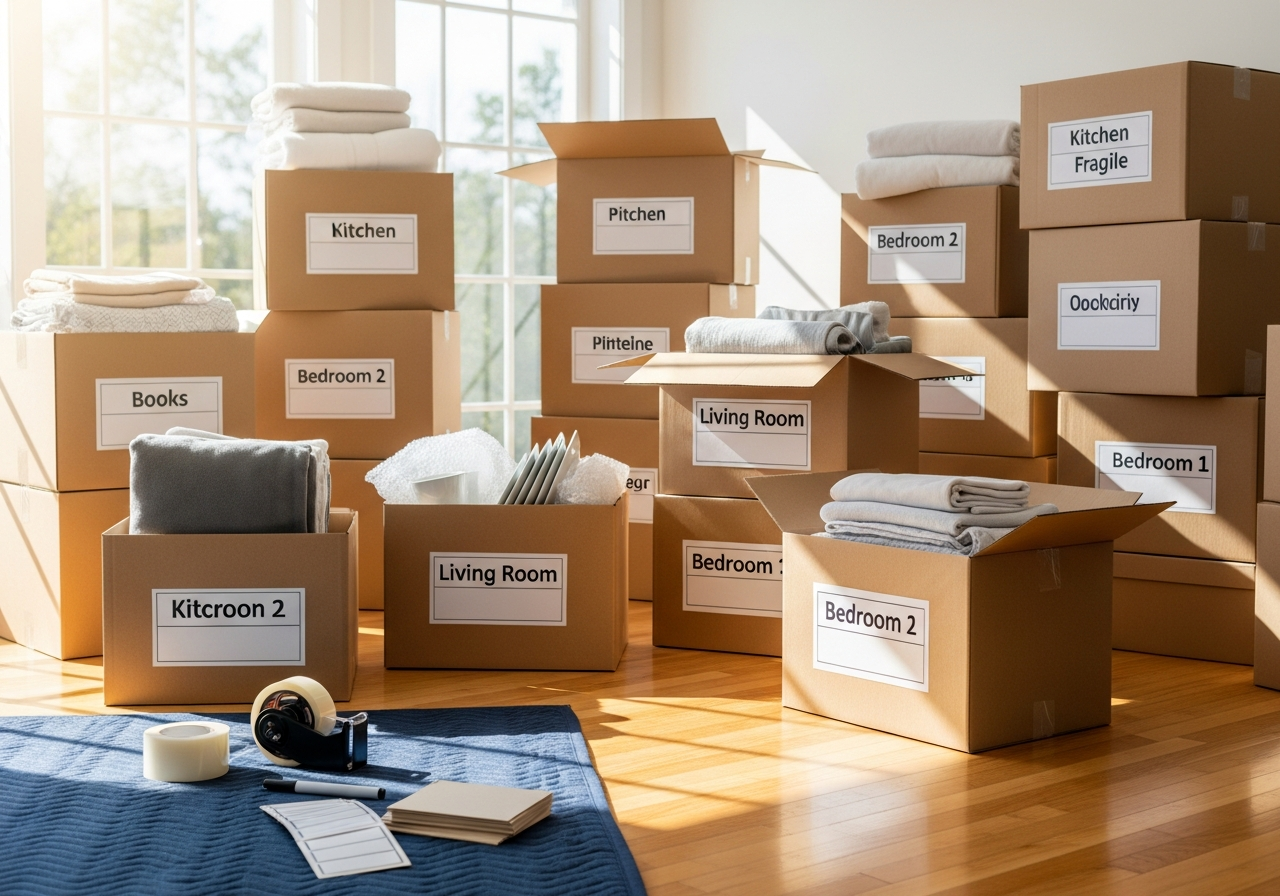
The stakes are higher too. If something breaks on a local move, you can often run back for a replacement or repack and try again. On a cross-Canada relocation, a poorly packed box discovered broken in Vancouver after leaving Ottawa is simply gone — there is no second chance. This is why experienced long distance movers treat packing as the single most important predictor of a damage-free delivery.
Good packing also saves money. Long distance pricing is driven by weight and volume, so disorganized, half-empty, or oversized boxes inflate your cost. Tight, well-planned packing reduces the cubic feet your shipment occupies and shrinks your final invoice. Throughout this guide we will show you exactly how professionals approach a cross-country pack so your belongings arrive intact and your budget stays in check.
Key Takeaway: Long distance packing must withstand days of highway vibration and multiple handling events — sturdier materials, smarter loading, and meticulous labelling are non-negotiable.
Start With a Room-by-Room Packing Plan
The biggest mistake people make is packing randomly, grabbing whatever is nearby and stuffing it into the closest box. For a long distance move you need a structured, room-by-room plan that begins four to six weeks before your loading date. Start with the rooms you use least — basements, storage closets, guest bedrooms, formal dining rooms — and work toward daily-use spaces like the kitchen and primary bedroom.
Create a simple master list of every room and assign each a colour or number. As you pack, every box gets tagged with its room code and a brief contents note. This system pays off enormously at delivery, when movers can place each box in the correct room without asking, dramatically speeding up unloading and reducing the chaos at your new home. Many people also build their plan around a broader timeline; pairing your packing schedule with a full cross-Canada moving checklist keeps every task on track.
A Realistic Packing Schedule
- 6 weeks out: Pack rarely used items — seasonal decor, books, spare linens, garage tools.
- 4 weeks out: Pack secondary bedrooms, hobby rooms, and most closet contents.
- 2 weeks out: Pack living areas, electronics, and non-essential kitchen items.
- Final week: Pack daily-use items, leaving only essentials for an open-first box.
💡 Pro Tip: Pack one room completely before moving to the next. Half-finished rooms create confusion, lost items, and stress as moving day approaches.
If your plan reveals you simply own too much to move affordably, it is worth pausing to declutter. Reviewing our guidance on preparing your home for a cross-country move early helps you decide what truly deserves a 4,000-kilometre journey.
Gathering the Right Packing Supplies
Quality supplies are the foundation of a damage-free long distance move. Bargain-bin boxes and reused grocery cartons may save a few dollars, but they crush under the weight stacked on a cross-country trailer. Invest in proper materials and you protect thousands of dollars in belongings.
Essential Supplies Checklist
- Small boxes (1.5 cu ft): Books, canned goods, tools, and dense heavy items.
- Medium boxes (3.0 cu ft): Kitchenware, toys, small appliances, and general goods.
- Large boxes (4.5 cu ft): Bedding, pillows, lampshades, and bulky lightweight items.
- Dish-pack/cell kits: Glassware, stemware, and fine china.
- Wardrobe boxes: Hanging clothes transported wrinkle-free.
- Picture/mirror cartons: Framed art, mirrors, and flat-screen TVs.
- Packing paper, bubble wrap, foam pouches, and stretch wrap.
- Heavy-duty packing tape (buy more than you think — plan two rolls per 10 boxes).
- Permanent markers and colour-coded labels.
Always choose double-walled, moving-grade cartons for a long distance haul. The slight premium over flimsy alternatives is trivial compared to the cost of replacing broken contents. A reputable long distance moving company can supply professional-grade cartons and specialty containers, and a dedicated moving boxes and supplies guide breaks down exactly how many of each size a typical home requires.
⚠️ Avoid Free Liquor Boxes: They are often weakened, inconsistently sized, and may carry pests — a real concern when crossing provincial lines. Stick to new, uniform moving cartons that stack securely.
Master Box-Packing Techniques
How you fill a box matters as much as the box itself. The goal for every carton is a firm, fully supported load with zero internal movement — a box that does not rattle, shift, or flex when lifted. Empty space is the enemy on a long distance move because contents shift and settle into gaps over hundreds of kilometres of vibration.
The Core Rules
- Heavy on the bottom, light on top. Books and dishes go low; linens and lampshades go high.
- Weight limit per box: Keep every carton under 22 kilograms (about 50 lb) so it stays liftable and structurally sound.
- Fill every void. Use packing paper, towels, or foam to eliminate gaps so nothing shifts in transit.
- Cushion top and bottom. Line the base and crown the top with crushed paper before sealing.
- Tape with the H-method. Seal the centre seam and both edge seams, top and bottom, for maximum strength.
Use small boxes for dense items. A large box full of books becomes impossible to lift safely and is far more likely to fail under stacking pressure. Distribute heavy items across several small cartons rather than concentrating them. When you reach furniture and oversized pieces, our guide to moving furniture long distance across Canada covers disassembly and wrapping in detail.
💡 Pro Tip: Shake each sealed box gently. If you hear or feel movement, open it and add more cushioning. A silent box is a safe box.
For shipments that will be consolidated or stored in transit, this discipline matters even more — stacked boxes may sit under heavy loads for days. Professional cross-country movers apply these same techniques on every job because they know what survives the highway.
Packing Fragile and High-Value Items
Fragile items demand the most attention on a cross-country move. Glassware, china, electronics, artwork, and heirlooms need individualized protection that anticipates days of vibration and multiple handling events.
Dishes and Glassware
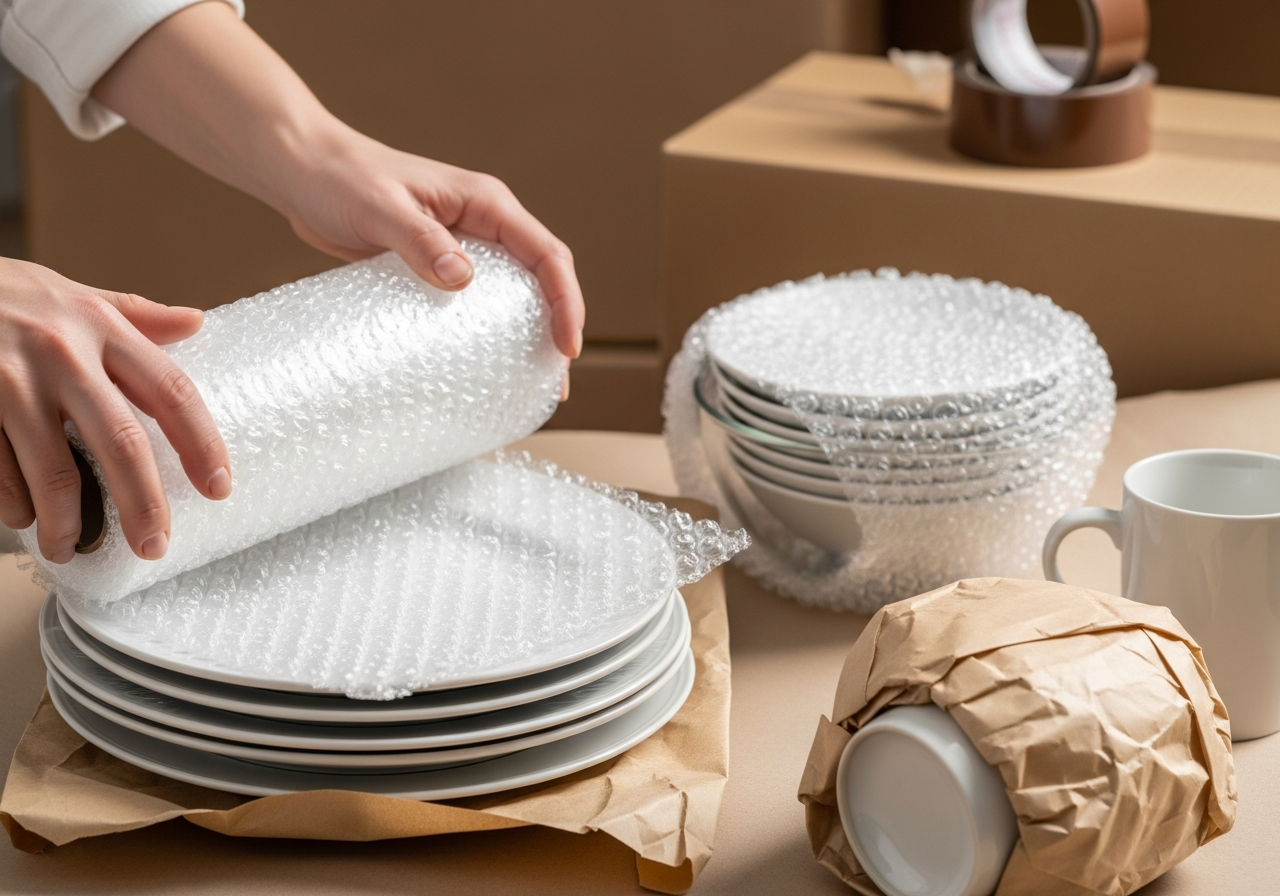
Wrap each plate individually in packing paper, then stack vertically (on edge, like records) inside a dish-pack box — plates are far stronger on edge than lying flat. Wrap glasses and stemware in paper, fill the bowls with crushed paper, and use cell dividers. Never let glass touch glass.
Electronics
Original boxes are ideal; if unavailable, use double-walled cartons with generous foam or bubble wrap on all sides. Photograph cable connections before unplugging so reassembly is effortless. Remove ink cartridges from printers and batteries from devices that may leak.
Artwork and Mirrors
Tape a large X across glass faces to contain shattering, wrap in bubble wrap, and use dedicated picture cartons. Never lay framed art flat under other items — always transport on edge.
⚠️ Document Your Valuables: Photograph high-value items before packing and keep receipts or appraisals. This is essential if you ever need to file a claim — and a good reason to understand how movers handle and protect valuable pieces.
For irreplaceable heirlooms, custom wooden crating offers the highest protection. A skilled professional long distance movers team can build custom crates for art, antiques, and electronics that absolutely cannot be replaced. The Canadian Association of Movers maintains standards for member companies handling high-value goods — verify credentials at the CAM website.
Labelling and Inventory Systems
A disciplined labelling and inventory system is what separates a smooth long distance move from a stressful one. When your belongings are out of sight for days, a written record is your only way to confirm everything arrived and to locate items quickly at the other end.

Label Every Box on Multiple Sides
Mark at least two sides and the top of each carton with: the destination room, a short contents summary, a box number, and a FRAGILE or THIS SIDE UP warning where relevant. Labelling multiple sides means crews can read the tag regardless of how boxes are stacked on the trailer.
Keep a Numbered Master Inventory
Number every box sequentially and log it on a master list (a notebook or a phone spreadsheet both work). Record the box number, room, and key contents. At delivery, check each number off as it comes through the door. A complete numbered inventory is also your strongest documentation if you ever file an insurance claim, so it pairs naturally with understanding how movers protect and account for your belongings.
💡 Pro Tip: Use a different colour of tape or label for each room. From across a room, crews instantly know where a box belongs — blue for kitchen, green for primary bedroom, and so on.
Reputable long distance moving services provide a detailed inventory sheet for the entire shipment, often with condition notes and barcoded tags. Keep your personal inventory alongside theirs so you can cross-reference at delivery and confirm nothing is missing.
Packing an Essentials Open-First Box
When your shipment takes four to eight days to cross the country, you may arrive at your new home long before your belongings do. An essentials box — sometimes called an "open-first" or "survival" box — keeps you comfortable during that gap and prevents frantic searching through dozens of cartons for basics.
What to Pack in Your Essentials Box
- Toiletries: Toothbrush, toothpaste, soap, shampoo, medications, and a basic first-aid kit.
- Bedding: Sheets, a pillow, and a blanket for the first nights.
- Kitchen basics: A few plates, cups, utensils, a knife, dish soap, and paper towels.
- Clothing: A few days of outfits suited to your destination's climate.
- Tools: A multi-tool, scissors or box cutter, phone chargers, and a power bar.
- Documents: Keep IDs, the moving contract, and the inventory with you, not in the truck.
Transport this box in your own vehicle or carry-on luggage rather than handing it to the movers. It should never leave your possession. If you are flying to your destination while a cross-country moving company drives your goods, the essentials box becomes a small suitcase or two that travels with you on the plane.
Key Takeaway: Pack a clearly marked essentials box and keep it with you, not on the moving truck — it bridges the multi-day gap before your shipment arrives.
Plan your essentials around the transit window your mover quotes. If storage-in-transit is involved, your gap could stretch to a week or more, so pack accordingly and confirm your delivery window in writing.
Items You Should Never Pack
Certain items cannot legally or safely travel on a moving truck, especially across provincial lines. Movers are prohibited from transporting hazardous materials, and packing them anyway risks fire, damage to your other belongings, and refusal of your shipment.
Non-Allowable Hazardous Items
- Propane tanks, gasoline, kerosene, and lighter fluid
- Aerosol cans, paint, paint thinner, and solvents
- Fireworks, ammunition, and explosives
- Pool chemicals, fertilizers, and pesticides
- Charcoal, matches, and other flammables
- Car batteries and corrosive liquids
Empty fuel from lawnmowers, trimmers, and generators before they are loaded. Dispose of partially used chemicals at a municipal hazardous-waste depot rather than risking them on the truck.
Keep These With You
- Cash, jewellery, and irreplaceable valuables
- Important documents — passports, birth certificates, financial records
- Prescription medications and medical devices
- Family photos, heirlooms, and sentimental irreplaceables
- Laptops, hard drives, and critical electronics with personal data
⚠️ Plants and Perishables: Most movers will not transport live plants or perishable food on long distance moves, and some provinces have restrictions on bringing plants across borders. See our guide on what can and cannot travel on the truck and plan alternatives early.
A trustworthy long distance moving company will give you a complete non-allowables list during your in-home or virtual survey. Review it carefully so nothing causes a delay on loading day.
Self-Pack vs Professional Packing
One of the biggest decisions for a cross-country move is how much packing to do yourself. The choice affects your cost, your timeline, your stress level, and — critically — your insurance coverage if something breaks.
Self-Packing
Doing your own packing is the most economical option and gives you full control over how items are handled. The trade-offs are significant time investment and a key insurance caveat: most movers limit liability on boxes you pack yourself ("PBO" — packed by owner). If a self-packed box breaks, claims are far harder to win unless there is external damage to the carton.
Professional Packing
Hiring movers to pack adds cost but delivers speed, expertise, and full liability coverage on professionally packed cartons. Trained packers complete a whole home in a day or two, use proper materials, and assume responsibility for what they wrap. For fragile-heavy households or tight timelines, this peace of mind is often worth it.
The Hybrid Approach
Many families choose a middle path: pack the easy, non-fragile items themselves (books, linens, clothing) and pay professionals to handle the kitchen, electronics, and artwork. This balances cost savings with protection where it matters most. To weigh the full spectrum, compare our breakdown of supply costs for self-packing against a professional quote.
💡 Pro Tip: If you self-pack, leave fragile and high-value items for the professionals. The small added cost protects your most valuable and irreplaceable belongings with full liability coverage.
Whatever you choose, get the packing service detailed in writing on your estimate. A transparent nationwide moving company itemizes packing labour and materials so there are no surprises, and you can always request just a fragile-only pack to control costs.
Loading and Protecting Your Shipment
Even perfectly packed boxes can be damaged by poor loading. How your shipment is stacked and secured on the trailer determines whether it survives thousands of kilometres of highway. While professional crews handle loading on a full-service move, understanding the principles helps you verify quality work.
Loading Best Practices
- Heaviest items first and low: Appliances and furniture anchor the load against the cab wall.
- Tight tiers, no gaps: Items are loaded in solid vertical tiers and strapped to prevent shifting.
- Furniture protection: Pieces are blanket-wrapped and shrink-wrapped before loading.
- Fragile boxes on top: Light, fragile cartons go last, never crushed under heavy loads.
- Use of straps and tie-downs: Every tier is secured so nothing topples during transit.
On shared or consolidated shipments, your goods may be separated from other customers' belongings by bulkheads or netting. Quality movers document the load with photos and an inventory before sealing the trailer. If you are self-loading a rental truck, take the time to do it right — rushed, loose loading is the leading cause of damage on DIY cross-country moves.
Key Takeaway: Excellent packing only pays off with excellent loading. Tight tiers, blanket-wrapped furniture, and secured straps protect your shipment across every kilometre.
Before signing off at delivery, inspect cartons and furniture as they come off the truck and note any visible damage on the paperwork immediately. Combining sound packing, careful loading, and a clear moving-day checklist gives you the best possible outcome. When in doubt, lean on the experience of established professional long distance movers who do this every day. For broader timing and provincial considerations, Statistics Canada also publishes useful migration data at Statistics Canada, and you can confirm mover credentials through the Better Business Bureau.
Frequently Asked Questions
How far in advance should I start packing for a long distance move?
Begin four to six weeks before your loading date for a typical home. Start with rarely used rooms and seasonal items, then work toward daily-use spaces, leaving only essentials for the final week. Starting early prevents the rushed, careless packing that causes damage on long hauls.
How many boxes will I need for a cross-Canada move?
As a rough guide, a one-bedroom home needs roughly 25 to 35 boxes, a three-bedroom home 60 to 90 boxes, and a four-bedroom home 90 to 120 or more. The exact number depends on how much you own. Order a mix of small, medium, and large cartons plus specialty boxes for dishes, wardrobes, and artwork.
Should I pay for professional packing on a long distance move?
It depends on your budget, timeline, and how many fragile items you own. Professional packing adds cost but provides speed and full liability coverage on professionally packed boxes. Many people use a hybrid approach — self-packing simple items while paying professionals to handle the kitchen, electronics, and valuables.
Are self-packed boxes covered by moving insurance?
Coverage on owner-packed boxes is usually limited unless there is visible external damage to the carton. Items packed by professional movers carry full liability protection. If full coverage matters for fragile or high-value items, have the movers pack those cartons.
What should I put in my essentials box?
Pack toiletries, medications, a few days of clothing, basic bedding, minimal kitchen items, chargers, tools, and important documents. Keep this box with you in your vehicle or carry-on — not on the truck — so you have what you need before your shipment arrives.
How do I protect fragile items for thousands of kilometres of highway?
Wrap each fragile item individually, stack plates on edge in dish-pack boxes, eliminate all empty space with cushioning, and load fragile cartons on top of the stack. For irreplaceable pieces, consider custom wooden crating. Document valuables with photos before packing in case you need to file a claim.
What items can movers not transport across provinces?
Movers cannot carry hazardous materials such as propane, gasoline, aerosols, paint, fireworks, ammunition, and pool chemicals. They also generally will not move perishable food or live plants. Keep cash, jewellery, documents, medications, and irreplaceable items with you rather than on the truck.
How can I reduce my long distance moving cost through packing?
Because pricing is driven by weight and volume, declutter aggressively before you pack, use right-sized boxes with no wasted space, and pack tightly so your shipment occupies fewer cubic feet. Getting a free moving quote after decluttering gives you the most accurate price.