Why the Right Supplies Matter Over Long Distances
On a long distance move across Canada, your packing supplies are the difference between belongings that arrive intact and belongings that arrive broken. A shipment travelling from Ottawa to Calgary or Vancouver endures four to eight days of highway vibration, multiple loading and unloading events, stacking pressure on the trailer, and sometimes storage-in-transit. Flimsy boxes and inadequate cushioning simply do not survive this journey.
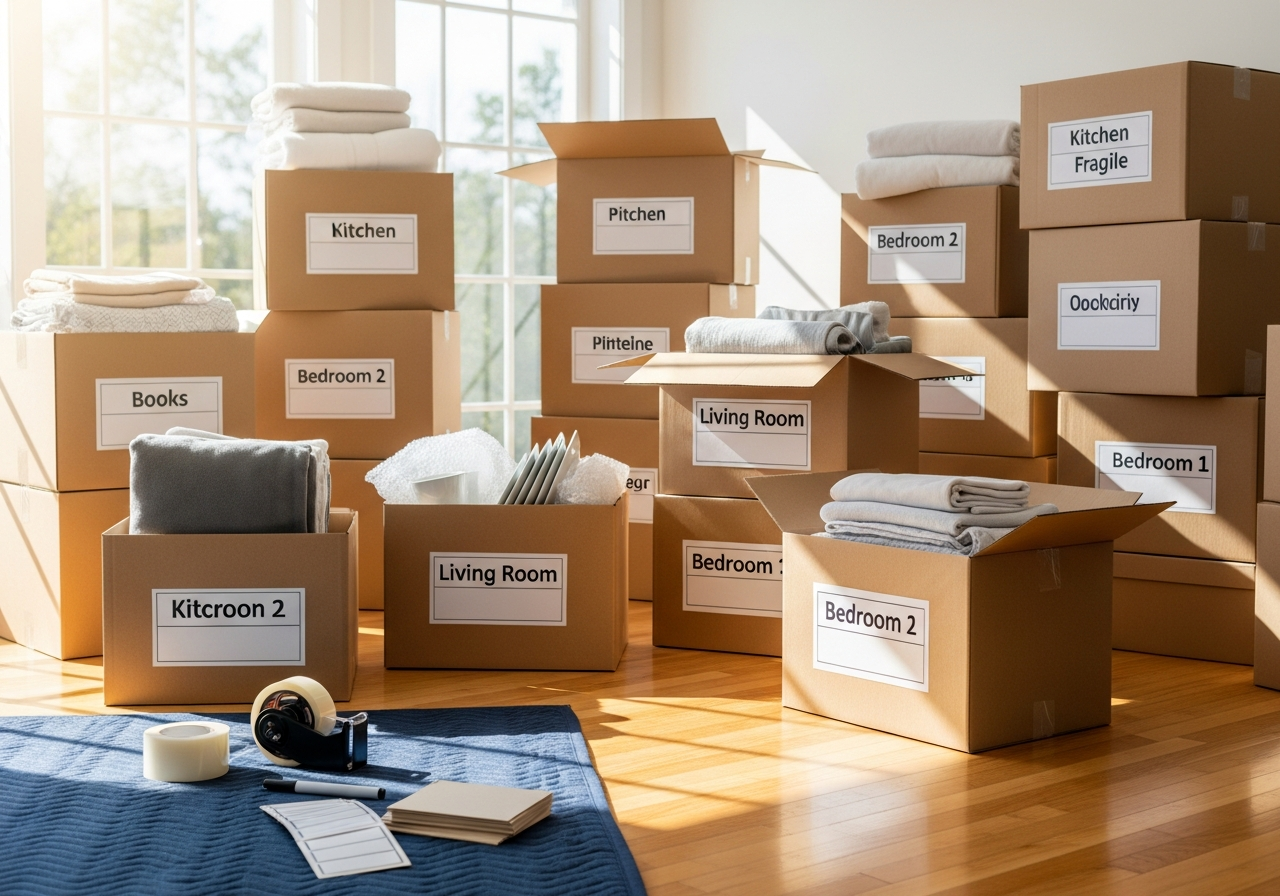
The supplies you choose also affect your final price. Long distance moves are billed by weight and volume, so right-sized, well-filled boxes keep your shipment compact and your invoice lower. Oversized or half-empty cartons waste space and money while increasing the chance of crushing. This guide walks through every supply you need, realistic quantities, current Canadian costs, and how to save without compromising protection.
Whether you are self-packing to save money or simply buying materials for a long distance moving company to use, understanding the right supplies puts you in control. It also pairs naturally with our companion guide on how to pack for a long distance move across Canada, which covers the techniques you will apply once your materials arrive.
Key Takeaway: Moving-grade supplies are an investment that protects thousands of dollars in belongings and can lower your bill by keeping your shipment compact.
Moving Box Sizes Explained
Standard moving boxes come in a handful of sizes, each designed for a specific category of belongings. Matching contents to the correct box size is the single most important factor in safe, efficient packing.
The Standard Box Sizes
- Small (1.5 cu ft): Roughly 16 x 12 x 12 inches. For dense, heavy items — books, canned goods, tools, records, and dishes. Keeps weight manageable.
- Medium (3.0 cu ft): Roughly 18 x 18 x 16 inches. The workhorse box for kitchenware, toys, small appliances, and general household goods.
- Large (4.5 cu ft): Roughly 18 x 18 x 24 inches. For bulky but lightweight items — bedding, pillows, linens, and lampshades.
- Extra-large (6.0 cu ft): For very light, voluminous items like comforters and large pillows. Use sparingly to avoid overloading.
The golden rule: heavy items go in small boxes, light items go in large boxes. A large box filled with books becomes impossible to lift safely and is far more likely to fail under stacking pressure on a cross-country trailer. Keeping every carton under 22 kilograms protects both your back and the box.
💡 Pro Tip: Buy uniform boxes in just a few standard sizes. Matching dimensions stack tightly and securely on the truck, eliminating gaps that let items shift over long distances.
Professional crews favour consistent sizing because it builds stable, interlocking tiers. A quality cross-country moving company stocks moving-grade cartons in these standard dimensions for exactly this reason.
How Many Boxes You Actually Need
Underestimating box quantity is one of the most common moving-day frustrations — running out mid-pack forces a stressful supply run. Use these realistic estimates as a starting point, then adjust for how much you own.
Box Estimates by Home Size
- Studio/1-bedroom: 25 to 35 boxes (mostly small and medium, a few large).
- 2-bedroom: 40 to 60 boxes.
- 3-bedroom: 60 to 90 boxes.
- 4-bedroom: 90 to 120 boxes.
- 5+ bedroom: 120 to 160 or more boxes.
A typical mix is roughly 40% small, 40% medium, and 20% large, plus specialty cartons for dishes, wardrobes, and artwork. Households with extensive book or kitchen collections skew toward more small boxes; minimalist homes need fewer overall.
⚠️ Always Buy Extra: Purchase 10 to 15% more boxes than you estimate. Running out at 9 p.m. the night before loading is a classic moving disaster. Surplus boxes can usually be returned or repurposed.
The simplest way to slash your box count is to declutter before you pack. Every item you donate or sell is one less thing to box, lift, and ship across the country. Combining a thorough purge with our downsizing before a long distance move guide can meaningfully shrink both your supply list and your final moving cost. A long distance moving services estimator can also recommend quantities during your survey.
Specialty Boxes for Cross-Country Moves
Beyond standard cartons, specialty boxes protect items that standard boxes cannot. On a long distance move, these purpose-built containers are well worth the modest premium.
Dish-Pack / Cell Kits
Double-walled boxes with cardboard cell dividers that isolate each glass or plate. Essential for fine china, stemware, and everyday dishes travelling thousands of kilometres.
Wardrobe Boxes
Tall cartons with a built-in hanging bar so clothes travel on their hangers, wrinkle-free. They also double as bulky storage for shoes and accessories at the bottom.
Picture and Mirror Cartons
Flat, adjustable boxes that telescope to fit framed art, mirrors, and flat-screen TVs. Always transport these items on edge, never flat.
Mattress Bags and Boxes
Heavy plastic bags or rigid cartons that keep mattresses clean and dry across multi-day transit and any storage-in-transit period.
TV and Electronics Boxes
Custom-fit boxes with foam corners for flat-screen televisions when the original packaging is gone.
For the most fragile pieces, custom wooden crating offers the ultimate protection — see our detailed coverage in the fragile packing section of our packing guide. A reputable interprovincial moving company can supply all of these specialty containers and build custom crates for art, antiques, and irreplaceable electronics.
💡 Pro Tip: Rent wardrobe boxes if your mover offers them — you only need them on loading and unloading day, so renting is far cheaper than buying for a one-time move.
Essential Packing Materials Beyond Boxes
Boxes are only half the equation. The materials that cushion, wrap, and seal your belongings are equally critical for surviving a cross-country haul.
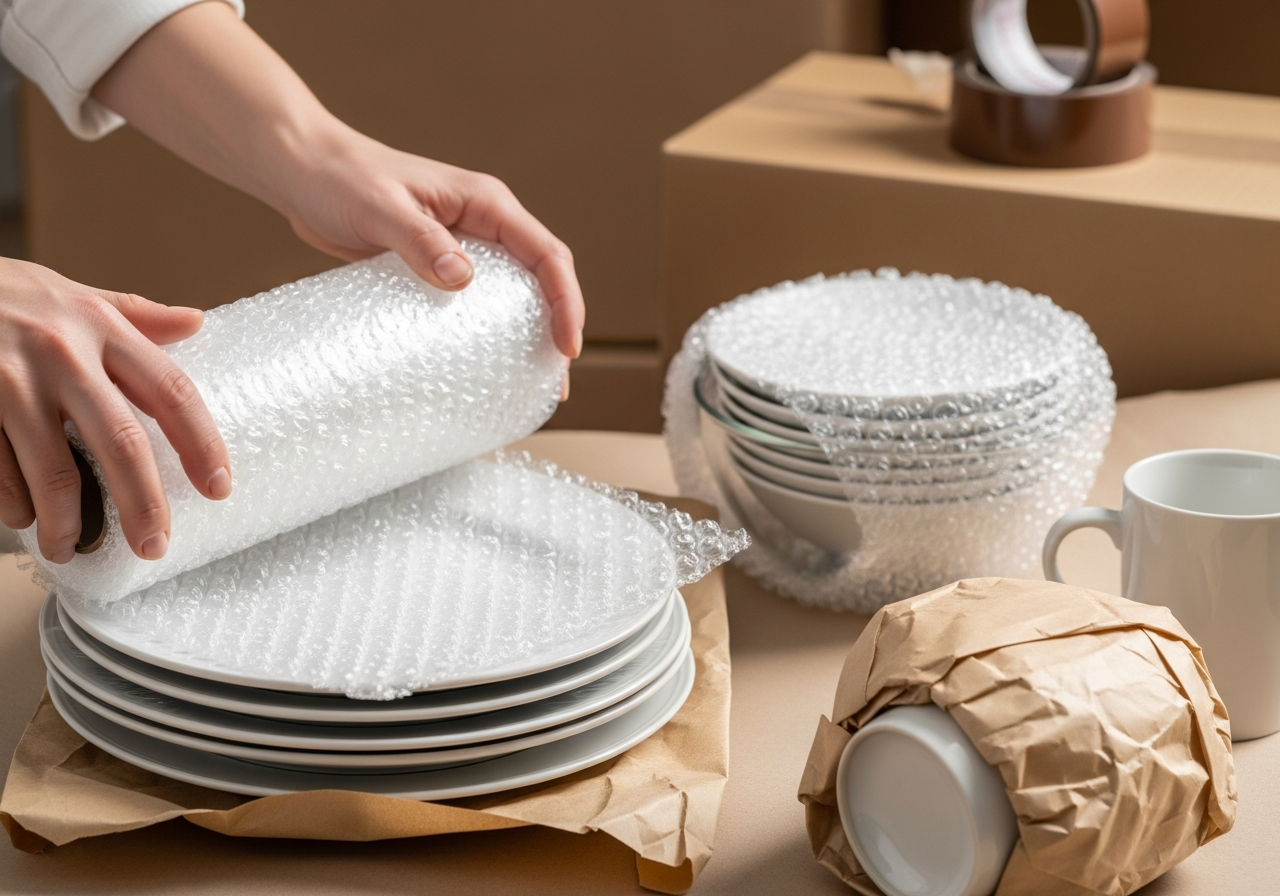
Cushioning and Wrapping
- Packing paper (newsprint): The most versatile cushioning — wraps items and fills voids. Buy generously; you will use more than expected.
- Bubble wrap: Superior protection for fragile and high-value items.
- Foam pouches and sheets: Quick protection for glasses, plates, and electronics.
- Furniture blankets/pads: Protect wood, upholstery, and appliances from scratches and dents.
- Stretch wrap: Secures blankets to furniture and keeps drawers and doors closed in transit.
Sealing and Marking
- Heavy-duty packing tape: Plan two rolls per 10 boxes; buy a tape gun for speed.
- Permanent markers: For clear, durable labelling.
- Colour-coded labels or coloured tape: One colour per room for instant sorting at delivery.
⚠️ Do Not Skimp on Tape: Cheap tape fails under the temperature swings and vibration of cross-Canada transit. Use moving-grade tape and seal every box with the H-method — centre seam plus both edges, top and bottom.
Furniture pads and stretch wrap deserve special mention for long distance moves, where furniture rides for days. If you are using full-service movers, these come standard; if self-loading, rent or buy enough to wrap every piece. Our guide to moving furniture long distance across Canada explains proper wrapping technique. Professional long distance movers arrive fully equipped with all of these materials.
What Quality Supplies Cost in Canada
Budgeting for supplies prevents surprises. Here are realistic 2026 Canadian price ranges for moving-grade materials. Costs vary by retailer and region, but these figures give you a dependable planning baseline.
Typical Per-Item Costs (CAD)
- Small box: $2 to $3 each
- Medium box: $3 to $4 each
- Large box: $4 to $6 each
- Dish-pack kit: $12 to $20 each
- Wardrobe box: $15 to $25 each (or rent for less)
- Picture/mirror carton: $8 to $15 each
- Packing paper (large bundle): $25 to $40
- Bubble wrap (large roll): $20 to $40
- Packing tape (per roll): $4 to $7
- Furniture blanket: $15 to $30 (or rent)
Total Supply Budgets by Home Size
- 1-bedroom: $120 to $220
- 2-bedroom: $200 to $350
- 3-bedroom: $350 to $600
- 4-bedroom: $550 to $900+
These supply costs are modest compared with the total price of a cross-country move and tiny compared with the value of what they protect. To see how materials fit into your overall budget, review our complete packing approach alongside a full estimate from a nationwide moving company.
Key Takeaway: Budget $350 to $600 in supplies for a typical three-bedroom cross-Canada move — a small fraction of the total cost and excellent insurance for your belongings.
Where to Buy and How to Save
You have many options for sourcing supplies, each with cost and convenience trade-offs.
Where to Buy
- Your moving company: Convenient one-stop shopping with professional-grade materials and specialty boxes; often the best quality.
- Home improvement and hardware stores: Reliable selection of standard boxes and tape.
- Self-storage facilities: Frequently sell moving boxes and supplies on site.
- Online retailers: Bulk box bundles delivered to your door, often the best per-unit price.
- Big-box and office-supply stores: Good for tape, markers, and bubble wrap.
Smart Ways to Save
- Buy box bundles rather than individual cartons — bulk pricing is significantly cheaper.
- Rent wardrobe boxes, furniture blankets, and reusable crates instead of buying.
- Use clean linens, towels, and clothing as free cushioning for non-fragile items.
- Declutter first so you buy fewer supplies overall.
- Ask your mover whether materials are bundled into a packing service.
💡 Pro Tip: Towels, sweaters, and bedding make excellent free padding. Wrapping pots, books, and unbreakables in your own soft goods cuts cushioning costs and reduces the number of boxes you need.
If you are comparing the all-in cost of self-packing against professional packing, a cross-Canada movers estimate will show whether buying everything yourself truly saves money once your time is factored in.
New vs Used vs Free Boxes
Not all boxes are created equal, and the new-versus-used decision matters more on a long distance move than a local one.
New Moving Boxes
Pros: Uniform sizing, full structural strength, clean, and stack securely. The safest choice for a multi-day haul.
Cons: Highest cost.
Used Moving Boxes
Pros: Cheaper or free, and environmentally friendly if sourced from recent movers.
Cons: May be weakened by prior use; inspect carefully for soft corners, water stains, or crushing. A box that survived one move may not survive a 4,000-kilometre second journey.
Free Boxes (Grocery and Liquor Stores)
Pros: No cost.
Cons: Inconsistent sizes complicate stacking, structural integrity is unknown, and they can carry pests — a genuine concern when crossing provincial lines. Generally not recommended for fragile or heavy items on a long haul.
⚠️ Inspect Every Reused Box: For a cross-country move, only reuse double-walled boxes in excellent condition. When in doubt, use new boxes for anything heavy or fragile — the savings are not worth a failed carton in transit.
A practical compromise: use sturdy reused boxes for lightweight, non-fragile items like linens and clothing, and reserve new boxes for books, dishes, and valuables. For guidance on which items demand the strongest protection, see our advice on deciding what to keep and ship. Experienced professional long distance movers will always recommend new cartons for fragile loads.
Eco-Friendly and Reusable Options
Sustainability matters to many Canadian movers, and there are excellent eco-friendly alternatives to single-use cardboard. These options reduce waste and can save money over a large move.
Reusable Plastic Crates
Many cities offer plastic moving-crate rental services. Crates are sturdy, weatherproof, stack perfectly, and are returned after your move — eliminating cardboard waste entirely. They are especially practical for local portions of a move, though logistics across provinces require returning them, so confirm coverage areas.
Recycled and Biodegradable Materials
- Recycled paper and cardboard: Widely available and fully recyclable after use.
- Biodegradable packing peanuts: Starch-based peanuts dissolve in water.
- Compostable bubble wrap alternatives: Paper-based cushioning that recycles with cardboard.
- Soft goods as padding: Towels, blankets, and clothing — the greenest cushioning of all.
After the Move
Break down and recycle cardboard, or pass good boxes to the next mover through community marketplaces. Return rented crates, blankets, and wardrobe boxes promptly. Donating supplies keeps materials in use and helps a fellow mover.
💡 Pro Tip: Ask your mover about reusable blanket and crate programs. Full-service long distance moving company crews typically reuse furniture blankets across hundreds of moves, which is inherently sustainable.
Choosing reusable and recycled materials does not mean compromising protection — it means selecting durable options designed for repeated use. Statistics Canada's environmental reporting at Statistics Canada highlights how reducing single-use packaging supports broader waste-reduction goals.
Building Your Complete Supply Kit
Putting it all together, here is a complete supply kit checklist for a typical cross-Canada move. Adjust quantities to your home size and contents using the estimates earlier in this guide.
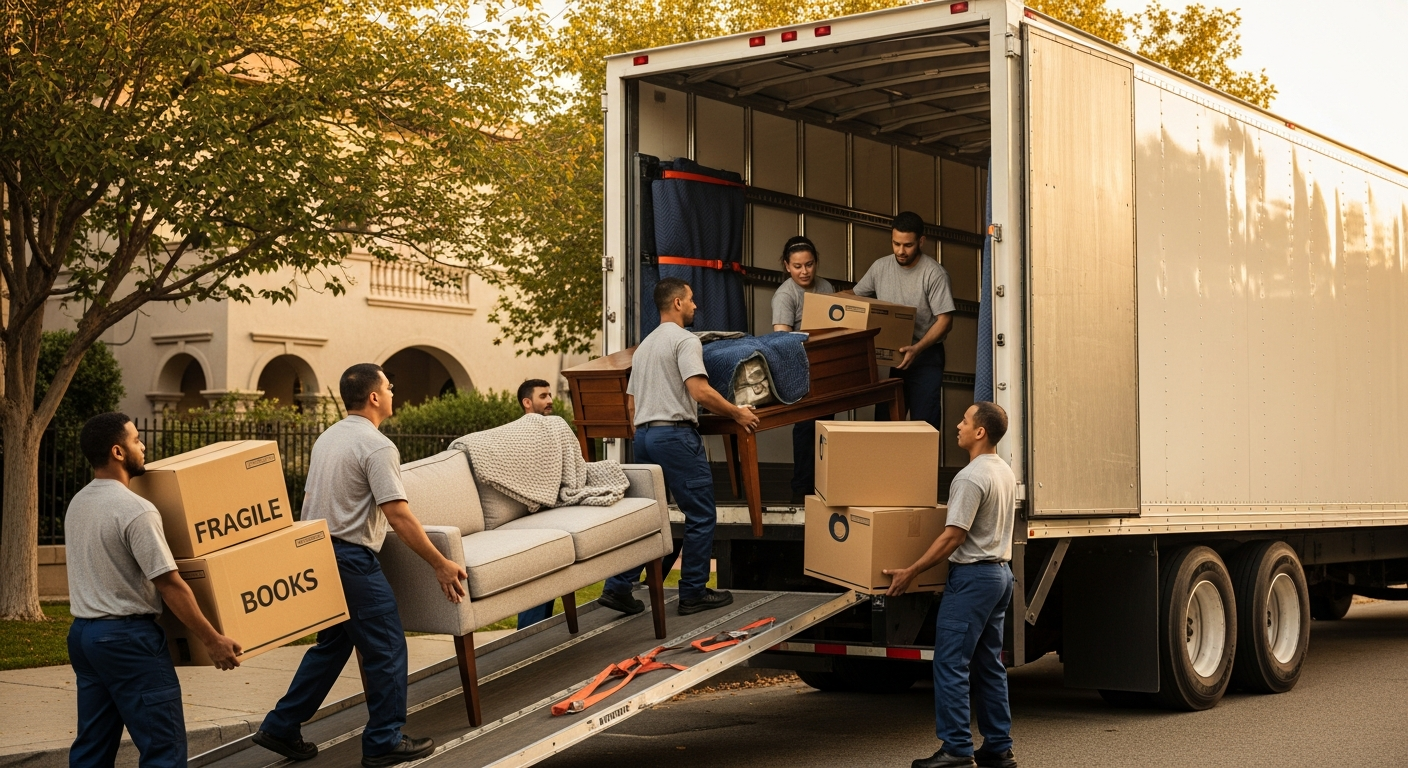
Your Master Supply Checklist
- Small, medium, and large boxes (40/40/20 split, plus 15% extra)
- Dish-pack kits for the kitchen
- Wardrobe boxes for hanging clothes (rent if possible)
- Picture/mirror cartons for art and TVs
- Mattress bags for every bed
- Packing paper and bubble wrap
- Furniture blankets and stretch wrap
- Heavy-duty packing tape and a tape gun
- Permanent markers and colour-coded labels
- A box cutter, scissors, and a basic tool kit
Order or buy everything at least two weeks before you start packing so you are never caught short. Stage materials in a central area — often the garage or a spare room — so supplies are always within reach as you work room by room.
Key Takeaway: A complete, well-stocked supply kit ordered in advance is the foundation of a calm, efficient, damage-free long distance move.
Once your kit is ready, follow proven technique from our how to pack for a long distance move guide and consider whether professional packing is worth it for your fragile items. When you are ready for pricing, request a free moving quote that itemizes materials and labour. For any items needing custom handling, lean on the expertise of seasoned long distance moving services, and verify any company you hire through the Canadian Association of Movers or the Better Business Bureau.
Frequently Asked Questions
How many moving boxes do I need for a three-bedroom home?
Plan for roughly 60 to 90 boxes for a three-bedroom home, in a mix of about 40% small, 40% medium, and 20% large, plus specialty cartons for dishes, clothing, and artwork. Households with large book or kitchen collections need more small boxes. Always buy 10 to 15% extra to avoid running out mid-pack.
What size boxes should I use for heavy items like books?
Always use small boxes (about 1.5 cubic feet) for heavy, dense items such as books, dishes, and tools. Large boxes filled with books become impossible to lift safely and are far more likely to collapse under stacking pressure during multi-day transit. Keep every box under 22 kilograms.
How much do packing supplies cost for a cross-Canada move?
Budget roughly $120 to $220 for a one-bedroom, $350 to $600 for a three-bedroom, and $550 to $900 or more for a four-bedroom home. This includes boxes, tape, packing paper, bubble wrap, and specialty cartons. Decluttering first and renting wardrobe boxes and blankets can lower these costs.
Are free grocery store boxes safe for a long distance move?
Generally no. Free boxes vary in size, have unknown structural integrity, and can carry pests — a real concern when crossing provincial lines. They may be acceptable for lightweight, non-fragile items, but use new double-walled boxes for anything heavy or fragile travelling thousands of kilometres.
What specialty boxes do I need for a cross-country move?
The most useful specialty boxes are dish-pack kits for kitchenware, wardrobe boxes for hanging clothes, picture and mirror cartons for art and TVs, and mattress bags. For irreplaceable items, consider custom wooden crating. Many of these can be rented from your moving company to save money.
Can I use towels and clothing instead of bubble wrap?
Yes — soft goods such as towels, blankets, and clothing make excellent free cushioning for non-fragile items and pots and pans, and they reduce both your supply costs and box count. For genuinely fragile items like glassware and electronics, still use bubble wrap or foam for reliable protection.
How much packing tape will I need?
Plan for roughly two rolls of heavy-duty packing tape per 10 boxes, and use a tape gun for speed. Seal every box with the H-method — the centre seam plus both edge seams on the top and bottom. Cheap tape fails under temperature swings and vibration, so always choose moving-grade tape.
Should I buy supplies from my moving company?
Buying from your mover is convenient and ensures professional-grade quality, including specialty boxes and custom crating. Online bulk bundles are often cheaper per unit, while renting wardrobe boxes and furniture blankets saves money on one-time items. Compare options and ask whether materials are bundled into a packing service.