The Montreal to Calgary Route: Distance and Highways
The Montreal to Calgary move covers approximately 3,700 kilometres, taking you from Quebec's largest city across four provinces to Alberta's vibrant business hub in the foothills of the Rockies. It is a popular route for professionals chasing Alberta's economic opportunities and lower cost of living.

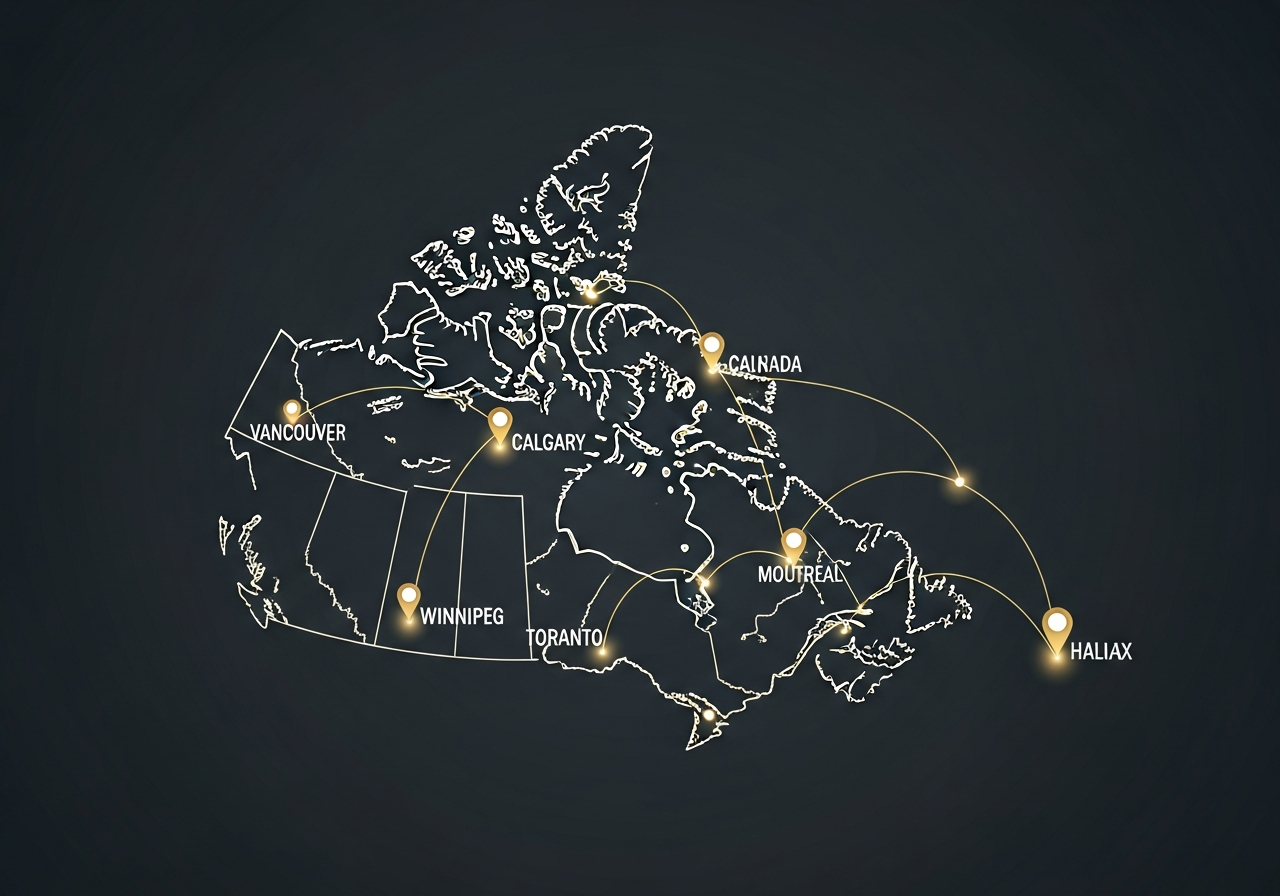
The standard route runs west from Montreal on Highway 401 through Ontario, joins the Trans-Canada Highway north of the Great Lakes through Sudbury, Sault Ste. Marie, and Thunder Bay, then crosses the Prairies via Winnipeg, Regina, and Medicine Hat into Calgary. Like the Toronto-Calgary haul, it stops short of the major mountain passes, ending in the foothills.
For professional drivers under federal hours-of-service rules, pure driving time is roughly 39 to 43 hours. With loading, unloading, fuel, and rest, the realistic door-to-door window is longer. Experienced long distance movers who run this corridor know that the Quebec and Northern Ontario legs set the pace, while the Prairies allow trucks to make good time toward Alberta.
The Montreal-Calgary route blends the remote Canadian Shield with the fast, open Prairies. Because it ends in the foothills rather than over the mountains, transit times are more predictable than the Vancouver routes — a real advantage in winter.
Montreal to Calgary Moving Costs (2026)
At 3,700 km, Montreal to Calgary sits between the shorter Toronto-Calgary haul and the longer Vancouver routes in price. Realistic 2026 ranges for full-service door-to-door moves:
- Studio / 1-bedroom: $4,500 – $7,000 CAD
- 2-bedroom apartment: $6,800 – $10,200 CAD
- 3-bedroom home: $10,000 – $15,000 CAD
- 4-bedroom home: $14,500 – $21,000 CAD
- 5+ bedroom / luxury home: $20,000 – $31,000+ CAD
These ranges cover professional loading and unloading, basic protection, moving pads, and standard transit. Full packing service adds roughly $650 – $1,700; specialty items add $300 – $1,100; and storage-in-transit adds $150 – $475 per month.
To see how distance, weight, and season shape these numbers nationally, our guide to long distance moving costs in Canada is a helpful reference. A transparent cross-country moving company that issues a binding written estimate protects you from surprises on delivery day.
💡 Pro Tip: Alberta charges only 5% GST with no provincial sales tax. After your move, expect everyday purchases to cost less than in Quebec, helping offset your relocation expenses over time.
Transit Times and Delivery Windows
For Montreal to Calgary, expect transit of 4 to 6 days for a dedicated truck, with longer windows for consolidated loads:
- Dedicated / express delivery: 4–6 days. Firm dates with your goods alone on the truck.
- Consolidated / standard delivery: 8–15 days. Shared trailer space lowers cost in exchange for a wider window.
- Economy / flexible delivery: 13–22 days. Lowest cost, widest window.
Because the route ends in the foothills rather than over the Rockies, delivery estimates tend to hold up well, even in winter. Most families choose standard delivery for value, while those with firm possession or job-start dates opt for dedicated service. Quality long distance moving services will give you a written delivery window and keep you posted as the truck crosses the country.
What Makes the Montreal-Calgary Route Unique
This corridor has a distinct profile shaped by its endpoints and terrain.
Full Quebec and Ontario legs
Starting in Montreal means the truck covers the entire Ontario stretch, including the remote, weather-sensitive Lake Superior section that is the slowest part of any westbound haul.
Prairie momentum
Across Manitoba and Saskatchewan, the flat, fast highway lets trucks recover time. The main hazards are crosswinds and storms rather than terrain.
Foothills finish
Calgary's location east of the Rockies keeps the route free of the steep mountain passes, making winter transit more reliable. For a broader view of this east-to-west journey, see our guide to moving from Eastern to Western Canada. Drivers crossing Alberta can check live conditions on 511 Alberta, a tool seasoned cross-Canada movers rely on to avoid trouble spots.
Best Time of Year to Make the Move
Season shapes both cost and reliability on the Montreal-Calgary route:
- Summer (June–August): Peak demand and pricing. Book 8–12 weeks ahead. Best road conditions.
- Fall (September–October): Often the best overall value — moderate pricing and reliable roads.
- Winter (November–March): Lowest pricing, but Northern Ontario and Prairie blizzards can cause delays. Calgary chinooks bring rapid temperature swings.
- Spring (April–May): Improving weather and moderate rates, though early spring can still bring Prairie snow.
If your schedule allows, a fall move usually offers the best blend of price and predictability. Mid-week, mid-month dates give any long distance moving company more flexibility to quote a competitive rate. For winter moves, allow a day or two of buffer to absorb potential weather delays on the Shield and Prairies.
Choosing the Right Long Distance Mover
On a 3,700 km move, carrier quality drives your entire experience. Look for:
- Documented experience on the Montreal-Calgary corridor
- GPS tracking for real-time visibility
- Direct operation rather than anonymous subcontracting
- Membership in the Canadian Association of Movers
- Full Value Protection insurance options
- Binding, transparent written estimates
- Recent, verifiable references
A quote far below the rest is usually a warning sign, not a deal. Cross-check any estimate against the benchmarks in our cost guide before committing. A reputable professional long distance movers team will provide documentation, answer your questions, and stand behind a binding written estimate.
⚠️ Red Flag: A refusal to provide a written binding estimate, or a demand for a large cash deposit up front, is a clear sign to keep looking.
Packing and Preparing for the Cross-Country Haul
A 3,700 km haul subjects your belongings to days of vibration. Pack for the road, not just the destination.
Strong, full boxes
Use double-walled cartons and fill every gap so contents do not shift. Half-empty boxes collapse over long distances.
Extra care for fragiles
Wrap dishes, glassware, and electronics individually and use dish-pack cartons. Keep documents, jewellery, and irreplaceable items with you rather than on the truck.
Prepare an essentials box
Since delivery can take several days to two weeks, pack a suitcase with clothing, toiletries, medications, chargers, and kitchen basics for your first days in Calgary.
Decluttering before packing is the most effective cost-saver on a long move — every item travels 3,700 km. When you are ready to commit, request a free moving quote to lock in your dates and pricing with confidence.
Storage Options Along the Route
Gaps between leaving Montreal and taking possession in Calgary are common, and storage bridges them smoothly. Two main options:
Storage-in-transit (SIT)
Your goods stay in the mover's secured warehouse for a defined period before final delivery — ideal for short gaps of days or a few weeks, and offered by most long-haul carriers.
Long-term storage
For longer gaps, a dedicated storage unit at origin or destination gives flexibility, though it adds handling. Climate-controlled units protect sensitive items through Calgary's cold winters.
Our detailed guide to storage-in-transit for cross-country moves explains how to coordinate timing and cost. A reputable interprovincial moving company can usually fold storage into your overall quote, keeping your belongings under a single chain of custody.
Key Takeaway: Arrange storage-in-transit up front if your Calgary possession date is uncertain. Planned storage is far cheaper and less stressful than a last-minute scramble.
Protecting Your Belongings: Insurance and Tracking
Across 3,700 km, strong protection and reliable tracking give you peace of mind.

Coverage options
Basic released-value protection reimburses only a small amount per kilogram, well below replacement cost. Full Value Protection covers actual repair or replacement and is strongly recommended for this distance. Compare it against standalone transit insurance.
Shipment tracking
Reputable carriers provide GPS tracking and regular updates so you always know where your goods are between Montreal and Calgary. Confirm the tracking method before booking.
Photograph your high-value items before the truck departs to document their condition. Quality long distance movers encourage this because it makes any claim faster and fairer. Strong coverage plus documentation is the smartest way to protect a cross-country shipment.
Settling In: Admin Tasks in Alberta
After your belongings arrive, handle the administrative side of becoming an Alberta resident:
- Driver's licence: Exchange your Quebec licence for an Alberta licence at a registry agent, generally within 90 days.
- Vehicle registration: Register your vehicle in Alberta and arrange Alberta auto insurance.
- Health coverage: Enrol in the Alberta Health Care Insurance Plan (AHCIP) promptly to avoid gaps.
- Mail forwarding: Set up forwarding through Canada Post.
- Tax records: Update your address with the CRA.
Some Quebec documents are in French and may need certified English translations for certain Alberta processes — gather these before you leave. For a complete east-to-west relocation overview, see our guide to moving from Eastern to Western Canada. A good nationwide moving company often shares a settling-in checklist to keep you on track.
Money-Saving Tips for the Montreal-Calgary Move
Smart planning meaningfully reduces the cost of a 3,700 km move. Use these strategies:
- Declutter first. Sell, donate, or recycle what you do not need — every kilogram travels 3,700 km.
- Choose consolidated transit. Flexible dates and shared trailer space lower your bill.
- Move in the shoulder season. Fall and late winter offer the best rates.
- Pack non-fragiles yourself. Reduce labour by boxing books, clothing, and linens on your own.
- Compare binding quotes. Get at least three written estimates from reputable carriers.
- Book early. Lead time unlocks better pricing and your preferred dates.
A reputable cross-country moving company will help you target the levers that save the most for your shipment. Combining a lean inventory with flexible dates and an early booking can save a typical household well over $1,000 on the Calgary route.
Migration from Quebec to Alberta has grown alongside Alberta's economy. For data on interprovincial movement, see Statistics Canada.
Leaving Quebec: Tax, Healthcare, and Address Changes
A Montreal-to-Calgary move involves one administrative wrinkle that western-to-western moves do not: you are leaving Quebec, which runs many of its own provincial systems separately from the rest of Canada. Tax filing, health coverage, driver licensing, and auto insurance all work differently in Quebec, so building these wind-down tasks into your 3,700 km relocation plan prevents gaps in coverage and surprise paperwork after you arrive.
Taxes: your last Quebec return
Quebec is the only province where residents file two income tax returns each year — one federal with the CRA and one provincial with Revenu Québec. Your province of residence for tax purposes is wherever you live on December 31, so if you complete your move before year-end, you will generally file as an Alberta resident for that tax year and will not owe Quebec provincial tax going forward. This matters because Alberta has both lower income-tax rates and no provincial sales tax. Update your address with the CRA promptly so refunds, benefit payments, and notices follow you — you can do this online through the CRA change of address service.
Healthcare: bridging RAMQ and AHCIP
Your Quebec health card (RAMQ) does not transfer to Alberta. New Alberta residents must register for the Alberta Health Care Insurance Plan (AHCIP), and coverage generally begins on your arrival date once you establish residency. There is, however, a waiting period of up to three months in some interprovincial situations — RAMQ typically continues to cover you for a limited transition window after you leave, so do not cancel it prematurely. Carry proof of both your departure and arrival dates, and register for AHCIP as soon as you have an Alberta address and supporting documents.
Driver's licence, registration, and insurance
You must exchange your Quebec (SAAQ) driver's licence for an Alberta one, generally within 90 days of becoming a resident, and re-register your vehicle in Alberta. Unlike Quebec's hybrid public-private system, Alberta auto insurance is fully private, so shop around — premiums and coverage rules differ, and your Quebec claims history should transfer to establish your record. Bring your driving abstract to help secure the best rate.
⚠️ Do not let coverage lapse: Keep your Quebec health card, auto insurance, and licence active until your Alberta equivalents are confirmed in writing. A gap of even a few days in health or auto coverage during the transition can be costly if something goes wrong on the road or after arrival.
Mail, banking, and the small stuff
Set up Canada Post mail forwarding from your Montreal address, then methodically update your bank, employer, subscriptions, and the federal benefit programs (CRA, EI, CPP, passport). Notify Élections Québec and register with Elections Canada at your new address. For a broader pre-move checklist that ties these tasks to a timeline, our guide to planning a long-haul move out of Quebec lays out the sequence week by week.
Documents, translation, and school enrolment
Many of your Quebec documents — birth certificates, marriage certificates, and some diplomas — are issued in French. Alberta institutions generally accept them, but schools, employers, and licensing bodies may request certified English translations, so order a few extra copies and translations before you leave rather than scrambling from 3,700 km away. For children, contact your Calgary-area school board early; Alberta offers French immersion and francophone schooling through the Conseil scolaire FrancoSud, which eases the transition for Quebec families. Placement is tied to your residential address, so confirm your catchment as soon as you sign a lease or purchase agreement.
Benefits, pensions, and the small accounts
Update your address with every federal program that pays or contacts you: the Canada Child Benefit, GST/HST credit, Employment Insurance, the Canada Pension Plan, and your passport file. If you receive Quebec-specific benefits, confirm how they wind down once you are an Alberta resident, since the Quebec Pension Plan (QPP) and Alberta sit under different administrations. Notify your bank, employer payroll, RRSP and TFSA providers, insurers, and any subscription services, and re-register to vote at your new Alberta address.
- Order certified translations and extra copies of key Quebec documents before moving.
- Register for AHCIP and exchange your SAAQ licence within 90 days of arrival.
- Update the CRA, CCB, EI, CPP, and passport records with your Calgary address.
- Enrol children in their catchment or francophone school and arrange utilities and internet.
Quebec runs its own pension and parental-insurance plans separate from the rest of Canada, so confirming how each transitions to Alberta administration prevents missed payments during your first months out west.
Cost of living and timing your move
One of the strongest draws of Calgary for Montrealers is the budget shift. Alberta charges only 5% GST with no provincial sales tax, versus Quebec's combined 14.975% GST and QST, so everyday purchases cost noticeably less. Alberta income-tax rates are also lower, and detached housing is generally more attainable than in central Montreal. Rents run roughly $1,500 to $1,900 CAD for a one-bedroom and $1,900 to $2,500 CAD for a two-bedroom as of 2026. Offsetting this, auto insurance and some services can cost more, and you will likely rely on a car far more than in transit-rich Montreal.
For timing, target a late-spring through early-fall arrival. Winter brings cold snaps and the risk of Prairie blizzards on the final approach, and frozen ground makes moving heavy items harder. An off-peak arrival also tends to mean better moving rates and more rental availability.
💡 Pro Tip: Keep a labelled "first-night" box of bedding, toiletries, medications, and chargers with you. On a 3,700 km move you may reach Calgary a day or two before your shipment, so having essentials on hand makes the first night in your new home far easier.
Key Takeaway: Leaving Quebec means closing out RAMQ, SAAQ, and Revenu Québec while opening AHCIP, an Alberta licence, and private auto insurance — ideally with no coverage gaps. File your final taxes based on where you live December 31, update the CRA, and forward your mail before the truck rolls west.
Frequently Asked Questions
How long does a Montreal to Calgary move take?
A dedicated truck typically takes 4 to 6 days door to door. Consolidated shipments run 8 to 15 days, and economy service can take 13 to 22 days, depending on weather and the tier you choose.
How much does it cost to move from Montreal to Calgary?
In 2026, expect roughly $4,500 to $7,000 for a 1-bedroom, $6,800 to $10,200 for a 2-bedroom, and $10,000 to $15,000 for a 3-bedroom home. Full packing and specialty items increase the total.
Is Montreal to Calgary easier than Montreal to Vancouver?
Yes. Calgary sits in the foothills, so the route avoids the steep mountain passes of the Vancouver run, making transit times shorter and more predictable, especially in winter.
When is the cheapest time to move to Calgary?
Late fall and winter offer the lowest rates, though winter can bring weather delays in Northern Ontario and on the Prairies. The fall shoulder season balances good pricing with reliable conditions.
Can my belongings be stored if my Calgary home is not ready?
Yes. Most long-haul carriers offer storage-in-transit, keeping your goods secure for days or weeks before final delivery. Arrange this in advance for the smoothest experience.
Do I need to translate my Quebec documents?
Some Alberta processes may require certified English translations of French-language documents such as driver's abstracts. Gather and translate these before you leave Quebec.
How far ahead should I book my move?
Book 8 to 12 weeks ahead for summer and at least 4 to 6 weeks for off-season moves to secure the best rates and your preferred dates.