The Montreal to Vancouver Route: Distance and Highways
The Montreal to Vancouver move is the longest commonly-booked city-to-city relocation in Canada, covering roughly 4,650 kilometres from the St. Lawrence to the Pacific. It crosses five provinces — Quebec, Ontario, Manitoba, Saskatchewan, Alberta — and finishes by climbing over the Rocky Mountains into British Columbia.
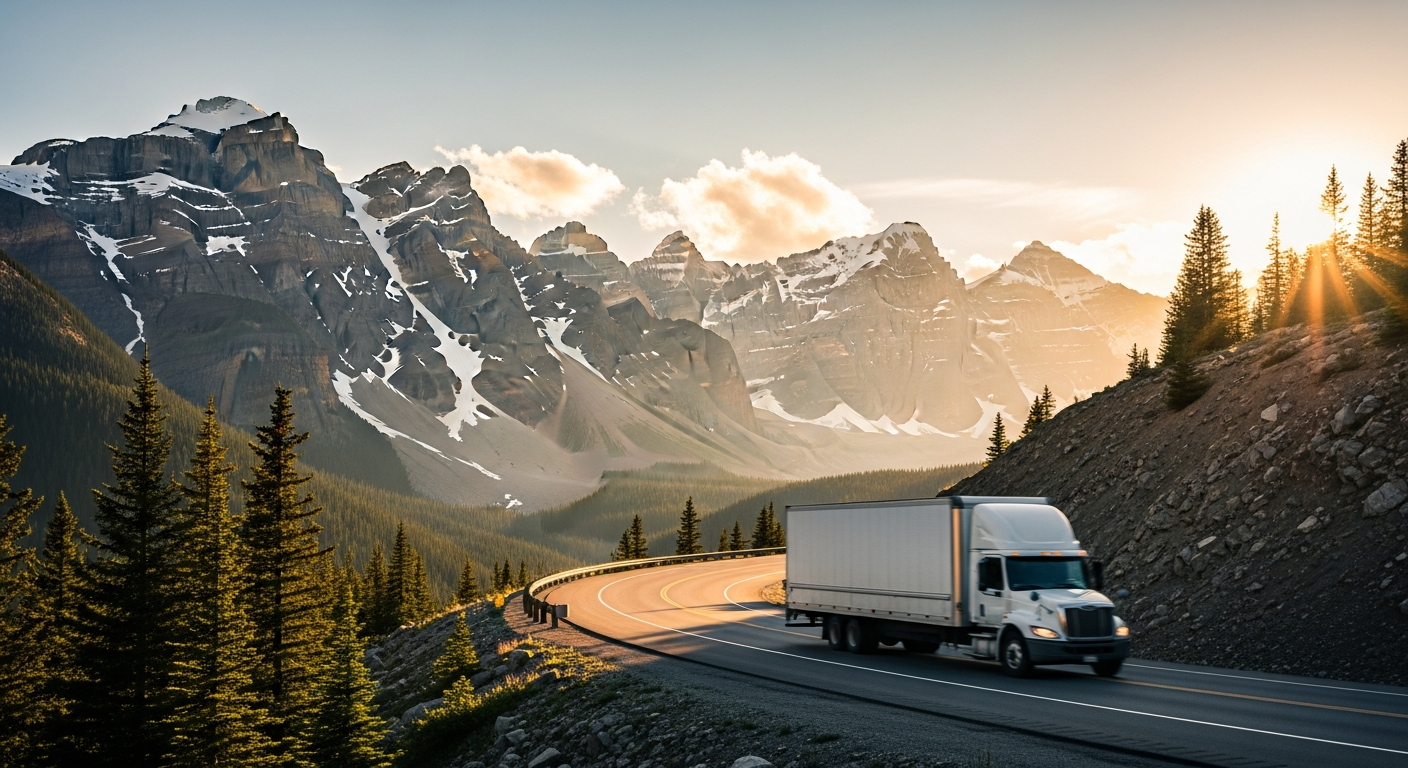
The standard route leaves Montreal westbound on Highway 401 through Ontario, joins the Trans-Canada Highway north of the Great Lakes through Sudbury, Sault Ste. Marie, and Thunder Bay, then crosses the Prairies via Winnipeg, Regina, and Calgary. The final stretch climbs through the Kicking Horse Pass and descends through Kamloops into the Fraser Valley and Metro Vancouver.
For professional drivers under federal hours-of-service rules, pure driving time is approximately 48 to 53 hours. With loading, unloading, fuel, rest, and weather factored in, the realistic door-to-door window is longer. Experienced long distance movers who run this corridor know it combines every Canadian moving challenge: the remote Canadian Shield, the exposed Prairies, and the demanding mountain passes.
At roughly 4,650 km, Montreal-Vancouver is the longest standard intercity move in Canada. The sheer distance makes carrier selection, packing quality, and insurance coverage more important than on any shorter route.
Montreal to Vancouver Moving Costs (2026)
As the longest route, Montreal to Vancouver carries the highest typical price tags. Here are realistic 2026 ranges for full-service door-to-door moves:
- Studio / 1-bedroom: $5,000 – $7,800 CAD
- 2-bedroom apartment: $7,500 – $11,500 CAD
- 3-bedroom home: $11,500 – $17,500 CAD
- 4-bedroom home: $17,000 – $24,500 CAD
- 5+ bedroom / luxury home: $23,000 – $36,000+ CAD
These ranges include professional loading and unloading, basic protection, moving pads, and standard transit. Full packing service adds roughly $700 – $1,900; specialty items add $300 – $1,200; and storage-in-transit adds $150 – $500 per month.
Because this is the most expensive route, understanding the cost drivers pays off. Our guide to long distance moving costs in Canada explains how distance, weight, and season interact. Booking with a transparent cross-country moving company that issues a binding written estimate is the surest way to avoid surprise charges on this long haul.
💡 Pro Tip: On the longest route in the country, decluttering before you pack delivers the biggest savings of any move — every kilogram you eliminate travels 4,650 km.
Transit Times and Delivery Windows
For Montreal to Vancouver, expect transit of 6 to 8 days for a dedicated truck, with longer windows for consolidated loads. Plan around these service tiers:
- Dedicated / express delivery: 6–8 days. Firm dates with your goods alone on the truck.
- Consolidated / standard delivery: 10–18 days. Shared trailer space reduces cost in exchange for a wider window.
- Economy / flexible delivery: 16–26 days. The lowest cost with the widest window.
Given the distance and the mountain passes, the Montreal-Vancouver route has the widest range of any city pairing. Most families choose standard delivery for the balance of cost and certainty. If you have firm dates, the premium for dedicated service is usually worth it. Quality long distance moving services will provide a written delivery window and keep you updated as the truck makes its way across five provinces.
What Makes the Montreal-Vancouver Route Unique
This route packs in every type of Canadian terrain and several logistical wrinkles.
Two big cities at each end
Both Montreal and Vancouver have dense urban cores, narrow streets, and parking restrictions that require permits and careful planning for the moving truck at pickup and delivery.
The full Northern Ontario stretch
Leaving from Montreal means the truck covers the entire Ontario leg, including the remote Lake Superior stretch — the slowest, most weather-sensitive part of the journey.
The mountain finale
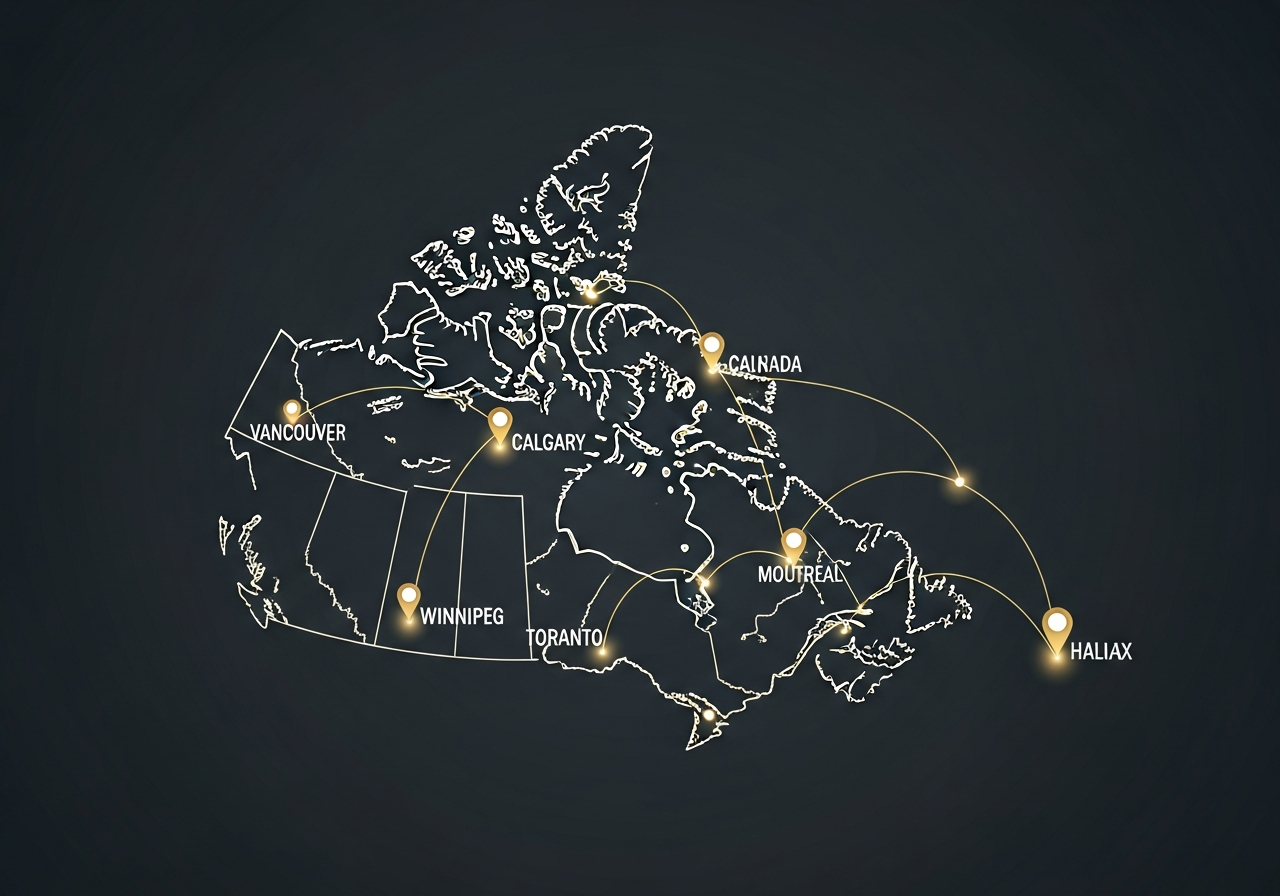
The Kicking Horse Pass and the descent into BC are demanding, with steep grades and winter chain-up requirements. A seasoned cross-Canada movers team monitors conditions and reroutes around closures. For a province-level perspective, see our guide to moving from Quebec to British Columbia. Live BC highway conditions are published by DriveBC.
Best Time of Year to Make the Move
On the longest route in the country, season has an outsized effect on both cost and reliability:
- Summer (June–August): Peak demand and pricing. Book 10–12 weeks ahead. Best road conditions.
- Fall (September–October): Often the best value — moderate pricing and reliable roads before mountain snow arrives.
- Winter (November–March): Lowest pricing, but the highest risk of weather delays in Northern Ontario and the mountain passes. Build in flexibility.
- Spring (April–May): Moderate rates and improving weather, though mountain snow can linger into May.
If you can be flexible, a fall move on this route generally delivers the best mix of price and predictability. Mid-week, mid-month dates give any long distance moving company more room to offer a competitive rate. For winter moves, a generous delivery window protects you from the inevitable mountain-pass and Shield delays.
Choosing the Right Long Distance Mover
For a 4,650 km move, the carrier you choose is the single most important decision. Prioritize:
- Documented experience on the Montreal-Vancouver corridor
- GPS tracking for real-time visibility
- Direct operation rather than subcontracting to anonymous van lines
- Membership in the Canadian Association of Movers
- Full Value Protection insurance options
- Binding, transparent written estimates
- Recent, verifiable cross-country references
On the most expensive route in the country, a lowball quote is especially dangerous — it often masks subcontracting, hidden fees, or outright scams. Benchmark every quote against the figures in our cost guide. A reputable professional long distance movers crew will provide documentation, answer questions, and stand behind a written estimate.
⚠️ Red Flag: Be especially cautious of unusually low quotes on this long route. The bigger the distance, the more a too-good-to-be-true price tends to unravel into hidden charges on delivery day.
Packing and Preparing for a 4,650 km Journey
The longest haul in the country demands the best packing. Your belongings will endure days of vibration across the Shield, the Prairies, and the mountains.
Invest in quality materials
Double-walled boxes, ample paper, and full cushioning are non-negotiable. Fill every void so nothing shifts during the mountain climb and descent.
Protect fragiles and valuables
Use specialty cartons for dishes and electronics, and crate or blanket-wrap artwork and mirrors. Carry irreplaceable documents, jewellery, and heirlooms with you personally.
Pack a robust essentials kit
Because delivery can take a week or more, prepare a suitcase or two with clothing, toiletries, medications, chargers, and kitchen basics to bridge the gap in Vancouver.
Decluttering is the most powerful cost lever on this route — pair your packing plan with the strategies in our cost-control guide. When you are ready to confirm, request a free moving quote to secure your dates and pricing.
Protecting Your Belongings: Insurance and Tracking
Over nearly 4,700 kilometres and several mountain passes, robust protection and reliable tracking are essential.
Coverage options
Basic released-value protection reimburses only a small amount per kilogram, far below replacement cost. Full Value Protection covers actual repair or replacement and is strongly advised for this distance. Compare the mover's policy against standalone transit insurance before deciding.
Shipment tracking
Reputable carriers offer GPS tracking and proactive updates so you can follow your shipment across five provinces. Confirm the tracking method in writing before booking.
Photograph your high-value items before the truck departs to document their condition. Quality long distance movers encourage this because it makes any claim faster and fairer. On the longest route in Canada, the combination of strong coverage and good documentation is your best safeguard.
Key Takeaway: The longer the route, the more valuable Full Value Protection becomes. On Montreal-Vancouver, treat the insurance upgrade as a core part of your budget, not an afterthought.
Crossing Provinces: Language and Logistics
Moving from Quebec to British Columbia means crossing not just distance but administrative and linguistic boundaries. A little preparation smooths the transition.
Documents and paperwork
Some Quebec documents are issued in French. When you settle in BC, you may need certified English translations for certain records, such as driver's abstracts or insurance histories. Gather these before you leave.
Coordinating two urban moves
Both endpoints are major cities with parking and elevator-booking requirements. Reserve elevators in your Montreal and Vancouver buildings well ahead, and arrange any street-parking permits the truck will need.
Updating your address everywhere
Changing provinces triggers a long list of address updates, from banking to subscriptions. Our guide to changing your address when moving provinces provides a complete checklist. A capable interprovincial moving company can help you sequence the logistics so nothing is missed at either end.
Settling In: Admin Tasks in British Columbia
After your belongings arrive, focus on becoming an official BC resident:
- Driver's licence: Exchange your Quebec licence for a BC licence within 90 days, through ICBC.
- Vehicle registration and insurance: Register and insure your vehicle with ICBC, BC's public auto insurer.
- Health coverage: Enrol in the BC Medical Services Plan (MSP) promptly, as a waiting period may apply.
- Mail forwarding: Set up forwarding through Canada Post.
- Tax records: Update your address with the CRA.
For a complete province-change checklist, see our guide to changing your address between provinces. Handling these tasks promptly keeps your coverage continuous. A good nationwide moving company often shares a settling-in checklist to help you stay on track during the first weeks.
Money-Saving Tips for the Montreal-Vancouver Move
On the longest and most expensive route in Canada, smart planning saves the most. Apply these strategies:
- Declutter aggressively. Every kilogram travels 4,650 km — sell, donate, or recycle ruthlessly.
- Choose consolidated transit. Flexible dates and shared trailer space cut costs significantly.
- Move in the shoulder season. Fall and late winter offer the best rates.
- Pack non-fragiles yourself. Reduce labour by boxing books, clothing, and linens on your own.
- Compare binding quotes. Get at least three written estimates from reputable carriers.
- Book early. Lead time secures better pricing and your preferred dates.
A trustworthy cross-country moving company will help you target the levers that save the most for your shipment. On this route, combining a lean inventory with flexible dates and an early booking can save a typical household $1,500 or more.
The Quebec-to-BC migration corridor remains active year over year. For data on interprovincial movement, see Statistics Canada.
Vancouver Neighbourhoods, Commuting, and Cost of Living
Crossing 4,650 km from Montreal to Vancouver is not just the longest move in this guide — it is also one of the biggest lifestyle shifts. You are trading Montreal's affordable rents, dense walkable plateaus, and continental winters for Canada's most expensive housing market, a mild rainy coast, and a city hemmed in by mountains and ocean. Understanding where to live and what it costs before your shipment arrives will save you money and stress in your first year.
Picking the right neighbourhood
Metro Vancouver is really a cluster of distinct municipalities, and your commute depends heavily on which one you choose:
- Downtown / West End / Yaletown: high-rise living, walkable, no car needed — but the priciest rents in the region.
- East Vancouver (Commercial Drive, Mount Pleasant): the closest feel to Montreal's Plateau, with cafés, character housing, and a creative crowd.
- Burnaby and New Westminster: excellent SkyTrain access and somewhat better value, popular with young families.
- Surrey, Coquitlam, and the Tri-Cities: the best space per dollar, with newer family homes but longer commutes.
What it actually costs
Be ready for sticker shock. As of 2026, a one-bedroom in the City of Vancouver typically rents for $2,400 to $2,900 CAD and a two-bedroom for $3,300 to $4,200 CAD — often double what the same unit costs in Montreal. Groceries, dining, and recreation also run higher. The trade-offs are mild winters (rarely below freezing, but grey and wet from November to March), proximity to the ocean and mountains, and a strong job market in tech and film. Build the higher cost of living into your relocation budget, not just the moving bill itself.
Getting around and insuring your vehicle
If you shipped a car west, British Columbia uses a public auto-insurance model through ICBC, so you must register and insure your vehicle through them rather than a private Quebec insurer — typically within 90 days of becoming a resident. Many newcomers find they can go car-free downtown thanks to the SkyTrain, SeaBus, and an extensive bus network; a monthly transit pass costs roughly $100 to $185 CAD depending on zones. For households deciding whether to bring the car at all, our overview of shipping a vehicle west weighs the cost of auto transport against driving.
💡 Pro Tip: Coming from Montreal, you will notice that English is the working language across Metro Vancouver, though the city is highly multicultural. If you are a francophone family, look into French-language and immersion school options early — spots in popular programs fill quickly.
Weather and lifestyle adjustments
The biggest day-to-day change from Montreal is the weather. Vancouver trades crisp continental winters and reliable snow for a long, grey rainy season — the city receives well over 1,400 mm of rain a year, most of it between November and March. You will rarely shovel a driveway, but you will want quality waterproof gear and a dependable umbrella. Summers are gloriously mild and dry, and the proximity to skiing on the North Shore mountains, the ocean, and the Gulf Islands is a major draw. Build a modest rain-gear and dehumidifier line into your first-month budget, especially if you are renting an older garden-level suite where damp can be an issue.
Schools and the job market
If you have children, register with the Vancouver School Board or your local district as soon as you have a confirmed address, since placement follows catchment boundaries and French immersion spots are competitive. Francophone families can also access the province-wide Conseil scolaire francophone de la Colombie-Britannique. On the employment side, Metro Vancouver's economy leans heavily on technology, film and television production, international trade through the Port of Vancouver, tourism, and clean energy — a different mix than Montreal's aerospace, AI, and bilingual head-office base, so research your sector before committing to a move date.
- Confirm housing and register children for school by catchment before arrival.
- Register for BC's Medical Services Plan (MSP) and find a family doctor or clinic.
- Transfer your driver's licence and insure your vehicle through ICBC within 90 days.
- Set up BC Hydro, internet, and tenant or home content insurance for your new place.
Timing, storage, and your first weeks
On the longest route in this guide, your shipment can take 6 to 8 days by dedicated truck and considerably longer by consolidated service, so plan for a gap between leaving Montreal and your belongings arriving in Vancouver. Many movers book a few weeks of storage-in-transit (roughly $150 to $400 CAD per month) while they finalize housing, since Vancouver's tight rental market sometimes means your move-in date does not line up neatly with delivery. Aim for a late-spring through early-fall arrival when mountain-pass weather is most reliable and rentals turn over most often.
Give yourself a realistic adjustment runway. Beyond the cost shock, you will navigate a new transit system, a rainier climate, and a different pace than Montreal. Set up your essential accounts in the first week, then explore neighbourhoods on foot before locking into a long lease or purchase.
💡 Pro Tip: Pack a clearly labelled essentials box — bedding, toiletries, medications, chargers, and a kettle — and keep it with you rather than on the truck. On a 4,650 km move you may arrive well ahead of your shipment, and these basics make the first nights comfortable.
Key Takeaway: Vancouver rewards newcomers with mild weather and stunning scenery but charges Canada's highest housing costs. Match your neighbourhood to your commute, budget for rents roughly double Montreal's, register your vehicle with ICBC within 90 days, and consider going car-free along the SkyTrain.
Frequently Asked Questions
How long does a Montreal to Vancouver move take?
A dedicated truck typically takes 6 to 8 days door to door. Consolidated shipments run 10 to 18 days, and economy service can take 16 to 26 days, depending on weather and the tier you choose.
How much does it cost to move from Montreal to Vancouver?
In 2026, expect roughly $5,000 to $7,800 for a 1-bedroom, $7,500 to $11,500 for a 2-bedroom, and $11,500 to $17,500 for a 3-bedroom home. As the longest route, it carries the highest typical costs.
Why is Montreal to Vancouver more expensive than Toronto to Vancouver?
The Montreal route is roughly 250 km longer because it includes the full Quebec and Ontario legs. More distance means more fuel, driver hours, and transit time, which raises the price.
When is the best time to move to Vancouver from Montreal?
The fall shoulder season usually offers the best balance of moderate pricing and reliable road conditions before mountain snow arrives. Winter is cheapest but carries the highest risk of weather delays.
Do I need to translate my Quebec documents?
Some BC processes may require certified English translations of French-language documents such as driver's abstracts or insurance histories. Gather and translate these before you leave Quebec.
How far in advance should I book this move?
Book 10 to 12 weeks ahead for summer and at least 6 weeks for off-season moves, since this long route fills up quickly during peak season.
Will my belongings be tracked across the country?
Reputable long-haul carriers provide GPS tracking and regular updates so you can follow your shipment across all five provinces. Always confirm the tracking method in writing before booking.