The Toronto to Vancouver Route: Distance and Highways
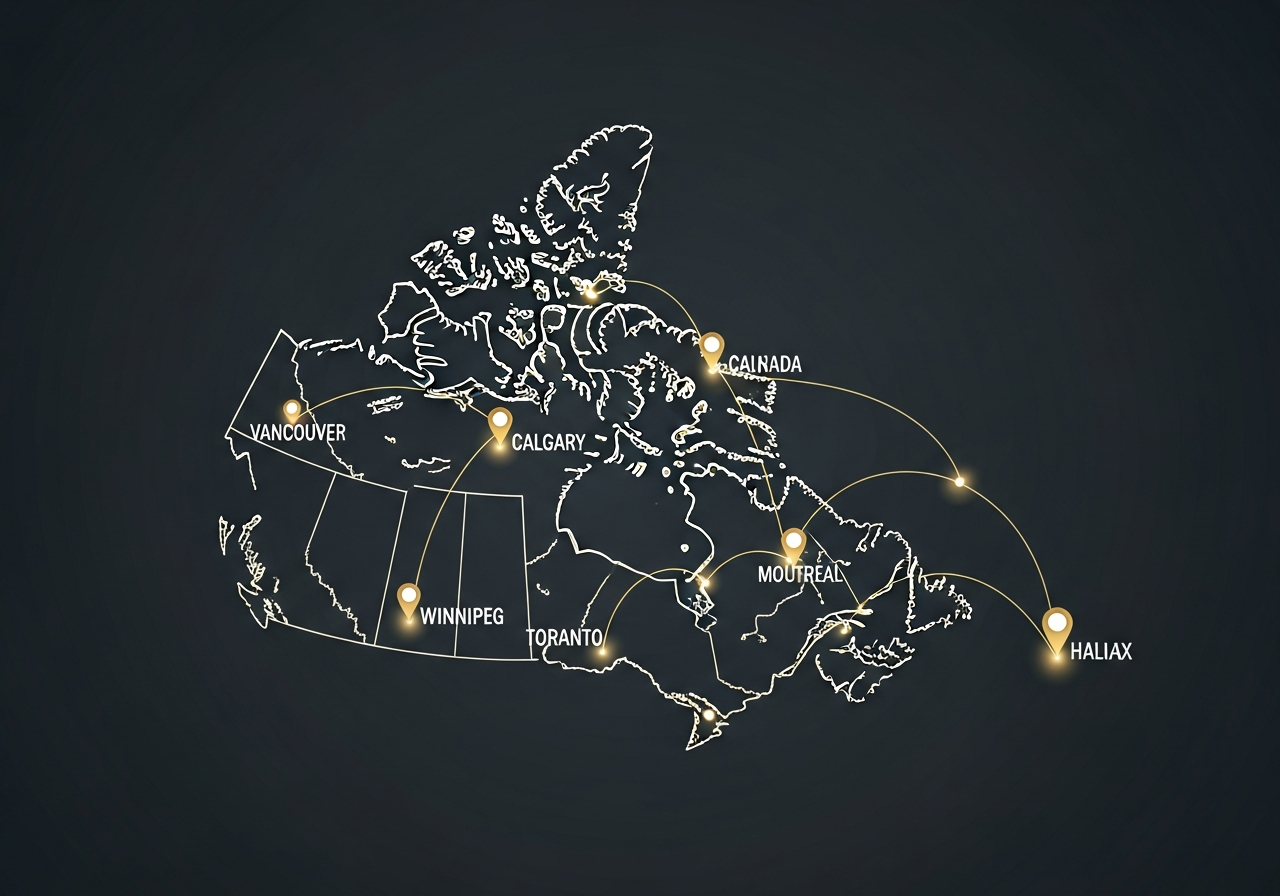
The Toronto to Vancouver move is one of the most iconic long-distance relocations in Canada — roughly 4,400 kilometres coast to coast, crossing four provinces and three distinct geographic regions. It is a journey that takes you from the dense urban core of Ontario, across the rugged shield of Northern Ontario, through the wide open Prairies, and finally over the Rocky Mountains into the Pacific coast.

The standard trucking route follows the Trans-Canada Highway (Highway 17) out of the Greater Toronto Area, north along Georgian Bay through Sudbury and Sault Ste. Marie, then across the top of Lake Superior through Thunder Bay. From there the route continues through Winnipeg, Regina, and Calgary before climbing through the Kicking Horse Pass and descending into the BC interior toward Kamloops and the Fraser Valley into Metro Vancouver.
For professional drivers operating under federal hours-of-service rules (a maximum of 13 hours of driving per day with mandatory rest), the pure driving time is approximately 45 to 50 hours. Layer in loading, unloading, fuel stops, weather, and rest periods and you arrive at a realistic door-to-door window. Experienced long distance movers who run this corridor regularly know exactly where the chokepoints are — the mountain passes, the seasonal weather closures, and the long unserviced stretches of Northern Ontario.
The Toronto-Vancouver corridor is the longest commonly-booked single move in Canada. Because of the distance, even small differences in pricing per kilometre or per pound translate into hundreds of dollars on your final invoice — making the choice of carrier especially important.
Toronto to Vancouver Moving Costs (2026)
Cost is almost always the first question, and for a 4,400 km move the numbers are significant. Here are realistic 2026 ranges for a full-service door-to-door move from the GTA to Metro Vancouver:
- Studio / 1-bedroom: $4,800 – $7,500 CAD
- 2-bedroom apartment: $7,200 – $11,000 CAD
- 3-bedroom home: $11,000 – $16,500 CAD
- 4-bedroom home: $16,000 – $23,000 CAD
- 5+ bedroom / luxury home: $22,000 – $34,000+ CAD
These ranges typically include professional loading and unloading, basic released-value protection, blankets and moving pads, and standard transit. Optional add-ons can change the picture considerably: full packing service adds roughly $600 – $1,800; specialty items like pianos or oversized safes add $300 – $1,200; and storage-in-transit can add $150 – $500 per month.
For a deeper breakdown of what drives these numbers across the country, our guide to long distance moving costs in Canada explains how weight, volume, distance, and season interact. Working with a transparent cross-country moving company that quotes binding estimates rather than vague ranges protects you from surprise charges on delivery day.
💡 Pro Tip: Always request an in-home or video survey for a Toronto-Vancouver move. A phone estimate based on a rough item count is the single biggest source of pricing disputes on long cross-country hauls.
Transit Times and Delivery Windows
For the Toronto to Vancouver route, expect a transit time of 5 to 7 days for a dedicated truck, and longer for consolidated shipments. Understanding the difference between service tiers is essential to budgeting and planning:
- Dedicated / express delivery: 5–7 days. Your goods are the only shipment on the truck, giving you firm pickup and delivery dates. This is the premium option.
- Consolidated / standard delivery: 9–16 days. Your shipment shares trailer space with others heading the same direction, lowering cost in exchange for a wider delivery window.
- Economy / flexible delivery: 14–24 days. The lowest-cost option with the widest window — best for those who can live out of suitcases at the destination for a while.
Most families moving to Vancouver choose standard delivery as the best balance of cost and certainty. If you have firm dates tied to a lease handover, a closing date, or a school start, the premium for dedicated service is usually worth it. Reputable long distance moving services will give you a delivery window in writing and update you as the truck progresses across the country.
What Makes the Toronto-Vancouver Route Unique
No two cross-country routes are alike, and the Toronto-Vancouver corridor has its own distinct challenges that shape both cost and timing.
Northern Ontario's remote stretches
The leg between Sault Ste. Marie and Thunder Bay is one of the most isolated highway sections in the country. Services are sparse, cell coverage is patchy, and winter closures are common. Experienced drivers plan fuel and rest around this stretch carefully.
The Prairies: fast but exposed
Across Manitoba, Saskatchewan, and Alberta the highway is flat and fast, but it is exposed to high winds, summer thunderstorms, and sudden blizzards. This is where consolidated trucks make up time.
The Rocky Mountain passes
The final climb through the Kicking Horse Pass and the descent into the BC interior is the most demanding portion. Steep grades, chain-up requirements in winter, and avalanche control closures all affect timing. A seasoned cross-Canada movers team that knows these passes will route around closures rather than getting stuck. For more on this transition between provinces, see our guide to moving from Ontario to British Columbia.
Best Time of Year to Make the Move
Timing your Toronto-Vancouver move affects both price and stress level. Each season carries trade-offs:
- Summer (June–August): The most popular and most expensive window. Demand peaks, so book 8–12 weeks ahead. Weather is favourable across all four provinces.
- Fall (September–October): Often the sweet spot — milder pricing, good road conditions, and shorter lead times.
- Winter (November–March): The cheapest pricing, but the mountain passes and Northern Ontario can cause weather delays. Build flexibility into your delivery window.
- Spring (April–May): Moderate pricing with improving weather, though mountain snow can linger into May.
For real-time mountain pass conditions on the BC side, drivers and shippers can consult DriveBC, which publishes live highway and weather advisories. If you are flexible on dates, a mid-week, mid-month move in the shoulder seasons usually delivers the best value from any long distance moving company.
Choosing the Right Long Distance Mover
For a move this long, the carrier you choose matters more than for any local move. Look for these markers of a quality long-haul operator:
- Documented experience on the Toronto-Vancouver corridor specifically
- GPS tracking so you can follow your shipment in real time
- Direct operation rather than subcontracting to anonymous van lines
- Membership in the Canadian Association of Movers
- Full Value Protection insurance options, not just minimum liability
- Transparent, binding written estimates
- Verifiable recent references from cross-country customers
Be wary of any quote that seems dramatically lower than the rest — it is often a sign of hidden charges, subcontracting, or a deposit scam. Our guide to national moving costs can help you benchmark whether a quote is realistic. A reputable professional long distance movers crew will welcome your questions and provide documentation without hesitation.
⚠️ Red Flag: Never pay a large cash deposit to hold a moving date. Legitimate carriers bill on completion or charge a small, refundable booking fee — never thousands up front.
Packing and Preparing for a 4,400 km Journey
A cross-country haul subjects your belongings to far more vibration and handling than a local move. Packing for the Toronto-Vancouver route means packing for the long road.
Use proper materials
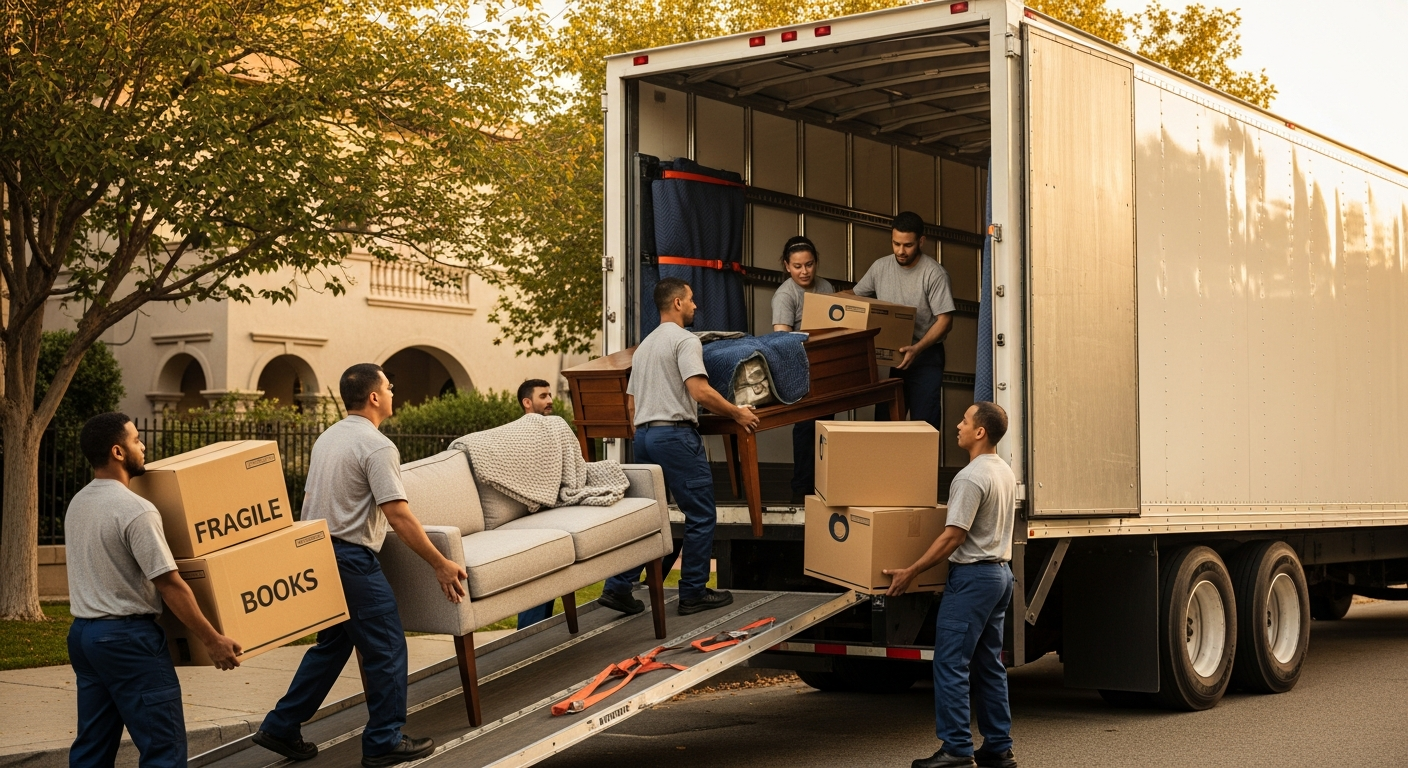
Double-walled boxes, ample packing paper, and plenty of cushioning are essential. Items shift during the climb and descent through the Rockies, so fill every void in every box.
Protect fragile and high-value items
Dishes, electronics, artwork, and mirrors need extra padding and ideally specialty cartons. Consider transporting irreplaceable valuables and documents with you personally rather than on the truck.
Create an essentials kit
Because delivery can take a week or more, pack a separate suitcase or box with clothing, toiletries, medications, chargers, and a few kitchen basics to get you through the first days in Vancouver.
Decluttering before you pack is the single biggest cost-saver on a long move — every kilogram travels 4,400 km. Many families pair their packing plan with the strategies in our cost-control guide. When you are ready to commit, you can request a free moving quote to lock in your dates and pricing.
Protecting Your Belongings: Insurance and Tracking
Over 4,400 kilometres, the odds of incidental damage rise simply because of the distance and handling involved. Understanding your protection options is critical.
Released value vs. full value protection
Basic released-value coverage is usually included but reimburses only a small amount per kilogram — far below replacement cost. Full Value Protection costs more but covers the actual repair or replacement value of damaged items. For a long haul, the upgrade is almost always worth it.
Third-party transit insurance
You can also buy standalone transit insurance, which sometimes offers broader coverage at competitive rates. Compare the mover's policy against an independent policy before deciding.
Equally important is shipment visibility. Modern long distance movers provide GPS tracking and proactive status updates, so you are never wondering where your belongings are between Toronto and the coast. Confirm the tracking method in writing before booking, and document the condition of valuable items with photographs before the truck departs.
Key Takeaway: On a coast-to-coast move, Full Value Protection plus photo documentation of your high-value items gives you the strongest position if you ever need to file a claim.
Shipping Your Vehicle to Vancouver
Many people moving to Vancouver choose to ship at least one vehicle rather than drive the entire 4,400 km. Driving solo across the country adds fuel, hotels, meals, and several days of wear — and it puts thousands of kilometres on your car in one trip.
Vehicle shipping options on this route include open transport (the most economical) and enclosed transport (best for luxury or classic vehicles). Expect 2026 costs in the range of $1,400 – $2,600 to move a standard car or SUV from Toronto to Vancouver, depending on transport type and timing.
If you are coordinating both household goods and a vehicle, many nationwide moving company providers can bundle the two for a smoother experience. Our detailed guide to shipping a car across Canada walks through the entire process, from inspection to insurance.
Remember that British Columbia has its own auto insurance system through ICBC, so you will need to register and insure your vehicle there within the required timeframe after arrival.
Settling In: Admin Tasks in British Columbia
Arriving in Vancouver is only half the journey — the administrative side of moving provinces requires attention in the first weeks.
- Driver's licence: Exchange your Ontario licence for a BC licence within 90 days of becoming a resident, handled through ICBC.
- Vehicle registration and insurance: Register and insure your vehicle through ICBC.
- Health coverage: Enrol in the BC Medical Services Plan (MSP). There may be a waiting period, so apply promptly.
- Mail forwarding: Set up forwarding through Canada Post so nothing falls through the cracks.
- Tax records: Update your address with the CRA.
For a complete province-change checklist that covers licences, health cards, and more, see our guide to moving from Ontario to BC. Staying organized in the first month prevents lapses in coverage and missed deadlines.
Money-Saving Tips for the Toronto-Vancouver Move
Because of the distance, the Toronto-Vancouver route rewards smart planning more than almost any other Canadian move. Use these strategies to bring your costs down:
- Declutter aggressively. Sell, donate, or recycle anything you do not truly need. Every kilogram travels 4,400 km.
- Choose consolidated transit. If your dates are flexible, sharing trailer space can cut your bill substantially.
- Move in the shoulder season. Fall and late winter offer the best rates.
- Pack what you can yourself. Doing your own non-fragile packing reduces labour charges.
- Get multiple binding quotes. Compare at least three written estimates from reputable carriers.
- Book early. Lead time gives you access to better rates and avoids last-minute premiums.
A reputable interprovincial moving company will happily walk you through which of these levers will save you the most for your specific shipment. Combining a lean inventory with flexible dates and an early booking can save a typical family well over $1,000 on this route.
Statistics Canada tracks interprovincial migration trends, and the Ontario-to-BC corridor remains one of the busiest in the country. For data on these patterns, see Statistics Canada.
Coordinating Delivery Day in Metro Vancouver
After a 4,400 km haul, delivery day is where a smooth move can still go sideways if you have not planned the final approach into Metro Vancouver. The region's older neighbourhoods, dense condo towers, and strict strata rules create logistical hurdles that simply do not exist in suburban Ontario. Sorting these details out before your truck arrives is the difference between a two-hour unload and an all-day ordeal that racks up waiting-time charges.
Booking elevators and loading docks
If you are moving into a condo, apartment, or co-op anywhere from Yaletown to Burnaby's Metrotown, you will almost certainly need to reserve the service elevator and a loading bay in advance. Most strata corporations require 1 to 2 weeks notice, charge a refundable damage deposit of $200 to $500 CAD, and limit move-in hours to weekdays between 9 a.m. and 4 p.m. Booking a same-day arrival without an elevator reservation can mean your crew is forced to use stairs or wait — and on a long-distance move where the truck is on a tight cross-country schedule, that pressure is the last thing you want.
Parking, narrow streets, and the shuttle problem
Many Vancouver streets — especially on the West Side, in Kitsilano, and across the older East Van grid — are too narrow for a 53-foot tractor-trailer. When that happens, your mover performs a shuttle transfer, moving your goods from the big rig into a smaller truck for the final leg. Shuttle fees typically run $350 to $750 CAD depending on volume and distance, so ask your carrier during the survey whether your destination address can accommodate a full-size trailer. You may also need a temporary street-occupancy or curb-lane permit from the City of Vancouver; these are inexpensive but can take a few business days to issue.
⚠️ Check road conditions first: The final descent into the Lower Mainland through the Coquihalla and Fraser Canyon can close suddenly in winter. On delivery morning, confirm the route is open via DriveBC before assuming your crew will arrive on schedule.
Be ready for the crew
Have your inventory list printed, your payment method confirmed, and a clear plan for where each box and piece of furniture should go. Reserve a parking spot for yourself nearby so you are not circling the block when the truck pulls up. If you are arriving by air ahead of your shipment, our guide to planning a western relocation covers timing your own travel against your delivery window. A little coordination on the receiving end protects all the careful planning you did at the Toronto origin.
Watch for waiting-time and long-carry fees
Long-distance carriers build a set number of unloading hours into your quote; exceed them and waiting-time charges of roughly $90 to $150 CAD per hour can apply. A long carry — when the truck cannot park within about 23 metres (75 feet) of your entrance — and stair carries above a set floor count frequently trigger extra fees as well. In hilly, parking-starved pockets of Vancouver these add-ons are common, so clarify the exact thresholds and per-unit rates in writing before delivery day rather than discovering them on the final invoice.
- Confirm your elevator and loading-bay reservation 48 hours before the truck arrives.
- Have a card or cash ready for the strata move-in deposit and any curb-lane permit fees.
- Post room labels at each doorway so the crew places boxes correctly on the first pass.
- Inspect high-value items against your inventory list before signing the delivery receipt — note any damage immediately.
Key Takeaway: Reserve your building's elevator and loading bay 1-2 weeks out, confirm whether the street can take a full trailer (to avoid surprise shuttle fees), secure any curb permit, and check DriveBC the morning of delivery. These four steps keep your Vancouver unload fast and your final invoice predictable.
Frequently Asked Questions
How long does a Toronto to Vancouver move take?
A dedicated truck typically takes 5 to 7 days door to door. Consolidated shipments take 9 to 16 days, and economy service can run 14 to 24 days, depending on weather and the delivery tier you choose.
How much does it cost to move from Toronto to Vancouver?
In 2026, expect roughly $4,800 to $7,500 for a 1-bedroom, $7,200 to $11,000 for a 2-bedroom, and $11,000 to $16,500 for a 3-bedroom home. Larger homes and added services like full packing increase the total.
Should I drive or ship my car to Vancouver?
For a 4,400 km trip, shipping often makes more sense than driving when you factor in fuel, hotels, meals, time off work, and vehicle wear. Auto transport typically runs $1,400 to $2,600 on this route.
When is the cheapest time to move to Vancouver?
Late fall and winter generally offer the lowest rates, though winter brings the risk of weather delays in Northern Ontario and the mountain passes. The fall shoulder season balances good pricing with reliable road conditions.
How far in advance should I book?
Book 8 to 12 weeks ahead for summer moves and at least 4 to 6 weeks for off-season moves. Early booking secures better rates and your preferred dates.
Will my belongings be tracked during transit?
Reputable long-haul carriers offer GPS tracking and proactive updates so you can follow your shipment across the country. Always confirm the tracking method in writing before you book.
Do I need extra insurance for a cross-country move?
Basic released-value coverage reimburses only a small amount per kilogram. For a move this long, upgrading to Full Value Protection or buying standalone transit insurance is strongly recommended.