Moving From Ontario to BC: Overview

Relocating from Ontario to British Columbia is one of the most ambitious — and rewarding — moves a Canadian household can make. You are crossing more than half the width of the country, trading the Great Lakes, dense urban corridors, and Ottawa's federal landscape for the Pacific coast, the Coast Mountains, and a milder west-coast climate. Tens of thousands of Ontarians make this move every year for tech and film careers in Metro Vancouver, retirement to the Okanagan, university in Victoria or Kelowna, and the simple pull of mountains and ocean.
Because this is a true long-haul interprovincial relocation, it rewards careful planning. The difference between a smooth, predictable arrival in Vancouver and a stressful, over-budget scramble usually comes down to how early you book, how honestly you estimate your shipment weight, and whether you hire experienced cross-country moving company crews who run this corridor every week.
This guide breaks down the entire journey: the kilometres and transit days, real 2026 cost ranges in Canadian dollars by home size, what is genuinely different about this particular route, and the long list of administrative tasks waiting for you in British Columbia. For broader pricing context across the country, our companion guide on long distance moving costs in Canada is worth reading alongside this one.
Distance, Route & Transit Time
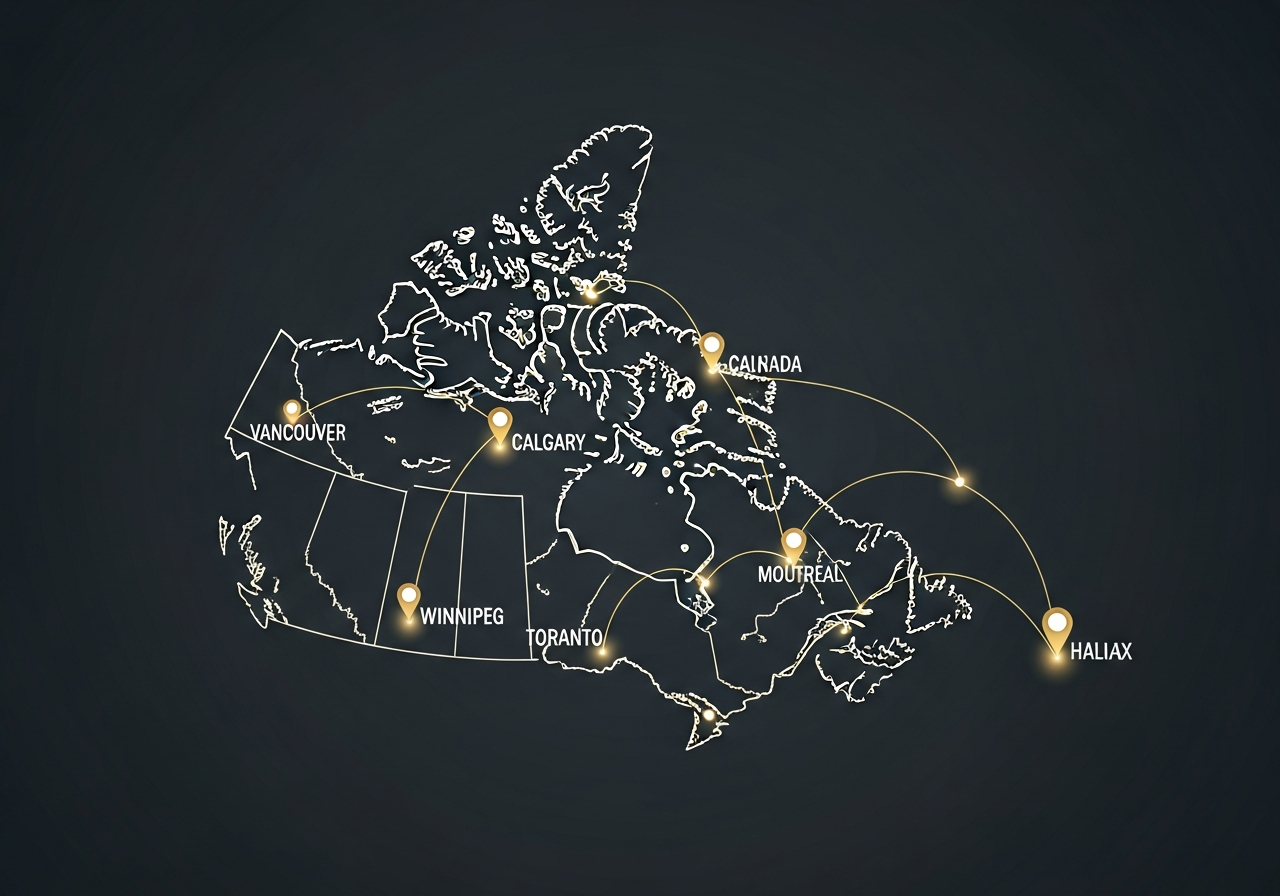
The driving distance from southern Ontario to the BC Lower Mainland is roughly 4,300 to 4,500 kilometres, depending on your exact origin and destination. A Toronto-to-Vancouver run is approximately 4,400 km; from Ottawa you add a few hundred kilometres on the eastern end. Most professional crews follow the Trans-Canada Highway and Highway 17 west across northern Ontario, then south through the Prairies before climbing into the BC Interior and descending toward the coast.
Typical transit time
Plan for a 5 to 7 day delivery window on a dedicated truck, and longer — 8 to 14 days — if your goods travel on a consolidated load that shares space with other shipments. Federal hours-of-service rules limit how long a driver can be behind the wheel each day, so even a "fast" cross-country move cannot legally be compressed into two or three days.
The terrain that shapes your schedule
- Northern Ontario: Long, sparsely serviced stretches between Sault Ste. Marie and Thunder Bay.
- The Prairies: Fast, flat, predictable driving across Manitoba, Saskatchewan, and Alberta.
- The Rockies and Coast Mountains: Mountain passes such as Kicking Horse and the Coquihalla add time and demand caution in poor weather.
Reputable professional long distance movers provide GPS tracking and a realistic delivery window rather than a single guaranteed day, which is the honest way to schedule a 4,400 km haul. If you want a city-specific deep dive on this corridor, see our detailed guide to Toronto to Vancouver movers.
Cost Breakdown by Home Size
Ontario-to-BC pricing is driven primarily by the weight and volume of your shipment and the distance travelled. The figures below reflect realistic 2026 ranges in Canadian dollars for a full-service move. Final quotes vary with season, access at both ends, and specialty handling.
Studio / 1-bedroom apartment
Typical cost: $3,200 - $5,500 CAD. Small loads often travel on consolidated shipments, which lowers the price but widens the delivery window.
2-bedroom home or condo
Typical cost: $5,000 - $8,500 CAD. A common size for couples and young families relocating for work.
3-bedroom home
Typical cost: $7,500 - $13,000 CAD. Usually requires dedicated truck space and a two-to-three person crew.
4-bedroom home
Typical cost: $11,000 - $18,000 CAD. Larger volume, often with specialty items adding to the base.
5+ bedroom or luxury home
Typical cost: $16,000 - $30,000+ CAD. Premium service with custom crating, white-glove handling, and climate-sensitive transport.
Because pricing hinges so heavily on weight, decluttering before you move is the single most effective way to cut your bill. Always insist on a written, binding or not-to-exceed estimate from any long distance moving company you are considering, and compare at least three quotes.
To understand how carriers actually calculate these numbers, read our breakdown of what long distance moving really costs in Canada.
What Makes the Ontario to BC Route Special
This is not a flat highway run. The Ontario-to-BC corridor packs in nearly every terrain type Canada has to offer, and that variety has direct consequences for cost, timing, and risk.
Mountain passes demand experience
The final 800 kilometres into the Lower Mainland include serious mountain driving. The Coquihalla (Highway 5) and Trans-Canada through Rogers Pass are spectacular but unforgiving in winter. Chains, brake management, and weather-aware scheduling are essential — another reason to favour a carrier that runs this route regularly.
Time zone and distance logistics
You will cross multiple time zones, ending three hours behind Ontario in Pacific Time. This affects everything from coordinating with your delivery crew to scheduling utility hook-ups. Build a buffer into your arrival plans.
Climate and lifestyle shift
The Lower Mainland's mild, rainy climate means less snow gear but a real need for moisture-resistant storage. Coastal humidity can affect wooden furniture and electronics during a multi-day transit, so quality wrapping matters more than on a short move.
💡 Pro Tip: If your belongings will sit in transit through a mountain stretch during shoulder season, ask your mover how they protect against temperature swings and condensation inside the trailer.
Statistics Canada's interprovincial migration data consistently shows strong movement from Ontario to BC, which means established cross-Canada movers run this lane often and can offer competitive consolidated rates.
Best Time of Year to Make the Move
Timing your Ontario-to-BC move well can save you money and spare you serious weather risk on the mountain passes.
Late spring and early fall: the sweet spot
May, June, September, and October typically offer the best balance of dry mountain driving and slightly softer pricing than the July-August peak. Mountain weather is stable and daylight hours are long.
Summer: peak demand
July and August are the busiest and most expensive months nationwide, often adding 20 to 30 percent to your quote. Book 10 to 12 weeks ahead if you must move then.
Winter: cheapest but riskiest
December through February delivers the lowest base rates but the highest weather risk. Rogers Pass and the Coquihalla regularly close for avalanche control and snow. Before any winter move, check DriveBC for live pass conditions and 511 Alberta for the Prairie-to-Rockies stretch.
⚠️ Winter Caution: A storm that closes a single mountain pass can add days to your delivery window. If your schedule is tight, avoid mid-winter or build in generous flexibility.
Our seasonal companion piece on changing your address when moving provinces pairs well with this timing planning so your paperwork lands at the right moment.
Packing & Preparation for a 4,000+ km Haul
A long mountain transit puts more stress on your belongings than a short city move. Vibration, temperature shifts, and multiple handling points mean packing standards have to be higher.
Pack for the journey, not just the move
- Double-box fragiles and use ample cushioning; items will be jostled over thousands of kilometres.
- Disassemble large furniture and keep hardware in labelled bags taped to the piece.
- Use uniform, sturdy boxes so the crew can stack a stable, shift-resistant load.
- Protect wood and electronics from coastal humidity with moisture-absorbing packs.
Build an essentials kit
Because delivery can take a week or more, pack a clearly labelled box (and a suitcase) with everything you will need for the first several days at the coast: medications, documents, chargers, a few kitchen basics, and weather-appropriate clothing.
Key Takeaway: On a route this long, the quality of your packing directly determines whether your goods arrive intact. When in doubt, let the pros pack the fragile and high-value items.
For a room-by-room system, follow our detailed guide to long distance moving in Canada and consider professional packing services for anything irreplaceable. Many households book full packing through their long-distance moving provider precisely because of the mountain transit.
Storage-in-Transit & Delivery Windows
Coordinating possession dates across 4,400 kilometres rarely lines up perfectly. That is where storage-in-transit (SIT) becomes invaluable.
When you will need it
If your Ontario home closes before your BC home is ready, your mover can hold your goods in a secure, climate-controlled warehouse and deliver when you take possession. This is extremely common on cross-country moves where closing dates seldom align.
How delivery windows work
Rather than a single guaranteed date, long-haul carriers quote a delivery window — typically a spread of several days. This reflects the legal driving limits and weather variables across the route. A trustworthy mover gives you a realistic window and keeps you updated as the truck progresses.
Always confirm SIT pricing, free-day allowances, and access rules in writing before you sign. Surprise storage charges are a common hidden cost on cross-country moves.
Read our deep dive on long distance moving cost factors to see how SIT fits into a total budget, and check the Canadian Association of Movers directory to confirm any carrier's standing before handing over your possessions.
Settling In: BC Admin Tasks & Address Changes
Arriving in British Columbia triggers a checklist of time-sensitive administrative tasks. Knock these out in your first few weeks to avoid gaps in coverage and documentation.
Health coverage
Enrol in BC's Medical Services Plan (MSP) as soon as you arrive. New residents generally face a wait period of the balance of the month of arrival plus two months before coverage begins, so keep your Ontario OHIP active during the transition and consider interim private coverage.
Driver's licence and vehicle insurance
BC requires you to exchange your Ontario licence and register your vehicle within 90 days of becoming a resident. Vehicle insurance is handled through ICBC, the provincial public insurer — budget for new rates and bring proof of your Ontario claims history.
Mail, taxes, and address updates
- Set up Canada Post mail forwarding before you leave Ontario.
- Update your address with the CRA to keep benefits flowing.
- Transfer utilities, banking, and subscriptions to your new BC address.
Our complete guide to changing your address when moving provinces walks through every notification in order so nothing slips through the cracks.
Shipping Your Vehicle & Moving Pets

Should you drive or ship your car?
You have three realistic options for getting your vehicle to BC: drive it yourself, hire an auto-transport carrier, or have your mover arrange shipping. Driving the full route is a memorable road trip but adds fuel, hotels, meals, and wear over 4,400 km. Enclosed or open auto transport typically runs $1,500 - $2,800 CAD for an Ontario-to-BC vehicle, depending on size and season.
Moving with pets
A multi-day journey across mountains is demanding for animals. If you are driving, plan pet-friendly stops and never leave pets in a hot or freezing vehicle. If flying, book direct where possible and confirm airline crate rules in advance. Update your pet's microchip registration and tags with your new BC address.
💡 Pro Tip: Whatever you decide, never let pets travel inside the moving truck — it is unsafe and not permitted. Keep them with the family or use a dedicated pet-transport service.
For full details on vehicle logistics, regulations, and pricing, see our dedicated guide and verify any cross-border equipment standards with Transport Canada.
How to Choose the Right Long Distance Mover
The carrier you pick matters more on a 4,400 km mountain route than on almost any other move in Canada. Here is how to separate professionals from risky operators.
Non-negotiable credentials
- Proper licensing and insurance for interprovincial transport.
- A verifiable track record on the Ontario-to-BC corridor specifically.
- Membership with the Canadian Association of Movers and a clean record with the Better Business Bureau.
- Written estimates — binding or not-to-exceed — never a vague phone quote.
Red flags to avoid
Be wary of large upfront cash deposits, quotes that come in far below everyone else, no physical address, and refusal to provide written terms. These are classic warning signs across the moving industry.
⚠️ Scam Watch: A lowball estimate that balloons on delivery day is the most common cross-country moving scam. Insist on a binding or not-to-exceed estimate in writing.
An established interprovincial moving company will welcome these questions and answer them clearly. The right mover turns a daunting cross-country haul into a coordinated, trackable, on-schedule relocation — and that peace of mind is worth every dollar. When you are ready, request a free moving quote and compare it carefully against the rest.
Smart Ways to Reduce Your Moving Budget
An Ontario-to-BC move is a major expense, but several proven strategies can meaningfully lower the total without compromising safety.
Cut weight aggressively
Since pricing follows weight and volume, every box you do not ship saves money. Sell, donate, or recycle anything you would not pay to haul across a mountain range. Heavy, low-value items — old furniture, bulk pantry goods, worn-out appliances — are rarely worth the transport cost.
Move in the off-season
Shifting your date from July to late September or October can save 15 to 25 percent. Mid-month and mid-week dates are cheaper than month-end weekends.
Consider consolidated shipping
If your load is small and your timeline flexible, sharing truck space with other Ontario-to-BC shipments is the most economical option.
Key Takeaway: The three biggest levers are weight, timing, and service level. Optimize all three and a five-figure move can shrink substantially.
For a full menu of savings tactics, read our guide to long distance moving costs in Canada, then get written quotes from at least three carriers before committing.
Settling Into British Columbia: Licences, Health Care, and Insurance
Arriving in B.C. starts a clock on several mandatory changes that catch many Ontario transplants off guard. Tackling them in the right order in your first weeks avoids fines, coverage gaps, and a scramble later.
Driver's licence and vehicle
New residents must switch to a B.C. driver's licence within 90 days of moving. You surrender your Ontario licence and, because both provinces are in good standing, you generally transfer without a road test. Vehicle registration and insurance are handled together through B.C.'s public auto insurer — review your coverage options and transfer process with ICBC before you drive on B.C. plates, as private supplemental policies work differently than they do in Ontario.
Health care enrolment
B.C.'s Medical Services Plan (MSP) has a waiting period: coverage typically begins on the first day of the third month after you establish residency. That means up to roughly two to three months where you should keep private interim health insurance to avoid being uninsured. Apply for MSP as soon as you arrive rather than waiting until the gap closes.
Cost-of-living realities
- Housing in Metro Vancouver and Victoria is among the highest in Canada — budget well above comparable Ontario markets outside Toronto for both rent and purchase.
- No provincial health premium for most, but factor MSP rules, higher fuel costs, and B.C.'s carbon tax into your monthly planning.
- Climate adjustment: the coast trades Ontario's cold, snowy winters for mild, wet ones — different gear, different home-maintenance priorities.
Handle the licence swap and MSP application in your first two weeks, and keep interim health coverage until MSP activates. Front-loading this paperwork is the single best way to make a 4,400 km move feel settled quickly.
Frequently Asked Questions
How much does it cost to move from Ontario to BC?
A full-service Ontario-to-BC move typically costs $3,200-$5,500 for a one-bedroom, $7,500-$13,000 for a three-bedroom home, and $16,000-$30,000+ for a large or luxury home. Weight, season, and specialty handling drive the final figure, so always get at least three written quotes.
How long does the move take?
Plan for a 5-7 day delivery window on a dedicated truck across the roughly 4,400 km route. Consolidated shipments that share truck space can take 8-14 days. Federal driving-hour limits and mountain weather mean a single guaranteed day is not realistic.
When should I book my Ontario to BC mover?
Book 8-12 weeks ahead for summer moves and at least 4-6 weeks ahead for off-season dates. Late spring and early fall offer the best balance of dry mountain driving and competitive pricing.
Do I need to change my driver's licence and health card?
Yes. BC gives new residents 90 days to exchange their licence and register their vehicle through ICBC, and you must enrol in the Medical Services Plan, which usually has a wait period before coverage begins. Keep your Ontario coverage active during the transition.
Should I drive my car or ship it?
Both are viable. Driving 4,400 km is a memorable trip but adds fuel, lodging, and vehicle wear. Auto transport typically costs $1,500-$2,800 and lets you fly to BC instead. Choose based on time, budget, and how comfortable you are with mountain winter driving.
How do I protect my belongings on the mountain route?
Use professional-grade packing, double-box fragiles, disassemble large furniture, and add moisture protection for the humid coast. A mover experienced on this corridor will load a shift-resistant truck and protect goods against temperature swings in the passes.
Is winter moving to BC a bad idea?
Winter offers the lowest base rates but the highest weather risk, since Rogers Pass and the Coquihalla can close for snow and avalanche control. If you move in winter, check DriveBC and 511 Alberta and build a generous, flexible delivery window.