The East-to-West Relocation Overview
Moving from Eastern to Western Canada is one of the most popular long-haul relocations in the country, driven by careers in energy, tech, and trades, the appeal of the mountains and the Pacific coast, and in some cases more affordable housing outside the largest eastern cities. It is also one of the longest journeys a household can make within Canada.

Whether you are heading from Toronto, Montreal, or the Maritimes to Alberta or British Columbia, an east-to-west move spans multiple landscapes, time zones, and provincial systems. Success comes down to understanding the route, budgeting realistically, and working with long distance movers who run the corridor regularly and know its quirks.
Key Takeaway: An east-to-west move can cover 3,000–4,600 km across several provinces. Realistic timelines, accurate budgets, and route-experienced movers are the keys to a smooth relocation.
This guide covers everything from distances and transit times to cost-of-living shifts and the administrative steps waiting for you at the destination.
Distances and Routes Coast to Coast
The Trans-Canada Highway is the spine of nearly every east-to-west move. Here are approximate distances for common starting points heading west:
- Toronto to Calgary: ~3,400 km
- Toronto to Vancouver: ~4,400 km
- Montreal to Calgary: ~3,700 km
- Montreal to Vancouver: ~4,650 km
- Halifax to Calgary: ~4,600 km
The standard route runs west along Highway 17 through Northern Ontario, across the Prairies via the Trans-Canada and Yellowhead routes, and — for BC destinations — through the mountain corridor on Highway 1 or the Coquihalla. Each leg has its own character, from the rugged Canadian Shield to the open Prairies to the dramatic Rockies.
For a move specifically across the Prairie provinces, our companion guide on moving across the Canadian Prairies digs deeper into that middle stretch. Knowing the route helps you set realistic expectations and choose a mover with proven corridor experience.
Transit Times You Can Expect
Transit time scales with distance, but it is also affected by consolidation, season, and road conditions. Typical professional transit windows in 2026:
- Toronto–Calgary: 4–5 days
- Toronto–Vancouver: 5–7 days
- Montreal–Calgary: 4–6 days
- Montreal–Vancouver: 6–8 days
These are driving transit estimates; add a day for loading and a day for unloading. If your shipment is consolidated with others to reduce cost, the delivery window can extend by several days. A dedicated truck shortens the window but raises the price.
Always plan around a delivery window rather than a fixed date. The longer the haul, the more variables — weather, mountain closures, consolidation — affect the exact arrival.
Experienced cross-country moving company operators build realistic buffers into their schedules and keep you informed with tracking and status updates throughout the journey.
What an East-to-West Move Costs in 2026
Cost depends primarily on the size of your shipment and the distance. Here are realistic 2026 ranges (door-to-door, CAD) for an east-to-west move:
- 1-bedroom: $4,200–$7,500
- 2-bedroom: $7,000–$11,000
- 3-bedroom: $10,000–$17,000
- 4+ bedroom: $16,000–$28,000+
Vancouver-bound moves sit at the higher end because of the extra distance and the mountain corridor; Calgary moves are typically a notch lower. Add costs for full packing service, storage, and specialty items. For a complete picture of every line item, see our detailed guide to long distance moving costs in Canada.
💡 Pro Tip: Downsizing before you go is the single most effective way to cut costs, since you pay by weight or volume. Every box you do not ship is money saved on a 4,000-kilometre move.
Request a written, itemized estimate from a transparent moving team so you can compare quotes accurately.
Crossing the Shield, Prairies and Rockies
An east-to-west move passes through three distinct landscapes, each with its own considerations.

The Canadian Shield (Northern Ontario)
Long, remote stretches with few services between major towns. Weather can close sections in winter, and the rugged terrain means slower going than the open Prairies.
The Prairies
Flat, fast driving through Manitoba, Saskatchewan, and into Alberta. The main hazards are summer storms and winter ground blizzards that can reduce visibility quickly.
The Rockies (BC-bound moves)
The mountain corridor demands winter-rated equipment and experienced drivers. DriveBC is the essential resource for pass conditions, while 511 Alberta covers the approach through Alberta.
Each leg is routine for a carrier that runs the corridor regularly. The right cross-Canada movers plan around weather and terrain rather than being surprised by them.
Cost of Living: East vs West
One of the biggest reasons people move west — and one of the biggest adjustments — is the change in cost of living. The picture varies dramatically by destination.
Alberta
No provincial sales tax and historically lower housing costs than Toronto or Vancouver make Alberta attractive. Calgary and Edmonton offer relatively affordable home ownership compared with the largest eastern cities, though prices have risen with in-migration.
British Columbia
The Lower Mainland is among the most expensive housing markets in Canada. A move from Toronto to Vancouver may not save on housing, but many people accept the trade for the climate and lifestyle. Smaller BC cities and the Interior are more affordable.
Research salaries, housing, and taxes for your specific destination using resources like Statistics Canada. Understanding the financial picture before you move prevents surprises after you arrive.
A west-bound move is as much a financial decision as a logistical one. Run the numbers on housing, income, and taxes for your exact destination, not the province as a whole.
Climate and Lifestyle Adjustments
Western Canada offers a different rhythm of life, and knowing what to expect makes the transition smoother.
Alberta
- Cold, snowy winters tempered by chinook winds in the south
- Warm, dry summers and abundant sunshine
- Easy access to the Rockies for outdoor recreation
British Columbia
- Mild, rainy winters on the coast; true winter in the Interior
- Temperate climate and a strong outdoor, ocean-and-mountain lifestyle
- A more relaxed, west-coast pace in many communities
💡 Pro Tip: If you are moving from a humid eastern climate to the dry Prairies, expect an adjustment period — dry air affects everything from your skin to your wood furniture. Acclimate sensitive items gradually.
Embracing the lifestyle change is part of what makes a west-bound move rewarding. Plan a few weekend trips early on to explore your new region and put down roots.
Administrative Steps at Your New Home
Crossing into a new province triggers a series of administrative updates. Tackle them in your first month at the destination.
Essential Updates
- Health card: Apply as soon as you can prove residency; expect a waiting period before coverage begins.
- Driver's license: Exchange your out-of-province license within the deadline (typically 30–90 days).
- Vehicle registration and insurance: Re-register and, in BC, switch to ICBC coverage.
- CRA and federal benefits: Update your address through the CRA change of address service.
For the complete administrative roadmap, our guide on budgeting your cross-Canada move pairs well with a dedicated change-of-address plan. Keep all your key documents with you during the move so you can register without delay on arrival.
⚠️ Don't Cancel Early: Keep your old province's health card active until your new coverage begins. Most provinces continue to cover you during the waiting period only if you have not cancelled.
Best Time of Year to Go West
Timing affects both cost and ease. Each season has trade-offs for an east-to-west move.
- Summer (peak): Best weather and road conditions, but the highest rates and tightest availability.
- Fall: A sweet spot — good weather, lower demand, and better pricing.
- Winter (off-season): Lowest rates and most flexible scheduling, but you must plan around mountain passes and Prairie storms.
- Spring: Moderate rates and improving weather, with some risk of late-season storms.
If your timing is flexible, fall and winter offer the best value. If you must move in summer, book early. For a season-by-season breakdown, our guide on the Prairie crossing covers the conditions you will face on the middle leg of the journey.
The cheapest months to move west are also the ones that demand the most weather planning. Match your timing to your tolerance for cost versus contingency.
An experienced interprovincial moving company can advise on the best window for your specific route and budget.
Planning and Storage Logistics
Long-haul moves rarely line up perfectly with housing timelines, so plan for the logistics of consolidation and storage.
Storage-in-Transit
If your western home is not ready when your goods arrive, storage-in-transit holds your shipment securely until you can take delivery. This is common when closing or possession dates do not align across provinces. Our guide on storage-in-transit for cross-country moves explains how it works and what it costs.
Consolidation
To reduce cost, many carriers consolidate your shipment with others heading the same direction. This saves money but widens the delivery window. Decide whether the savings or the certainty matters more to you.
💡 Pro Tip: Pack a clearly labelled "essentials" set of boxes and a suitcase to keep with you, so you can function for several days while your shipment is in transit or storage.
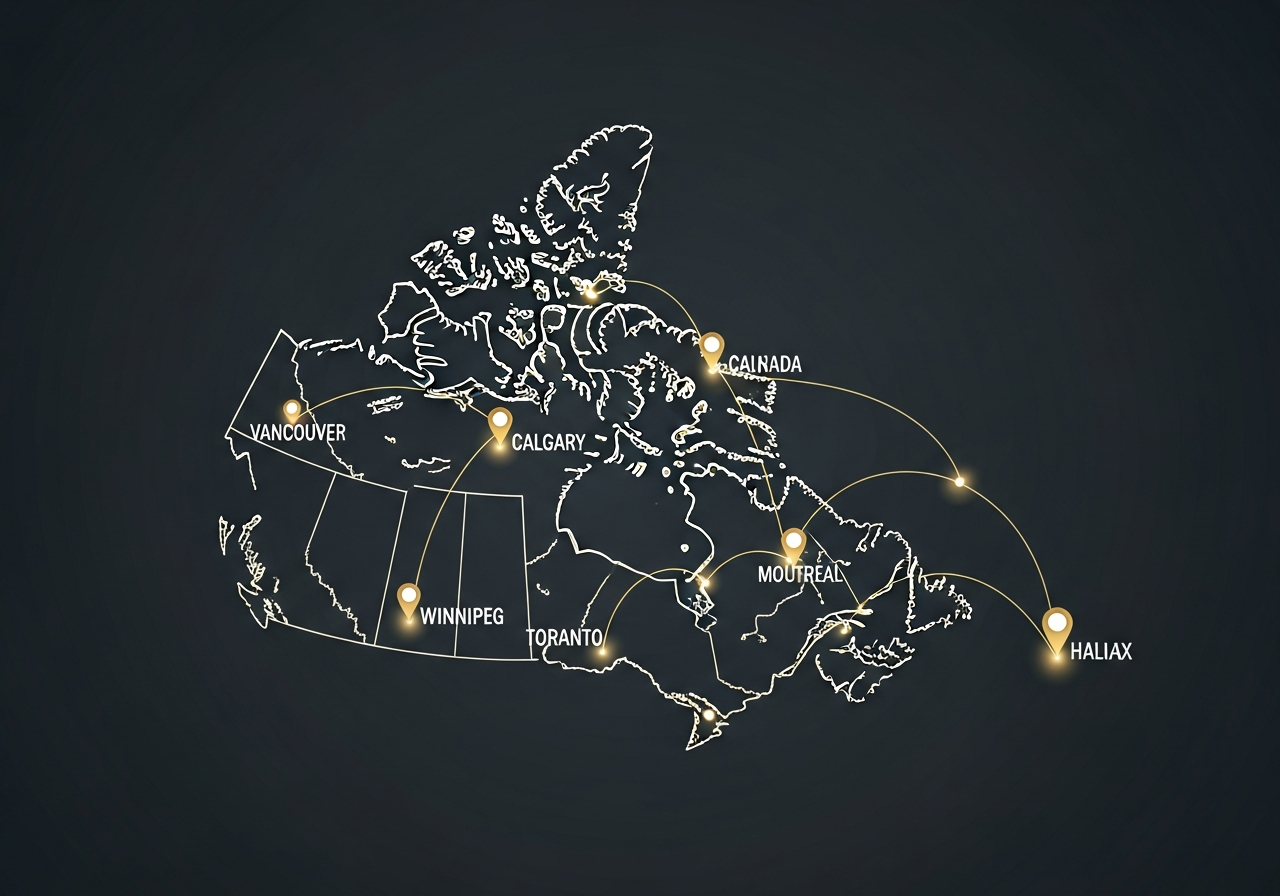
Timing the Two Ends of Your Move
The trickiest part of any long-haul relocation is synchronizing your departure and arrival. Selling or ending a lease on one side of the country while securing a home on the other rarely lines up perfectly, and a few days of mismatch is normal. Build a buffer into your plan: aim to have access to your new home a couple of days before your delivery window opens, and keep your old place available until you are confident the truck has departed. If the gap is longer, storage-in-transit bridges it without forcing you into a rushed, expensive decision.
Communicate your real constraints to your mover early — a firm possession date, a school start, or a job report date all shape how the shipment is scheduled and whether consolidation or a dedicated truck makes more sense. The more lead time you give, the more options you keep open and the lower your final cost is likely to be.
Coordinating storage and consolidation in advance removes the biggest source of stress in a long-distance relocation.
Making the Move Work
An east-to-west move is a major undertaking, but it follows a clear formula: understand the route, budget realistically, time it well, handle the admin, and choose the right mover.
Break the project into stages — research and budget, get and compare estimates, plan packing and downsizing, sort the administrative steps, and confirm logistics — and the 4,000-kilometre distance becomes manageable. The single biggest factor in your success is the company you trust with your belongings. Dependable nationwide moving company crews who run the corridor regularly turn an intimidating cross-country haul into a well-organized experience.
Key Takeaway: Treat your east-to-west move as a staged project — route, budget, timing, admin, and mover selection — and a journey across half a continent becomes entirely achievable.
When you are ready to compare options for your specific route, request a free moving quote and ask each company about their experience running the east-to-west corridor.
City Spotlights for Easterners Heading West
Where you land in the West shapes your budget, your commute, and your daily life far more than the move itself. Easterners tend to cluster in a handful of destination cities, and each has a distinct character, housing market, and job base. Here is what to expect from the most common arrival points.
Calgary, Alberta
About 3,400 km from Toronto, Calgary is the top landing spot for easterners chasing energy-sector, tech, and finance jobs. Alberta charges no provincial sales tax, and detached-home prices have historically sat well below Toronto and Vancouver, though they have climbed with interprovincial migration. Expect a dry, sunny climate, frequent winter chinooks that briefly melt the snow, and easy weekend access to the Rockies an hour to the west.
Edmonton, Alberta
Roughly 3,700 km from Toronto and a three-hour drive north of Calgary, Edmonton offers some of the most affordable big-city housing in the country, a large public-sector and university job base, and a famously enthusiastic festival scene. Winters are colder and longer than Calgary's, so block heaters and plug-in parking are part of daily life.
Saskatoon and Regina, Saskatchewan
The Saskatchewan cities sit around 2,800 to 3,000 km from Toronto and remain among Canada's most affordable provincial centres. Housing is inexpensive by national standards, commutes are short, and agriculture, mining, and the public sector anchor employment. Winters are cold and dry, with unusually abundant sunshine.
Winnipeg, Manitoba
At about 2,200 km from Toronto, Winnipeg is the first major western city eastbound travellers reach and often the most budget-friendly. It has a diverse economy, a strong arts community, and very affordable real estate, balanced against some of the coldest winters of any large Canadian city.
Vancouver and Victoria, British Columbia
The coast is the longest haul — roughly 4,400 km from Toronto and 4,650 km from Montreal — and the most expensive destination in the country, with housing costs that dwarf most eastern markets. In return you get a mild, rainy winter with little snow, ocean and mountain access, and a major Pacific-facing economy. Budget carefully and research neighbourhoods before committing.
Getting Around Your New City
Easterners often underestimate how different western commuting feels. Calgary and Edmonton both run light-rail systems but remain car-oriented and sprawling, so a vehicle is close to essential in the suburbs. Vancouver, by contrast, has the SkyTrain and an extensive transit network that makes car-free living realistic in the core, though you will pay for the privilege in rent. Winnipeg, Regina, and Saskatoon are compact and quick to drive, with commutes that rarely exceed 25 minutes. Factor parking, transit passes, and winter-tire costs into your first-year budget, and remember that British Columbia, Alberta, and the Prairie provinces each run their own auto-insurance systems — in BC that means ICBC — so your premium and the way you buy coverage will change the moment you become a resident.
💡 Pro Tip: Rent for the first six to twelve months in an unfamiliar western city before buying. It gives you time to learn the neighbourhoods, confirm your commute, and avoid an expensive mistake in a market you do not yet understand.
Before you set a budget, compare current population and income data for your shortlist on Statistics Canada, which publishes city-level housing and cost-of-living figures. If your route runs through the heartland, our guide to moving across the Prairies adds detail on the cities between Winnipeg and the Rockies.
⚠️ Do Not Assume You Will Save: Alberta and the Prairies can be cheaper than the East, but Vancouver and Victoria are not. Run the full math — housing, insurance, fuel, and provincial taxes — for your specific destination before you commit.
Key Takeaway: Calgary, Edmonton, Saskatoon, Regina, Winnipeg, and the BC coast each offer a different balance of cost, climate, and opportunity. Match the city to your budget and career, and rent first to learn the ground.
Frequently Asked Questions
How far is it from Eastern to Western Canada?
It depends on your exact endpoints. Toronto to Calgary is about 3,400 km, Toronto to Vancouver about 4,400 km, and Montreal to Vancouver about 4,650 km. Maritime starting points add several hundred more kilometres.
How much does it cost to move from East to West Canada?
In 2026, expect roughly $4,200–$7,500 for a one-bedroom and $10,000–$17,000 for a three-bedroom, door-to-door. Vancouver-bound moves cost more than Calgary-bound moves due to distance and the mountain corridor.
How long does the move take?
Transit ranges from about 4–5 days for Toronto–Calgary to 6–8 days for Montreal–Vancouver, plus loading and unloading. Consolidated shipments may take longer; dedicated trucks are faster.
Is the cost of living lower in Western Canada?
It varies. Alberta has no provincial sales tax and historically lower housing costs, while Vancouver is among the most expensive markets in Canada. Research your specific destination before assuming you will save.
When is the best time to move west?
Fall offers the best balance of weather and price. Winter has the lowest rates but requires planning around mountain passes and Prairie storms. Summer has the best conditions but the highest cost.
What administrative steps do I need at my new home?
Apply for a new health card, exchange your driver's license, re-register your vehicle and insurance, and update the CRA and federal benefits — all within your first month at the destination.
What if my new home is not ready when my goods arrive?
Storage-in-transit holds your shipment securely until you can take delivery. It is common on long-haul moves where possession dates do not line up and is billed per day or month.