Why Pianos Demand Specialty Handling
A piano is unlike any other item in your home. It combines extreme weight — uprights run 130 to 320 kilograms and grands 270 to 545 kilograms — with thousands of delicate internal components: strings under enormous tension, a cast-iron plate, a wooden soundboard, hammers, and an intricate action. This combination of brute mass and precision engineering is why moving a piano across Canada is one of the most demanding specialty moves there is.
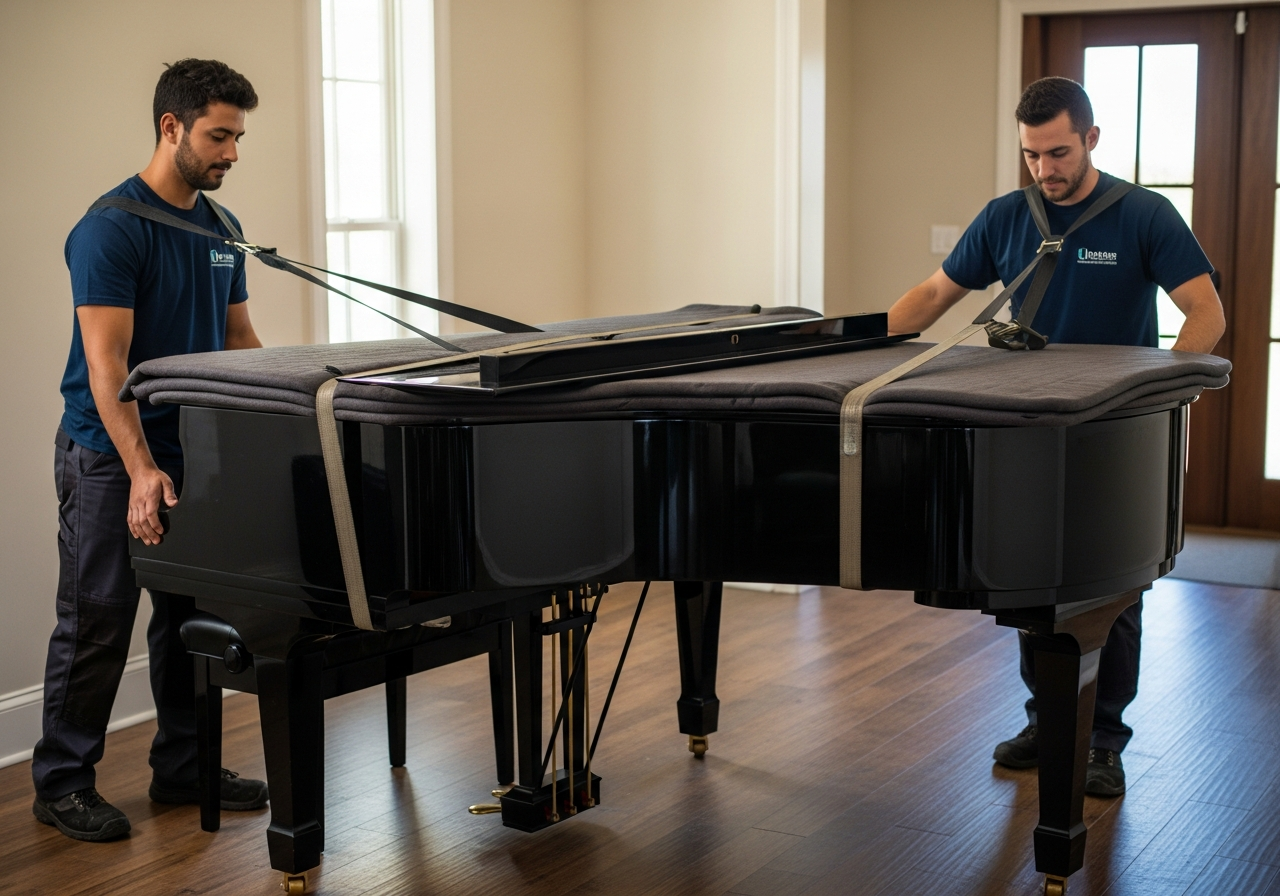
Over a long distance journey of thousands of kilometres, a piano faces sustained vibration, temperature and humidity swings between provinces, multiple lifts through doorways and stairs, and the stress of loading and securing on a trailer. Mishandling can crack the soundboard, damage the action, scratch the finish, or knock the instrument so far out of tune that costly repairs follow. For grand pianos, improper handling can warp the structure permanently.
Because of these risks, a piano move should always be entrusted to specialists. A reputable long distance moving company with piano experience has the equipment, training, and climate-aware processes to transport your instrument safely across the country. This guide explains exactly what is involved, what it costs, and how to protect your investment. For general furniture handling, also see our guide on moving furniture long distance across Canada.
Key Takeaway: A piano combines enormous weight with delicate precision components — it requires specialty movers, never a general DIY approach, on a cross-Canada move.
Understanding Your Piano Type

The type of piano you own determines how it is handled, what it costs to move, and the risks involved. Knowing your instrument helps you communicate accurately with movers and budget appropriately.
Upright Pianos
Uprights (also called vertical pianos) range from small spinets to tall studio and professional models, weighing 130 to 320 kilograms. They are more compact than grands but still require dollies, straps, and a trained crew. Their height makes them top-heavy and prone to tipping if handled carelessly.
Grand and Baby Grand Pianos
Grands weigh 270 to 545 kilograms and present the greatest challenge. They are typically partially disassembled for transport — the legs, lyre (pedal assembly), and music desk are removed, and the body is placed on its side on a padded piano board (skid board), then strapped and wrapped. This disassembly must be done by specialists to avoid damaging the action and finish.
Digital Pianos
Digital pianos are far lighter and less fragile, handled more like standard electronics and furniture. Still, they benefit from careful padding and boxing for a long haul.
💡 Pro Tip: Note your piano's make, model, and approximate age when requesting quotes. Older and higher-end instruments may need extra care, and accurate details ensure your estimate reflects the true scope of the move.
Whatever the type, an experienced professional long distance movers team will assess your specific instrument and access conditions before quoting. When evaluating companies, prioritize documented piano expertise — review our advice on what to look for in long distance movers in Canada to vet specialty credentials.
Why You Should Never DIY a Long Distance Piano Move
It can be tempting to save money by moving a piano yourself, especially with friends and a rental truck. For a long distance move across Canada, this is a serious mistake that risks injury, instrument damage, and property damage.
The Risks of DIY
- Injury: Pianos cause severe crush injuries and back injuries when they shift or tip. Their weight is unforgiving.
- Instrument damage: Without proper technique, you can crack the soundboard, damage the action, or warp a grand's structure — repairs that can exceed the cost of the move many times over.
- Property damage: Dropped or uncontrolled pianos damage floors, walls, staircases, and doorways at both homes.
- Improper securing: A piano that is not correctly anchored on the trailer can shift over thousands of kilometres, causing catastrophic damage.
- No coverage: A self-moved piano carries no professional liability protection if something goes wrong.
⚠️ Stairs Multiply the Danger: Navigating a piano up or down stairs is the single most dangerous part of any piano move and the leading cause of injuries and drops. Never attempt stairs without trained professionals and proper equipment.
The money saved by attempting a DIY piano move is dwarfed by the potential cost of medical bills, instrument repair, and property damage. This is the clearest possible case for hiring specialists — far more so than for ordinary belongings discussed in our furniture moving guide. A qualified cross-country moving company carries the insurance and expertise to protect everyone and everything involved.
What Professional Piano Movers Do Differently
Professional piano movers bring specialized equipment, training, and processes that ordinary movers and DIY attempts cannot match. Understanding what they do illustrates why their expertise is worth the cost.

Specialized Equipment
- Piano boards (skid boards): Padded boards that support the instrument and distribute its weight, especially for grands moved on their side.
- Heavy-duty piano dollies rated for the instrument's mass.
- Ramps and stair-climbing equipment for safe vertical movement.
- Specialized straps and harnesses for controlled lifting and securing.
- Custom padding and moving blankets for finish protection.
Expert Technique
Trained crews know how to balance and pivot the instrument, navigate tight turns and stairs safely, partially disassemble grands without harming the action, and position and anchor the piano on the trailer so it cannot shift. They wrap the instrument completely, protect the finish, and load it where vibration and pressure are minimized.
💡 Pro Tip: Ask prospective movers how many piano moves they complete and whether they use dedicated piano boards. Genuine specialists answer confidently and can describe their process in detail.
This combination of equipment and skill is why a piano arrives in tune-able, undamaged condition. A seasoned interprovincial moving company treats your piano as the high-value, delicate instrument it is — verify their track record through the Canadian Association of Movers before booking.
What It Costs to Move a Piano Across Canada
Piano moving costs depend on the instrument type, the distance, access challenges (stairs, tight doorways, elevators), and whether the piano is part of a larger household move or a standalone shipment. Here are realistic 2026 Canadian ranges.
Typical Cost Ranges (CAD)
- Upright piano, as part of a household move: Often a specialty surcharge of $300 to $800 on top of your base move.
- Grand piano, as part of a household move: A surcharge of $500 to $1,500 depending on size and disassembly.
- Standalone long distance upright move: $1,500 to $3,500 depending on distance and access.
- Standalone long distance grand move: $2,500 to $6,000+ for cross-country distances.
What Drives the Cost
- Distance: A cross-Canada haul costs far more than a regional move.
- Access: Stairs, narrow doorways, and the need for hoisting add labour and risk charges.
- Disassembly: Grands require partial disassembly and reassembly.
- Climate-controlled transport: Recommended for valuable instruments, adds cost.
- Bundling: Moving the piano with your household goods is usually cheaper than a standalone shipment.
Key Takeaway: Bundling your piano into a full household move is almost always cheaper than a standalone shipment, but always get a piano-specific quote that accounts for access challenges.
Because piano pricing is so dependent on specifics, always request a tailored quote rather than relying on averages. A transparent nationwide moving company will assess your instrument and both homes' access before quoting. For how a piano surcharge fits into your overall budget, compare it against the broader cost of moving furniture long distance.
Protecting Your Piano From Climate and Transit
Pianos are sensitive to temperature and humidity, and a cross-Canada move can take your instrument through dramatic climate variation — from humid central Canada to the dry prairies to coastal British Columbia. Protecting against these swings is as important as protecting against physical impacts.
Climate Concerns
Wood expands and contracts with humidity changes, which can affect tuning, the soundboard, and the action. Extreme temperature swings stress the finish and internal components. A piano that travels for days in an unconditioned trailer through freezing or scorching conditions is at risk.
How Movers Protect the Instrument
- Climate-controlled transport: The gold standard for valuable pianos on long hauls, maintaining stable temperature and humidity.
- Complete wrapping: Moving blankets and padding insulate the instrument and protect the finish.
- Strategic loading: Positioning away from trailer walls and securing to minimize vibration.
- Gradual acclimatization: Allowing the piano to adjust to the new environment before tuning (covered later).
⚠️ Avoid Extreme Conditions: Never expose a piano to freezing temperatures or direct heat for extended periods. If your move crosses winter prairie cold or summer heat, ask specifically about climate-controlled transport options.
For high-value and antique instruments, climate-controlled transport is a worthwhile investment that protects both the instrument's condition and its tuning stability. Ask your long distance moving company whether it is available for your route. Understanding the climate variation across provinces also helps with timing — our guide to insurance and protection explains how to safeguard valuable items further.
Preparing Your Piano and Home for Moving Day
While professionals handle the heavy lifting, a few preparations on your end ensure the move goes smoothly and safely.
Preparing the Piano
- Close and lock the keyboard lid to protect the keys (use the lock if your piano has one, or secure it gently).
- Remove loose items — sheet music, metronomes, and decor from on and around the instrument.
- Do not attempt disassembly yourself — leave leg and lyre removal on grands to the crew.
- Document condition with photos of the finish, keys, and any existing marks.
Preparing the Path
- Clear the route from the piano to the truck at both homes — remove rugs, furniture, and obstacles.
- Measure doorways and stairs and share any access concerns with the movers in advance.
- Protect floors if needed, though crews typically bring their own floor protection.
- Reserve parking close to the entrance for the truck.
💡 Pro Tip: Tell your movers about every access challenge — stairs, tight corners, gravel driveways, narrow elevators — when you book, not on moving day. Surprises cause delays and can affect safety and cost.
Good preparation lets the specialty crew focus on what they do best. Coordinating piano-day logistics alongside the rest of your furniture and household move keeps the whole day efficient. A professional cross-Canada movers team will confirm access details with you ahead of time so there are no surprises.
Piano Insurance and Valuation
Given a piano's value — often thousands or tens of thousands of dollars for fine instruments — proper insurance is essential. Default moving coverage is dangerously inadequate for an instrument.
Why Default Coverage Falls Short
Standard Released Value Protection covers only about $0.60 per pound. For a 250-kilogram grand, that is roughly $330 — a fraction of its true worth. Relying on default coverage for a piano is a serious financial risk.
Better Coverage Options
- Full Value Protection from your mover, which covers repair or replacement value — choose this at minimum.
- Specialty piano or instrument insurance for high-value and antique pianos, offering broader coverage.
- A rider on your home insurance policy covering the instrument in transit.
Protect Your Claim
Obtain a recent appraisal for valuable pianos, photograph the instrument's condition before the move, and inspect carefully at delivery. Note any damage on the paperwork immediately — including subtle issues like new buzzing or sticking keys that may indicate internal damage.
Key Takeaway: Never move a piano on default coverage. Choose Full Value Protection or specialty instrument insurance, and document the piano's condition with photos and an appraisal.
For a full explanation of valuation tiers and the claims process, see our dedicated guide on long distance moving insurance in Canada. A reputable professional long distance movers company will discuss specialty-item coverage openly and recommend appropriate protection for your instrument.
Tuning and Acclimatizing After the Move
The job is not finished when the piano arrives. A piano needs time to acclimatize to its new environment, and it will almost certainly need tuning after a long distance move.
Let It Acclimatize First
Place the piano in its permanent location — away from heating vents, exterior walls, direct sunlight, and drafty windows — and let it adjust to the new home's temperature and humidity for two to four weeks before tuning. Tuning immediately is wasted money, because the wood is still settling and the tuning will not hold.
Schedule a Professional Tuning
After the acclimatization period, hire a qualified piano technician to tune the instrument and inspect the action and soundboard. Cross-country moves and humidity changes nearly always knock a piano out of tune; a post-move tuning restores its sound and confirms no internal damage occurred.
Maintain a Stable Environment
- Keep room humidity stable, ideally around 40 to 50%, using a humidifier or dehumidifier as needed.
- Avoid placing the piano near radiators, fireplaces, or air-conditioning vents.
- Keep it out of direct sunlight to protect the finish and internal components.
💡 Pro Tip: Book your post-move tuning before you even relocate, scheduling it for about three weeks after delivery. Good technicians book up quickly, and planning ahead ensures your piano sounds its best soon after the move.
With careful specialty moving, climate protection, and proper acclimatization, your piano will arrive and play beautifully in its new home. When you are ready to plan, request a free moving quote that includes your piano, and rely on the experience of established long distance moving services for this most demanding of specialty moves. For verifying any company's standing, the Better Business Bureau is a useful resource.
Frequently Asked Questions
How much does it cost to move a piano across Canada?
As part of a household move, expect a specialty surcharge of roughly $300 to $800 for an upright and $500 to $1,500 for a grand. Standalone long distance piano moves range from about $1,500 to $3,500 for uprights and $2,500 to $6,000 or more for grands, depending on distance, access, and whether climate-controlled transport is used.
Can I move a piano myself on a long distance move?
It is strongly discouraged. Pianos cause severe injuries and are easily damaged without proper equipment and technique, especially on stairs. A dropped or improperly secured piano can suffer repairs costing more than the entire move, and a DIY move carries no professional liability coverage. Always hire specialists for a cross-country piano move.
Do grand pianos need to be disassembled for moving?
Yes. Grands are typically partially disassembled — the legs, lyre (pedal assembly), and music desk are removed, and the body is placed on its side on a padded piano board, then wrapped and secured. This must be done by trained specialists to avoid damaging the action and finish, and the piano is reassembled at delivery.
Will my piano need tuning after a cross-country move?
Almost certainly. The vibration of transit and the humidity changes between provinces knock pianos out of tune. Let the instrument acclimatize to its new home for two to four weeks first, then hire a qualified technician to tune it and inspect the action. Tuning immediately is wasted because the wood is still settling.
Is climate-controlled transport necessary for a piano?
It is highly recommended for valuable, antique, or high-end pianos on long hauls, especially routes crossing extreme prairie cold or summer heat. Stable temperature and humidity protect the wood, soundboard, finish, and tuning stability. Ask your mover whether climate-controlled transport is available for your route.
How should I insure a piano for a long distance move?
Never rely on default Released Value coverage (about $0.60 per pound) — it covers only a fraction of a piano's worth. Choose Full Value Protection at minimum, or specialty instrument insurance for valuable pianos. Get a recent appraisal, photograph the condition before the move, and inspect carefully at delivery.
How do I prepare my piano for moving day?
Close and secure the keyboard lid, remove loose items like sheet music and metronomes, and photograph the condition. Do not attempt any disassembly yourself. Clear the path to the truck at both homes, measure doorways and stairs, and tell the movers about every access challenge in advance.
Where should I place my piano in the new home?
Position it away from heating vents, radiators, fireplaces, air-conditioning vents, exterior walls, drafty windows, and direct sunlight. Keep room humidity stable, ideally around 40 to 50%. A stable, moderate environment protects the wood and internal components and helps the instrument hold its tuning.