Build a Packing Plan That Fits Your Move
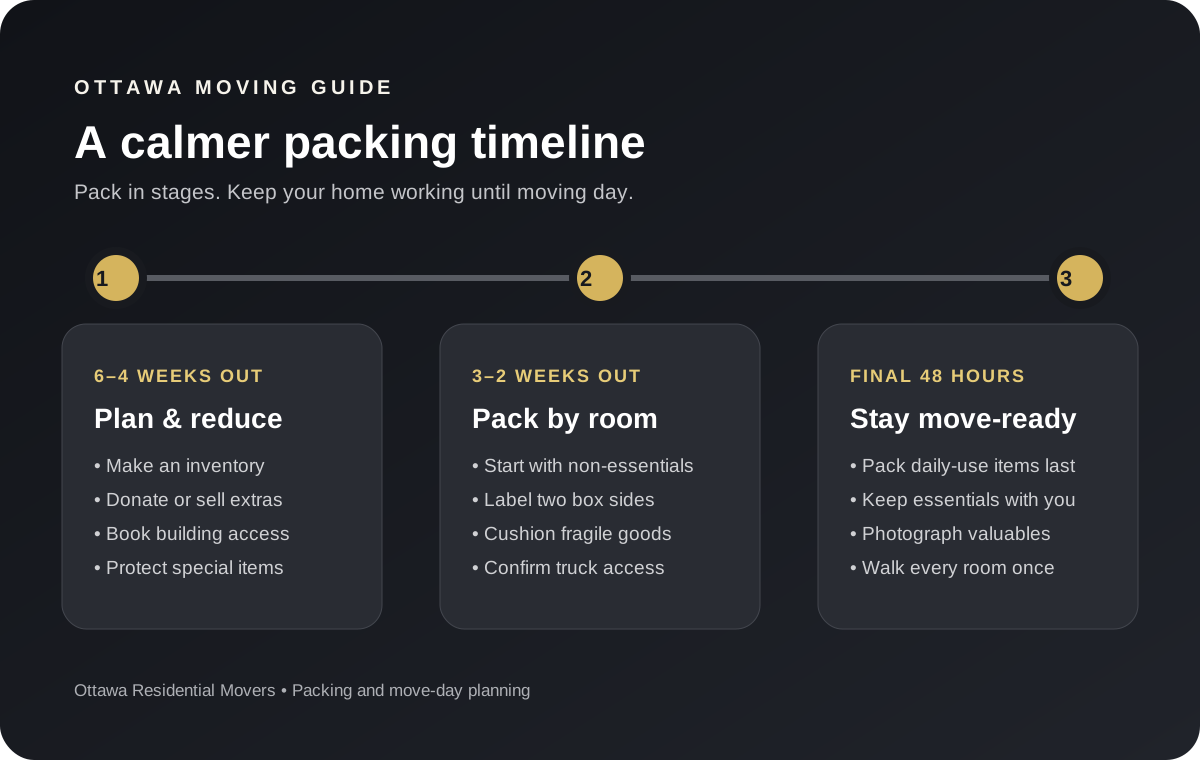
Packing for an Ottawa move is not just a matter of filling boxes. A good plan protects belongings, keeps the home usable while you prepare, and helps movers load and unload efficiently. Start with the move date and work backwards. Confirm whether the building has elevator or loading-dock times, whether the mover is packing the whole home or selected rooms, and when you will need access to daily essentials.
Walk through each room and make four lists: items to move, items to donate or sell, items that need special protection, and items you will carry personally. Photograph valuable furniture and electronics before packing, including serial numbers where useful. Set aside passports, medication, keys, jewellery, cash, essential documents, chargers, and a first-night kit. These should not disappear into a labelled carton at the back of the truck.
Choose one staging area for empty boxes and packing material, and one completed-box area that does not block hallways or exits. Label each box on the top and at least one side with the destination room and a short contents note. Mark boxes that need to remain upright or contain fragile items, but remember that labels do not replace cushioning and a stable pack.
For a DIY move, use a realistic daily target rather than leaving every room until the last weekend. Pack rarely used décor and seasonal items first; leave everyday dishes, work equipment, and children’s essentials until later. If the task feels too large, partial packing is an option: you can pack most belongings yourself and reserve a professional crew for the kitchen, artwork, closets, or another time-consuming area. Compare the scope of Ottawa packing services with your own schedule before deciding.
For another perspective on timing and move-day coordination, use the Ottawa moving checklist alongside this packing guide. If you want a crew to handle the packing, professional packing services in Ottawa can be discussed as full-home, partial, fragile-only, or unpacking support; confirm the current scope and written estimate directly.
A Room-by-Room Packing System
Kitchen: Begin with serving pieces, seasonal appliances, and pantry goods you will not use before moving. Wrap plates individually and place them on edge in a snug, cushioned carton; stack cups and bowls with padding between pieces. Use dividers for stemware if available. Keep knives in blade guards or securely wrapped and labelled. Seal liquids upright in leak-resistant bags and keep cleaning chemicals separate from food and dishes. Do not pack open containers that may spill.
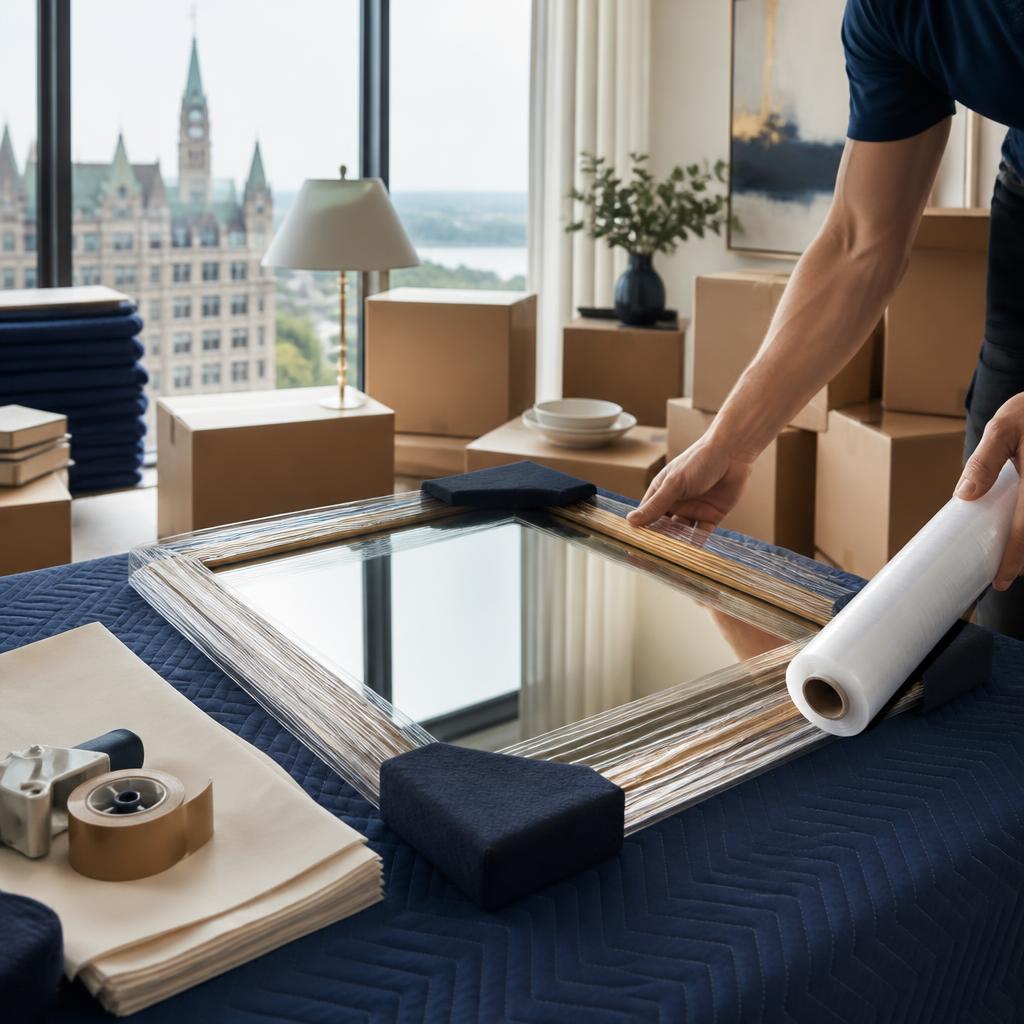
Living and dining rooms: Remove loose shelves, glass tops, and detachable legs when the item is designed to come apart. Put screws and fittings in a labelled bag and tape that bag to the corresponding furniture only where the finish will not be damaged. Protect framed art with corner guards and an appropriately sized picture carton. Stand mirrors on edge when the packaging allows; do not lay heavy cartons on top.
Bedrooms and closets: Use small cartons for books and heavier items, medium cartons for folded clothing, and wardrobe cartons only when they are useful for hanging garments. Keep jewellery, watches, and sentimental items with you. Cover mattresses with a clean protective bag sized for the mattress; make sure it is fully dry before sealing it to avoid trapping moisture.
Bathrooms: Keep prescription medicine and daily toiletries in a personal essentials bag. Place caps firmly on bottles, tape or bag liquids separately, and avoid packing aerosols or chemical products without first checking the mover’s rules. Dispose of expired or unwanted products responsibly rather than carrying them from home to home.
Home office: Back up important files before disconnecting computers. Photograph cable connections, remove batteries from devices when the manufacturer recommends it, and pack screens upright with suitable protection. Carry external drives, work credentials, and sensitive paperwork yourself. If equipment is business-critical, ask the mover how it will be handled and whether it should travel in a dedicated carton.
Garage and storage areas: Sort before boxing. Tools should be cleaned and secured so sharp edges cannot puncture cartons. Fuel, propane, solvents, paint, some batteries, and other hazardous products may be excluded from transport. Ask the moving company for its prohibited-items list, and follow municipal disposal guidance for anything that cannot travel.
Use cartons that are strong enough for their contents and close fully without bulging. Fill empty space with clean packing paper or other appropriate cushioning so items cannot shift. Keep cartons at a manageable weight; a small box packed with books is usually easier and safer to carry than a large, overloaded one. For general decision-making and professional packing options, see DIY packing versus hiring Ottawa packers.
Protect Fragile, Valuable, and Awkward Items
Fragile packing works by preventing movement and absorbing impact. Wrap each piece separately, cushion the bottom and sides, and use dividers when objects could strike one another. Put heavier, sturdier objects at the bottom and lighter items above them. Fill voids so the contents do not rattle when the carton is gently moved. If an item is irreplaceable, unusually heavy, or difficult to wrap, ask the mover about custom packing or crating instead of improvising.
For framed art and mirrors, use corner protection, a rigid carton, and a clear orientation mark. For televisions and monitors, use the original box if it is still in good condition; otherwise ask about a suitable screen carton. Keep electronics dry and avoid storing them in a cold vehicle for extended periods. Antique finishes, marble, glass, musical instruments, and large sculptures can require materials and handling beyond ordinary household packing.
Make a short high-value inventory that records an item’s description and condition before the move. Share relevant details with the estimator and ask how declared value, carrier liability, and any available protection options work. The federal Office of Consumer Affairs moving advice explains that consumers should discuss insurance and special-care items with the mover; do not assume every policy covers every item in the same way.
For a long-distance relocation, packing standards matter even more because goods may spend longer in transit and experience more handling. Use our companion guide to planning a long-distance move from Ottawa across Canada for route, inventory, and delivery planning.
Ottawa Condo, House, and Winter Packing Details
For a condo or apartment move, ask management about the move-in and move-out window, elevator reservation, loading entrance, floor protection, insurance certificate, and deposit. These requirements can affect when boxes must be staged and which path movers may use. Keep corridors, stair landings, and fire exits clear while packing. If a building restricts elevator access to a short time slot, label priority cartons and have the truck-ready items organized before the crew arrives.
In older Ottawa homes, plan for narrow turns, steep staircases, low basements, and doorways that limit the size of furniture pieces. Measure the largest items and the tightest openings before moving day. For a house move, keep the driveway and walkway clear and tell the crew about detached garages, sheds, or basement storage that is part of the inventory. In newer neighbourhoods, check for active construction or temporary street restrictions that could affect truck access.
Winter packing needs a little extra care. Keep liquids and temperature-sensitive items inside until close to loading. Dry footwear and wipe snow or slush from boxes before they go on the truck. Use plastic bins selectively for items that may be exposed to wet conditions, while remembering that sealed containers can trap moisture if packed damp. Keep a separate bag with warm clothing, gloves, chargers, and basic supplies in your own vehicle so it is easy to reach.
If you are moving across the Ottawa–Gatineau area, confirm the exact addresses and access details on both sides of the river. A short drive can still involve different building procedures and administrative tasks. When you need to notify federal services, the Government of Canada’s change-of-address page notes that a new address must be updated with each department or agency rather than assuming it is shared automatically.
When Professional Packing Services Make Sense
Professional packing can be useful when time, physical ability, item sensitivity, or a fixed building schedule makes self-packing difficult. A full-home service can reduce the number of separate tasks you manage; partial packing is a more focused option when you only need help with selected rooms. Fragile-only packing can suit households with artwork, glass, antiques, or delicate electronics, while unpacking support may help when you need the home functioning quickly after delivery.
Before booking, ask exactly what is included: cartons and materials, wardrobe boxes, wrapping of furniture, packing of closets and drawers, labelling, disassembly, unpacking, and removal of packing debris. Confirm which items you must pack yourself and which materials are included in the estimate. Ask whether the crew packs on moving day or arrives earlier, and how the schedule changes if the inventory is larger than expected.
Prestige Moving publicly describes full-home, partial, fragile-item, and unpacking options on its packing-services page. If you are considering that provider, use the same evaluation steps you would use for any company: share an accurate inventory, confirm the written scope, ask what protection is used, and make sure the timing fits your building’s rules. A natural starting point is Ottawa residential movers and their published service details. This is a reference for comparing options, not a substitute for a move-specific quote.
Prestige Moving lists its Ottawa address as 50 Colonnade Rd Unit 200B, Ottawa, ON K2E 7J6. Check the company’s Google listing for Prestige Moving for current location details, and contact the company before visiting to confirm whether appointments are available.
For a broader comparison of service levels, browse the site’s full-service moving options and residential moving service. If you want help with a specific room, ask whether partial packing is available rather than assuming you must choose an all-or-nothing package.
A Seven-Day Packing and Move-Ready Checklist
Seven days out: confirm the mover, building booking, parking, and destination access. Finish donation and disposal runs. Pack guest linens, décor, books, and other non-essentials. Check that your labels and inventory match the rooms in the new home.
Five to six days out: pack most clothing, extra kitchenware, hobby supplies, and storage areas. Keep a short list of cartons that must stay open until the final day. Confirm any special packing instructions for artwork, electronics, musical instruments, or oversized furniture.
Three to four days out: pack the majority of the kitchen and bathroom while leaving enough items for daily use. Set aside food that must be used or donated. Defrost and dry appliances according to their manuals if they are part of the move. Charge devices and back up computers.
One to two days out: finish packing, clearly mark boxes that travel with you, and prepare the essentials kit. Keep keys, documents, medication, chargers, and valuables in a single place. Confirm the arrival window and the person to contact if access changes.
Moving morning: make one final walk-through of closets, cupboards, storage rooms, balcony, and garage. Show the crew which items are excluded, identify fragile or heavy pieces, and keep hallways clear. At the destination, direct labelled cartons to the right rooms and check that the essentials kit stays accessible.
Frequently Asked Questions About Packing in Ottawa
How early should I start packing for a move in Ottawa?
Start planning several weeks ahead and pack items you rarely use first. The right schedule depends on home size, how much you own, and whether you are packing yourself or hiring help. Leave daily essentials until the final days.
Can I hire packers for only one room or fragile items?
Many moving companies offer partial or fragile-only packing, but services differ. Ask whether kitchen packing, artwork, mirrors, electronics, or selected cartons can be handled separately, and request the scope in writing.
What should I keep out of moving boxes?
Keep medication, identity documents, jewellery, cash, keys, chargers, important records, and a first-night bag with you. Check the mover’s prohibited-items policy for hazardous products, perishables, plants, and temperature-sensitive belongings.
How should I label boxes for movers?
Write the destination room and a brief contents description on two sides and the top. Mark fragile or upright items clearly, but use proper packing and cushioning rather than relying on labels alone.
Do Ottawa condo buildings have special moving requirements?
They often have building-specific rules. Confirm elevator bookings, loading access, move windows, floor protection, certificates of insurance, and deposits directly with management before moving day.
How can I protect belongings during an Ottawa winter move?
Keep temperature-sensitive items warm until loading, pack only dry belongings, protect walkways from snow and slush, and keep winter essentials accessible. Follow the manufacturer’s instructions for appliances and electronics.