Why an 8-Week Timeline Works

Long-distance moves fail when everything is left to the final scramble. Eight weeks is the sweet spot for planning a cross-Canada relocation — long enough to secure good pricing and handle interprovincial paperwork, but not so long that momentum fades. Breaking the project into weekly milestones converts an overwhelming undertaking into a series of achievable tasks.
This timeline assumes a full interprovincial move of a typical household. If you have a larger home, are moving internationally afterward, or face a tight real estate closing, start even earlier. If your move is smaller or your dates are flexible, you can compress the schedule. The structure, however, stays the same: research first, commit early, declutter, pack progressively, manage admin, then execute.
Key Takeaway: An eight-week runway lets you book long distance movers at off-peak rates, avoid last-minute stress, and complete every provincial registration on time. Each week has a clear focus so tasks never pile up.
Use this article alongside our ultimate cross-Canada moving checklist, which lists the granular tasks within each phase. Together they form a complete planning system for any interprovincial move in 2026.
Week 8: Plan and Get Quotes

Eight weeks out, your job is to gather information and build the foundation of your move. Decisions made now ripple through everything that follows.
Define Your Move
- Confirm your move-out and target arrival dates.
- Estimate the size of your move — number of rooms and any specialty items.
- Decide your service level: full-service, partial packing, or self-pack.
Request Multiple Quotes
Contact at least three licensed movers and request in-home or video surveys. Insist on written estimates that specify whether the price is binding or guaranteed-not-to-exceed. For long-distance jobs, this accuracy is essential because the price hinges on weight or volume.
- Ask whether your goods travel on a dedicated truck or a consolidated load.
- Request proof of insurance and references for similar cross-country routes.
- Verify membership in a recognized industry association at cam-acd.ca.
💡 Pro Tip: Take notes during each survey and compare quotes line by line, not just on bottom-line price. A slightly higher quote that includes full-value protection and dedicated transport may be the better deal.
Early in the process, also start thinking about whether your dates fall in peak season. Choosing the right window has a major effect on cost — our guide to the best time of year to move across Canada can help you decide. If your schedule allows flexibility, a reputable cross-country moving company can often offer significant savings for off-peak dates.
Week 7: Book Your Mover
With quotes in hand, week seven is decision time. Booking now — roughly seven weeks out — strikes the balance between securing your dates and giving yourself time to prepare.
Compare and Choose
Evaluate each quote on credentials, services, transport type, valuation coverage, and total price. The cheapest option is rarely the best; the goal is the best value from a licensed, well-reviewed company.
- Confirm the delivery window, not just the pickup date.
- Review the cancellation, rescheduling, and claims policies.
- Get everything in a signed written contract.
Lock In Logistics
Once booked, confirm your pickup date and provisional delivery window in writing. If you are flying or driving to your new province, this is the moment to align your travel with the delivery window.
⚠️ Important: Be cautious of any company asking for a large upfront cash deposit or refusing to provide written terms. A trustworthy mover provides a clear contract and reasonable payment schedule.
If you will need temporary storage because your move-out and move-in dates do not line up, raise it now so it can be built into the plan. Many professional long distance movers offer storage-in-transit, which keeps your goods in their care between pickup and final delivery. Booking the right service now prevents a last-minute scramble later.
Week 6: Declutter and Inventory
Six weeks out, shift from logistics to your belongings. The less you ship across the country, the less you pay — making decluttering one of the most cost-effective tasks of the entire move.
Sort Every Room
Go through your home methodically, sorting items into keep, sell, donate, and discard. Be honest about what is worth shipping thousands of kilometres. Heavy, low-value, or easily replaced items rarely justify the cost.
- List quality items for sale online or hold a garage sale.
- Donate usable goods and keep receipts.
- Responsibly dispose of broken or expired items.
Document What You Keep
Build a room-by-room inventory with photos. Record serial numbers for electronics and capture the existing condition of furniture. This record protects you if a claim arises and helps you confirm nothing is missing on delivery.
Decluttering before you pack means you never waste a single box, kilometre, or dollar on items you do not actually want in your new home.
For larger purges — especially when downsizing into a smaller home — our dedicated guide on preparing your home for a cross-country move offers a structured approach. Reducing your load now also keeps your packing weeks far more manageable.
Week 5: Gather Supplies and Start Packing
At five weeks out, begin the physical work of packing. Starting now, with the items you use least, prevents the dreaded final-week panic.
Stock Up on Materials
- Sturdy double-walled boxes in multiple sizes.
- Specialty cartons for dishes, wardrobes, and mirrors.
- Packing paper, bubble wrap, and strong tape.
- Markers and labels for room-by-room organization.
Begin With the Non-Essentials
Pack seasonal clothing, books, decor, spare linens, and rarely used kitchenware first. Label every box clearly by room and contents. Keep boxes to a manageable weight so they survive the rigours of long-distance handling.
💡 Pro Tip: Use a colour-coded label system — one colour per room. On delivery day, the crew can place every box in the right room instantly, saving hours of sorting.
Long-distance shipments face more handling and vibration than local moves, so pack to a higher standard. If you have opted for full-service movers, the crew will handle this in a single day with insured materials, but if you are packing yourself, starting now is essential. Whatever you choose, a quality interprovincial moving company will inspect and accept properly packed boxes without issue.
Week 4: Handle Administration
Four weeks out, turn to the paperwork that interprovincial moves demand. These tasks are easy to overlook and have real deadlines on the far side of the country.
Address Changes
- Set up Canada Post mail forwarding.
- Update your address with the CRA to protect benefits and refunds.
- Notify banks, insurers, your employer, and subscription services.
Schedule Utilities and Services
Arrange disconnection at your current home and connection at your new one, accounting for the multi-day transit gap. Book internet installation early in case the new-province provider has a long lead time.
⚠️ Important: Provincial health coverage often carries a waiting period after an interprovincial move. Keep your old coverage active and buy travel health insurance to avoid any gap.
Because moving provinces affects your health card, driver's licence, and vehicle registration, plan to complete these transfers within the required windows after arrival. Our complete walkthrough on timing your move for the smoothest transition pairs well with this admin phase. Handling paperwork now leaves your final weeks free for packing and travel.
Week 3: Pack in Earnest
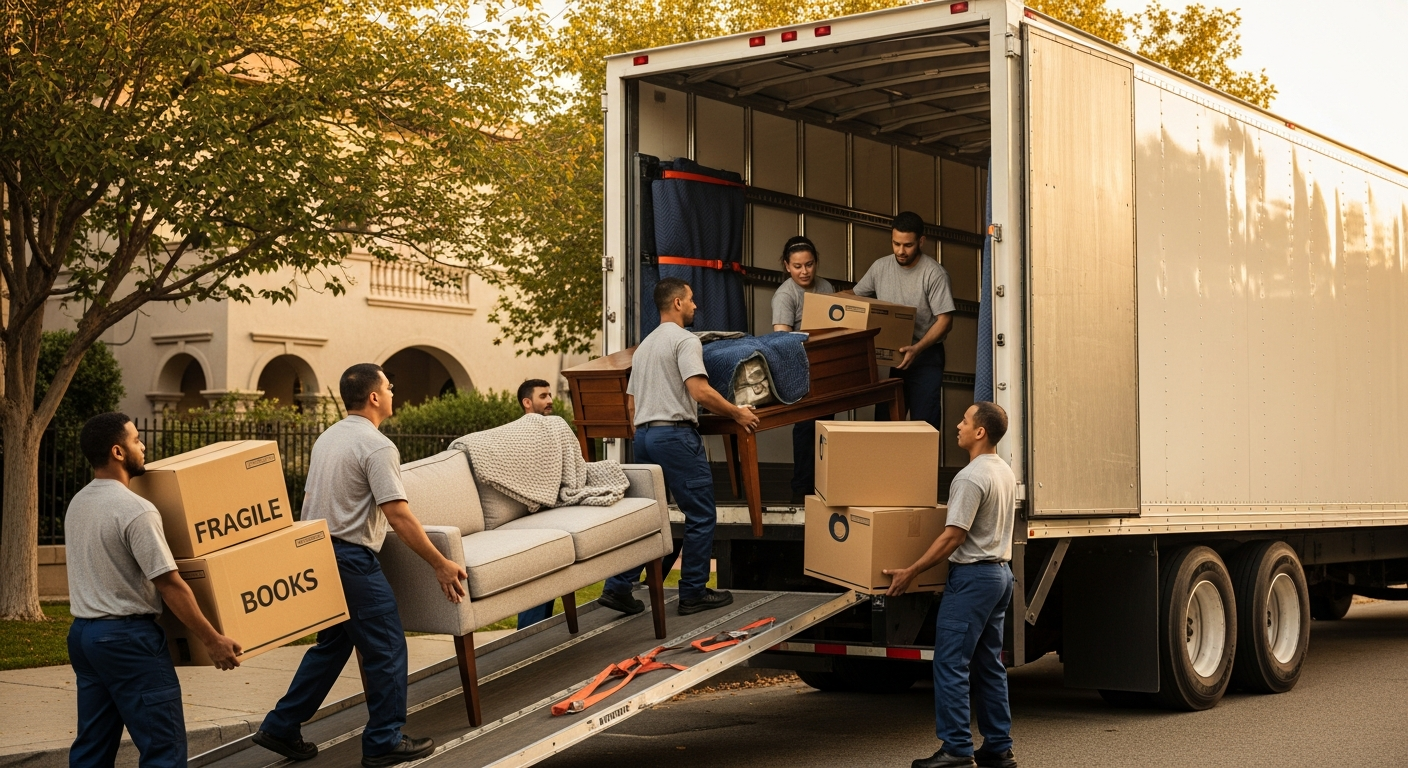
Three weeks out, packing accelerates. By the end of this week, the majority of your home should be boxed, leaving only daily essentials for the final stretch.
Work Through the Main Living Areas
- Pack most of the kitchen, keeping out only what you need for the coming days.
- Box up books, electronics (in original packaging where possible), and decor.
- Wrap artwork and mirrors in specialty cartons.
- Disassemble non-essential furniture and bag the hardware to each piece.
Protect for the Long Haul
Fill every void in your boxes so nothing shifts during days of transit. Double-box fragile items and use plenty of cushioning. Wrap furniture in blankets and stretch film to guard against scuffs and moisture.
On a cross-country move, your packing has to withstand multiple load-and-unload cycles and long stretches of highway vibration. When in doubt, over-protect — it costs far less than replacing a damaged heirloom.
If the volume feels daunting, this is the point where many households decide to bring in help for the toughest rooms. Experienced long distance moving services can pack an entire home professionally in a day. For technique-by-room guidance if you continue on your own, see how the loading process unfolds in our article on what to expect on long distance moving day.
Week 2: Confirm and Coordinate
Two weeks out, the focus shifts to confirmation and coordination. Loose ends tied up now prevent moving-day surprises.
Reconfirm Everything
- Reconfirm pickup date, delivery window, and contacts with your mover.
- Confirm utility connection and disconnection dates.
- Verify travel and accommodation bookings.
- Ensure someone can receive the shipment at the destination.
Prepare the Essentials
Assemble your "first night" boxes — toiletries, medications, chargers, a change of clothes, and basic kitchen items. Gather important documents into a single secure folder you will personally carry, along with valuables and irreplaceable items.
💡 Pro Tip: Photograph the serial numbers and condition of your most valuable electronics and furniture now. Combined with your inventory, this is your strongest evidence if you ever need to file a claim.
Finish the last of your packing this week so the final week is calm. Use up perishable food, plan to defrost the fridge, and arrange pet transport if needed. Coordinating these details now means moving day becomes supervision rather than scrambling. A dependable cross-Canada movers crew will reconfirm logistics with you, but staying proactive keeps you firmly in control of the schedule.
Week 1 and Moving Day
The final week brings everything together. Your home should be nearly fully packed, leaving only essentials and last-minute tasks.
The Final Days
- Finish packing the last essentials, keeping only your personal-transport items out.
- Defrost and clean the refrigerator and freezer.
- Confirm final details with your mover one more time.
- Do a deep clean or arrange cleaning for your old home.
Moving Day
- Be ready early and do a final walkthrough before the crew arrives.
- Set aside personal-transport items so they are not loaded by mistake.
- Walk the crew through the home and review the inventory carefully.
- Inspect every room, closet, and the garage before the truck departs.
- Read and sign the bill of lading, confirming price and delivery terms.
⚠️ Important: Keep jewellery, cash, medications, legal documents, and small heirlooms with you. Never load irreplaceable items onto the truck.
Once the truck rolls out, your belongings are in transit for several days. Begin your own journey to the new province in alignment with the delivery window. For a detailed look at the day itself, our guide to long distance moving day covers what happens from arrival of the crew to final departure.
After the Move: Settling In
The timeline does not end when the truck leaves — the first weeks in your new province carry important tasks of their own.
Delivery Day
- Check every item against your inventory as it is unloaded.
- Inspect for damage before signing the delivery receipt.
- Direct items to the correct rooms using your labels.
- File any claims promptly within the mover's stated window.
First Week in the New Province
- Set up beds, the bathroom, and the kitchen first.
- Complete your driver's licence and vehicle registration transfers.
- Activate provincial health coverage.
- Update any remaining accounts and explore your new neighbourhood.
Key Takeaway: Unpack in order of need rather than all at once. Beds and bathrooms first, then the kitchen, then everything else over the following days keeps the household functional from night one.
Settling in takes patience. Give yourself a few weeks to find your rhythm, locate essential services, and finish the administrative loose ends. A smooth handover from your nationwide moving company gets your possessions home; the rest is about turning a new house into a home. Refer back to the post-move section of our checklist to be sure nothing is forgotten.
Adapting the Timeline to Your Situation
No two moves are identical. Use the eight-week structure as a backbone and adjust it to fit your circumstances.
When to Start Earlier
- Peak season moves (May–September): begin ten to twelve weeks out to lock in dates and rates.
- Large or luxury homes: more volume and specialty items demand a longer runway.
- Tight real estate closings: coordinate move dates with your closing carefully.
- Remote destinations: limited carrier options require extra lead time.
When You Can Compress
- Smaller homes or apartments: the schedule condenses naturally with less to pack.
- Flexible dates: off-peak availability is easier to secure on short notice.
- Full-service packing: hiring professionals to pack removes weeks of personal effort.
If you are short on time, prioritize three things: book a licensed mover, declutter aggressively, and handle health and licence transfers. Everything else can flex around those essentials.
Whatever your timeline, the principle holds: commit to a reputable mover early, reduce your load, pack progressively, and handle provincial admin on schedule. When you are ready to set firm dates and pricing, request a free moving quote tailored to your home and route. Pairing this timeline with the full checklist gives you a complete, adaptable system for any interprovincial move.
Moving Week and Moving Day: The Final Countdown
The last seven days are where a well-built eight-week plan either pays off or unravels. By now the logistics should be locked; this final stretch is about execution, confirmation, and protecting yourself on the day the truck arrives.
The final week (days 7 to 1)
- Reconfirm everything in writing. Re-verify your pickup date, crew arrival window, and delivery spread with your coordinator. Confirm parking or elevator bookings at both ends.
- Finish your essentials box. Pack a clearly labelled "open first" kit per person: medications, chargers, a few days of clothing, toiletries, important documents, and basic tools. This box rides with you, not on the truck.
- Empty, defrost, and dry the refrigerator and freezer at least 24 hours before pickup so they do not leak or grow mould in transit across several days.
- Set utilities to switch over. Schedule disconnection at your old home for the day after pickup and connection at your destination for the day before delivery. Submit your Canada Post mail forwarding so nothing is lost during the gap.
Moving day itself
- Be present for the inventory. Walk the home with the lead mover, review the condition report, and keep your own copy of the signed bill of lading and inventory sheet.
- Do a final walkthrough of closets, the basement, the garage, and outdoor storage before the truck pulls away — these are the spots people forget.
- Keep cash or a plan for tipping if the crew has earned it, and confirm the delivery contact details before they leave.
Key Takeaway: The final week is about confirmation, not new decisions. Lock your essentials box, your utilities, and your paperwork, and moving day becomes a formality rather than a fire drill.
Frequently Asked Questions
Is eight weeks enough time to plan a long distance move?
For most households, yes. Eight weeks allows time to compare quotes, book a licensed mover at competitive rates, declutter, pack progressively, and complete interprovincial paperwork. For peak-season moves, larger homes, or remote destinations, start ten to twelve weeks out for a comfortable margin.
When should I book my moving company?
Aim to book around seven weeks before your move, after gathering at least three written quotes. During peak summer season and for month-end dates, book even earlier — popular slots fill quickly, and early booking typically secures better pricing and guaranteed availability.
What is the most important task on the timeline?
Booking a licensed, reputable mover early is the highest-leverage decision. It locks in your dates and price, and a good company guides you through the rest. Close behind are decluttering to reduce cost and completing provincial registrations on time.
When should I start packing?
Begin around five weeks out with items you rarely use, then accelerate at three weeks until the bulk of your home is boxed. Leave only daily essentials for the final week. Starting early prevents a stressful last-minute scramble and improves packing quality.
How do I handle utilities for a multi-day transit?
Schedule disconnection at your old home around pickup and connection at your new home for the day before or of your expected arrival. Because cross-country transit spans several days, plan the gap so you arrive to a home with heat, hydro, and water already on.
What if my move-out and move-in dates do not line up?
Arrange storage-in-transit, where the mover keeps your goods between pickup and final delivery. Raise this when you book so it is built into the plan and quoted accurately, rather than scrambling for storage at the last minute.
Can I shorten the timeline if I am moving on short notice?
Yes. Prioritize booking a licensed mover, decluttering aggressively, and handling health and licence transfers. Hiring full-service packing removes weeks of personal effort, and flexible off-peak dates are easier to secure quickly. The eight-week structure compresses well for smaller homes.