Long Distance Moving in Canada at a Glance
Moving across Canada raises a thousand questions, and most of them come down to four themes: how much will it cost, how long will it take, will my belongings be safe, and how do I pick the right company. This guide answers all of them in one place so you can plan an interprovincial move with confidence.
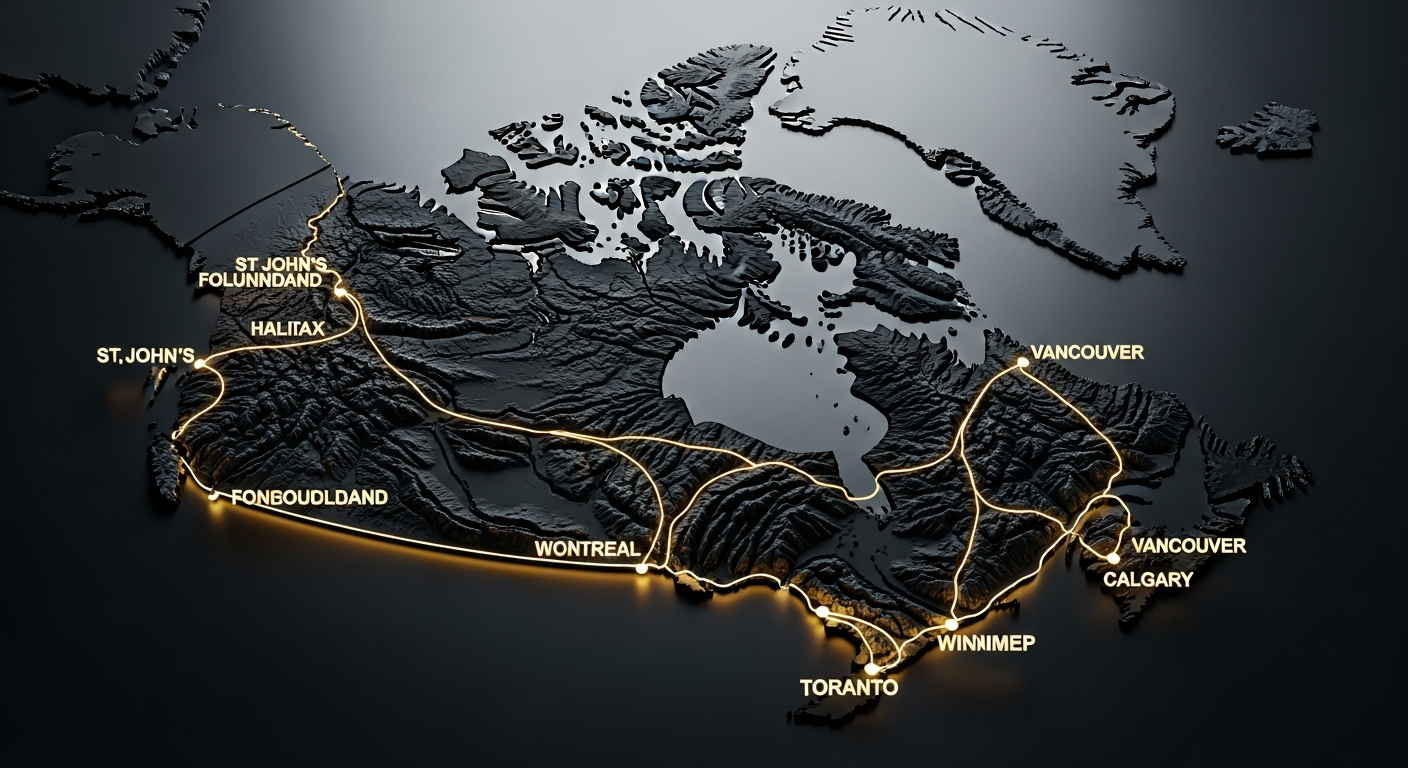
Canada is enormous — a move can span anywhere from 1,800 km between Toronto and Halifax to over 4,600 km from Montreal to Vancouver. That scale means long distance moving works differently from a local move, with specialized pricing, longer timelines, and more administrative steps. Whether you are relocating for work, family, or a fresh start, understanding how the industry works is the first step to a smooth experience with reliable long distance movers.
Key Takeaway: The four core questions of any cross-Canada move — cost, timeline, protection, and choosing a mover — all have clear, knowable answers once you understand how the industry prices and operates.
What Counts as a Long Distance Move?
Generally, a move is considered "long distance" when it crosses provincial or territorial boundaries, or when it covers more than a few hundred kilometres within a large province. The industry term you will often hear is an interprovincial or cross-country move.
Long distance moves differ from local moves in several important ways:
- Pricing model: Local moves are usually billed hourly; long distance moves are priced on weight or volume plus distance.
- Timeline: Delivery happens over a window of days rather than the same day.
- Logistics: Trucks may consolidate multiple shipments, and storage-in-transit is common.
- Regulation: Interprovincial carriers operate under federal Transport Canada rules.
If your move crosses a provincial line, you will also face administrative changes — health card, driver's license, and registration — that a local move never involves. Our guide to the cross-Canada moving checklist walks through every one of those steps so nothing gets missed.
How Much Does It Cost?
This is the number-one question, and the honest answer is "it depends" — on the size of your home, the distance, the season, and the level of service you choose. That said, here are realistic 2026 ranges for a full cross-Canada move (door-to-door, CAD):
- 1-bedroom: $4,000–$7,000
- 2-bedroom: $6,500–$10,000
- 3-bedroom: $9,500–$16,000
- 4+ bedroom: $15,000–$26,000+
The biggest cost drivers are the weight or volume of your shipment and the distance travelled. Season matters too — summer is the most expensive time, while winter offers the best rates. For a complete breakdown of every line item and how to estimate your own move, see our in-depth guide to long distance moving costs in Canada.
💡 Pro Tip: Get at least three written estimates and compare them line by line. The lowest number is not always the best value once you account for insurance, packing, and potential hidden fees.
A transparent cross-country moving company will give you a clear, itemized quote rather than a vague ballpark.
How Long Does a Cross-Canada Move Take?
Transit time depends on distance and route. Here are typical professional transit windows in 2026:
- Toronto–Halifax (~1,800 km): 3–4 days
- Toronto–Calgary (~3,400 km): 4–5 days
- Montreal–Calgary (~3,700 km): 4–6 days
- Toronto–Vancouver (~4,400 km): 5–7 days
- Montreal–Vancouver (~4,650 km): 6–8 days
These are transit estimates; add loading and unloading days on each end. With a consolidated shipment — where your goods share truck space with other moves to save money — the delivery window may extend to a week or more. With a dedicated truck, transit is faster but more expensive.
Why the Window Matters
The biggest misunderstanding on long-haul moves is the difference between a delivery date and a delivery window. On a consolidated move, your shipment travels with others, so the carrier commits to a range of days rather than a single guaranteed time. This is not a sign of poor service — it is simply how long-distance logistics keep costs reasonable. The trade-off is real: a dedicated truck gives you a precise date but can add thousands of dollars to the bill. Decide which matters more to you before you book, and plan your housing, work start, and travel around a realistic window with a couple of days of buffer on either side.
Always ask for a delivery window, not a guaranteed date. Weather, road conditions, and consolidation logistics make exact dates unrealistic on a long-haul move.
Winter routes through mountain passes and the Prairies can add a day or two. Experienced cross-country crews build realistic windows into their schedules rather than overpromising.
How Are Long Distance Moves Priced?

Long distance moves are priced on one of two models:
Weight-Based Pricing
Common with traditional van lines, your shipment is weighed and you pay per pound (or per 100 lbs) plus a distance factor. The truck is weighed empty and full, and the difference is your shipment weight.
Volume-Based Pricing
Increasingly common, you pay for the cubic space your goods occupy in the truck. This is often easier to estimate upfront and avoids surprises at the scale.
Both models add charges for packing services, materials, insurance, storage, and specialty items like pianos. Stairs, long carries, and elevator access can add fees too. Understanding which model a company uses helps you compare quotes fairly. To make sense of the trade-offs, our breakdown of what drives cross-Canada moving prices explains how each factor affects your bottom line.
⚠️ Watch For: A quote that seems unusually low may rely on a "binding-to-exceed" estimate that balloons after loading. Insist on a binding or not-to-exceed estimate in writing.
What About Insurance and Valuation?
Protecting your belongings across thousands of kilometres is essential, and it is worth understanding exactly what coverage you have. Movers offer "valuation," which is not the same as insurance.
Basic vs Full-Value Protection
- Basic (released value): Often included free, but it pays only a few dollars per kilogram — far less than the real value of your goods.
- Full-value protection: The mover is liable for the replacement value of lost or damaged items; you pay a premium for this coverage.
- Third-party moving insurance: Separate policies that can supplement a mover's valuation.
For a high-value household, full-value protection or a third-party policy is almost always worth the cost. Document your belongings with photos and a detailed inventory before the move. Our complete guide to preparing for a cross-Canada move includes an inventory step that makes any future claim far easier.
A reputable interprovincial moving company will explain your options clearly and never pressure you into the cheapest, least-protective tier.
How Do I Choose a Reputable Mover?
The mover you choose matters more than any single line on the quote. A great company makes a long-haul move feel effortless; a bad one can damage your belongings and your peace of mind.

What to Verify
- Membership in the Canadian Association of Movers
- A verifiable business address and proper licensing as a Transport Canada-regulated carrier
- Strong, recent independent reviews and a clean record with the Better Business Bureau
- A written, itemized estimate after an in-home or video survey
- Clear answers about insurance, timelines, and subcontracting
For the full vetting process, our guide on how to choose a long distance moving company walks through every red and green flag. The right cross-Canada movers will welcome your questions and provide everything in writing.
What Should I Pack Myself vs Leave to Pros?
Deciding how much to pack yourself is one of the biggest levers on both cost and stress. There is no single right answer — it depends on your budget, timeline, and how much you value your time.
Worth Packing Yourself
- Books, linens, and non-fragile everyday items
- Clothing and personal effects
- Anything irreplaceable you want to keep with you
Worth Leaving to Professionals
- Fragile dishware, glassware, and artwork
- Electronics and large appliances
- Specialty items like pianos and antiques
💡 Pro Tip: Professional packing not only saves time, it also affects your insurance claim — items packed by the mover are easier to claim if damaged. For valuables, the cost is often worth the protection.
Many households choose a hybrid approach: pack the easy stuff themselves and hire pros for the fragile and bulky items. Whatever you decide, start early — packing always takes longer than expected on a long distance move.
Storage, Delivery Windows and Tracking
Long distance moves often involve storage and consolidation, so it helps to understand how these services work.
Storage-in-Transit
If your new home is not ready when your goods arrive, storage-in-transit holds your shipment at a secure facility until you can take delivery. This is common when closing dates do not line up and is usually billed per day or per month.
Consolidation and Delivery Windows
To keep costs down, many carriers consolidate several shipments onto one truck. This means your delivery comes within a window of days rather than a fixed date. A dedicated truck eliminates the window but costs more.
Tracking
Reputable carriers offer GPS tracking and regular status updates so you always know where your belongings are. Ask about tracking before you book.
Plan for the possibility of a storage gap. Knowing your mover offers secure, climate-appropriate storage removes the stress of mismatched closing dates.
A well-run long distance moving company coordinates storage, consolidation, and tracking seamlessly so you are never left guessing.
Booking, Deposits and Payment
Understanding the booking and payment process protects you from scams and surprises.
Booking Lead Time
Book 6–12 weeks ahead for the best availability and rates, especially for summer moves. Winter and shoulder seasons offer more flexibility and lower prices.
Deposits
A modest deposit to reserve your date is normal. Be wary of any company demanding a large cash deposit upfront — a common sign of a scam.
Payment
- Pay by credit card when possible for added protection.
- Never pay the full amount before your goods are delivered.
- Get a clear payment schedule in writing.
⚠️ Red Flag: Demands for large cash-only deposits, refusal to provide written estimates, or a no-show in-home survey are classic warning signs of an unreliable mover.
When you are ready to lock in a date, request a free moving quote and review the deposit and payment terms carefully before signing anything.
Your Long Distance Moving Action Plan
Pulling it all together, a successful cross-Canada move follows a clear sequence:
- Research and budget using realistic cost ranges for your home size and distance.
- Get three written estimates from vetted, licensed movers and compare them line by line.
- Book 6–12 weeks ahead and confirm insurance, storage, and tracking options.
- Plan your packing — decide what to do yourself and what to leave to professionals.
- Handle the admin — health card, license, registration, and address changes.
- Confirm the delivery window and stay reachable throughout transit.
Key Takeaway: Every part of a long distance move is knowable in advance. Plan the cost, timeline, protection, packing, and admin as one coordinated project and the move becomes straightforward.
With clear expectations and a trusted, professional crew handling the heavy lifting, even a 4,000-kilometre relocation can be a smooth, well-organized experience.
Specialty Items, Vehicles and Pets on a Cross-Canada Move
Standard furniture and boxes are only part of many households. Specialty items, vehicles, pets, and plants each follow their own rules on a long distance move, and pricing them correctly upfront prevents unwelcome surprises on moving day.
Pianos, Safes and Oversized Pieces
Heavy and awkward items are quoted separately because they need extra crew, equipment, and sometimes a crane. As a rough guide for a cross-Canada move, budget $400 to $900 to move an upright piano and $700 to $2,000 for a grand, $250 to $600 for a gun safe or large floor safe, and $400 to $1,200 to disassemble, move, and re-felt a slate pool table. Hot tubs, treadmills, and large aquariums usually require draining and special handling — flag them when you request a quote so the crew arrives with the right gear.
Shipping Your Vehicle
Many cross-country movers either ship vehicles in-house or partner with an auto-transport carrier. Expect roughly $1,200 to $2,200 for open transport and $1,900 to $3,500 for an enclosed trailer on a coast-to-coast route, with transit of 7 to 14 days. It is often cheaper and far less tiring than driving a second vehicle 4,000 kilometres, especially in winter. Confirm whether the carrier's insurance covers the vehicle in transit, and document existing damage with photos before pickup.
Moving With Pets
Pets cannot ride in the moving truck. For long distances, most families drive them or fly them. Air travel within Canada runs roughly $50 to $120 for a small in-cabin pet and $200 to $500 or more for a larger animal in cargo, depending on the airline and crate size. Update the microchip registry and municipal license with your new address, carry vaccination records, and ask your vet about sedation only as a last resort — many discourage it for flights.
Antiques, Artwork and Wine Collections
High-value fragile items need more than standard packing. Fine art and framed pieces should travel in custom mirror cartons or wooden crates, which a mover will build for roughly $80 to $300 per piece depending on size, and you should declare their value for full-value protection rather than basic coverage. Wine collections are sensitive to the heat and vibration of a long trailer ride; for serious cellars, a climate-controlled shipment or specialist carrier is worth the premium. Photograph each antique and note any existing wear before it is wrapped, so a damage claim is straightforward if the worst happens over 4,000 kilometres of road.
Houseplants and Perishables
Most movers will not transport live plants on long hauls because they cannot survive days in a dark trailer, and some provinces restrict the movement of certain soils and plants to protect agriculture. Carry treasured plants in your own vehicle, gift the rest, and run down your fridge and freezer in the final week rather than trying to relocate frozen food across the country.
💡 Pro Tip: Create a one-page special-handling list — every piano, safe, vehicle, pet, and plant with dimensions or weight noted — and send it with your quote request. Movers can only price accurately what they know about in advance.
For details on regulated goods and what can legally cross provincial lines, consult the Canadian Food Inspection Agency, which sets the rules on plants, soil, and certain foods. If you are moving from Eastern Canada toward the West, our guide to moving from Eastern to Western Canada covers route-specific timing for these specialty shipments.
⚠️ Get It in Writing: Verbal promises about pianos, vehicles, or fragile antiques mean little. Insist that every specialty item and its handling charge appears on your written estimate before you book.
Key Takeaway: Pianos, safes, vehicles, pets, and plants each carry their own costs and rules on a cross-Canada move. Disclose them early, get charges in writing, and plan to transport pets and plants yourself.
Frequently Asked Questions
How much does it cost to move across Canada?
For a full door-to-door move in 2026, expect roughly $4,000–$7,000 for a one-bedroom, $9,500–$16,000 for a three-bedroom, and $15,000+ for larger homes. The exact cost depends on weight or volume, distance, season, and service level.
How far in advance should I book a long distance move?
Book 6–12 weeks ahead for the best availability and pricing, particularly during the summer peak. Winter and shoulder seasons offer more flexibility and lower rates.
How long does a cross-Canada move take?
Transit ranges from about 3–4 days for Toronto–Halifax to 6–8 days for Montreal–Vancouver, plus loading and unloading. Consolidated shipments may take a week or more; dedicated trucks are faster but cost more.
Is basic moving coverage enough?
Usually not. Basic released-value coverage pays only a few dollars per kilogram. For a valuable household, full-value protection or a third-party policy is well worth the added cost.
Should I pack myself or hire packers?
A hybrid approach works well: pack non-fragile everyday items yourself and hire professionals for fragile, bulky, or specialty items. Professionally packed items are also easier to claim if damaged.
What is storage-in-transit?
It is temporary, secure storage of your shipment when your new home is not ready on delivery day. It is commonly used when closing dates do not align and is billed per day or month.
How do I avoid moving scams?
Verify licensing and association membership, insist on a written in-home or video survey and binding estimate, never pay a large cash deposit upfront, and check independent reviews before booking.