Why Vancouver Neighbourhoods Demand Different Moving Strategies
Vancouver is not one moving market — it is twelve. Moving from a glass tower in Yaletown to a heritage character home in Kitsilano is a completely different operation than moving from a Burnaby townhouse to a North Vancouver split-level. Each neighbourhood has its own access challenges, parking realities, strata regulations, and traffic patterns that affect how long a move takes, how much it costs, and how smoothly it unfolds.
Crews that have only worked one or two neighbourhoods learn the hard way. Crews that have moved thousands of Vancouver households across every postal code know exactly which streets accommodate a 26-foot truck, which buildings demand insurance certificates 14 days in advance, which Lions Gate Bridge windows to avoid, and which Kitsilano back lanes require a shuttle. That neighbourhood-specific knowledge is what separates expert movers in Vancouver from generalists.
This guide walks through Vancouver's most common moving zones — what to expect, what to budget for, and what to ask your mover before booking.
Downtown Vancouver, Yaletown & Coal Harbour
Vancouver's downtown core is dominated by concrete high-rises, mixed-use towers, and tightly controlled strata buildings. It is the most logistically complex zone in the entire city.
What to Expect
- Elevator booking: Required in virtually every building, typically 1–2 weeks in advance. Some premium buildings (Shangri-La, Vancouver House, Fairmont Pacific Rim residences) require 4 weeks.
- Certificate of Insurance: Almost universally required. The strata must be named as additional insured on the mover's policy.
- Damage deposits: $300–$1,000, refundable after building management inspects elevators, hallways, doors and lobby for damage.
- Moving windows: Usually weekdays 8 AM – 5 PM only. Saturday moves are restricted in many buildings; Sunday moves are usually prohibited.
- Loading bay sharing: Many buildings share loading bays with neighbouring towers. Coordinate with the strata manager well in advance.
Typical Downtown Move Cost (2026)
- Studio: $650 – $950
- 1-bedroom condo: $850 – $1,400
- 2-bedroom condo: $1,400 – $2,300
- 3-bedroom penthouse: $2,500 – $4,500+
Add $200–$400 for buildings with restrictive elevator-only access, mandatory padding install/removal, or back-of-house loading bays.
⚠️ Most common downtown mistake: Booking a mover who has never worked your specific building. Strata managers will turn away crews that arrive without proper documentation, costing you the entire elevator deposit. Always ask if the crew has worked your building before.
West End & Davie Village
The West End presents a fascinating mix of 1960s–80s concrete apartment towers, art deco walk-ups, and a small number of detached heritage homes. Streets are narrow, parking is at a permanent premium, and many older buildings have undersized elevators.
What to Expect
- Parking permits required: Most West End streets are residential-permit zones. A temporary moving permit from the City of Vancouver costs about $48 per day.
- Undersized elevators: 1960s–70s buildings often have elevators too small for a queen-size mattress or large sofa. Walk-up stair carries become unavoidable.
- Walk-up buildings: Many low-rise buildings have no elevator. Expect $75–$150 per flight stair-carry surcharge.
- Tight street access: Most blocks cannot accommodate a 26-foot truck. Plan for a 20-foot truck or a shuttle.
Typical West End Move Cost
Similar to downtown ($650–$2,300 depending on home size), plus $100–$300 in stair-carry or shuttle surcharges for walk-up buildings.
Kitsilano, Point Grey & Dunbar
The West Side is Vancouver's character home heartland — heritage Craftsman houses, mid-century bungalows, and tasteful character conversions on quiet residential streets. The moves are larger, the items are nicer, and the access is generally easier than downtown — but there are specific challenges.
What to Expect
- Heritage features: Narrow doorways, low door frames, original hardwood floors and tight staircases require professional floor protection and careful furniture disassembly.
- Back-lane access: Many Kitsilano homes have back-lane garages used as the primary loading point. Plan accordingly.
- Basement suites: Common throughout the West Side. Tight basement stairs, low ceilings and exterior-only access add complexity.
- Larger homes, larger moves: 3–4 bedroom homes are typical, with proportionally higher item volumes than condo moves.
Typical West Side Move Cost (2026)
- Basement suite / 1-bedroom: $900 – $1,500
- 2-bedroom character apartment: $1,400 – $2,200
- 3-bedroom heritage home: $2,200 – $3,800
- 4+ bedroom Point Grey home: $3,500 – $6,500+
Choosing experienced professional movers in Vancouver with West Side-specific experience saves real money — they know which crews to send, which equipment to bring, and which back lanes to use.
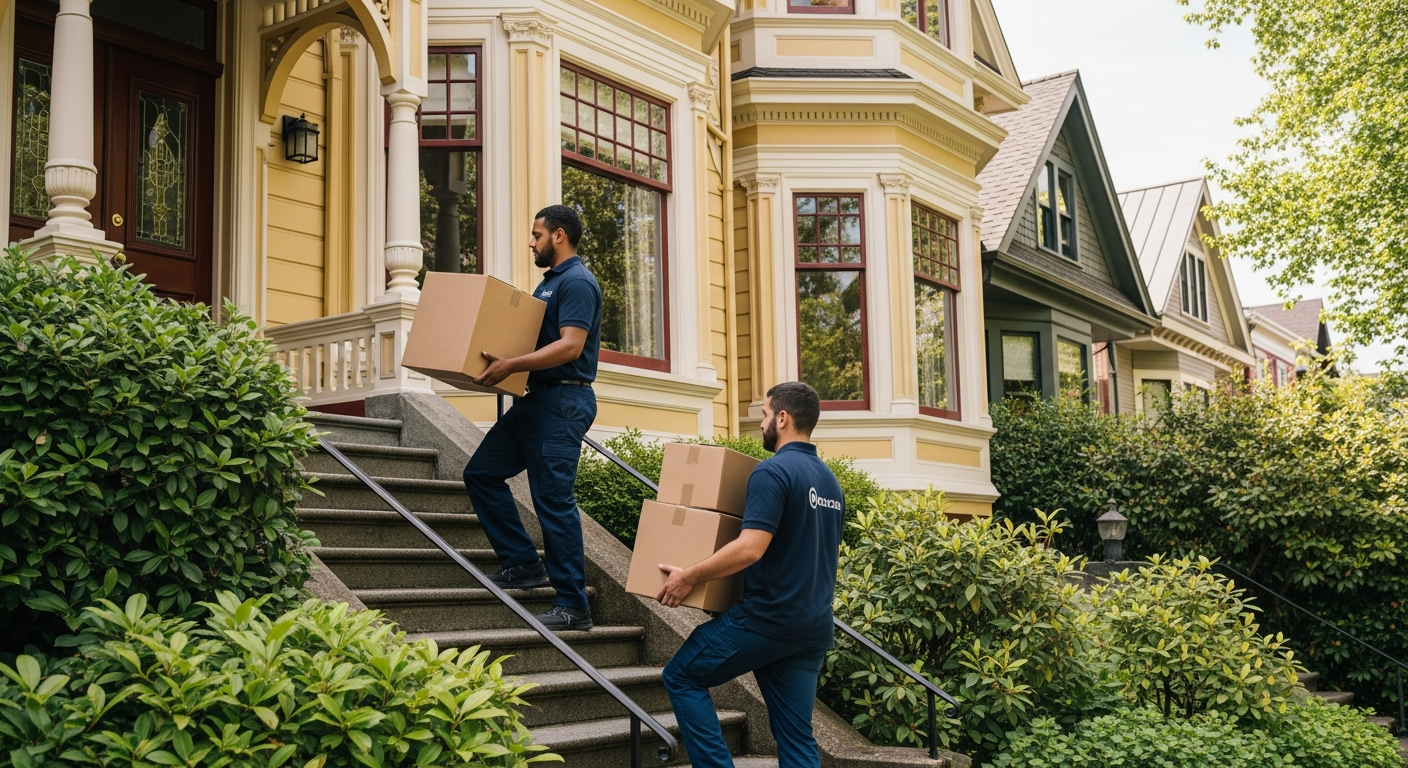
Mount Pleasant, Main Street & Cambie Corridor
Vancouver's most dynamic mid-density neighbourhood, Mount Pleasant blends heritage homes, character apartment buildings, modern townhouse complexes and a growing number of mid-rise condos along the Cambie Corridor and Broadway corridors.
What to Expect
- Mixed building types: A given block can include a 1920s heritage home, a 1970s walk-up apartment, and a 2022 mid-rise condo. Each requires different equipment and planning.
- Broadway construction: The Broadway Subway construction continues to affect traffic and access throughout 2026. Confirm route planning with your mover.
- Townhouse complexes: Many newer Mount Pleasant townhouse complexes have shared visitor parking only — coordinate with the strata for temporary loading access.
Typical Mount Pleasant Move Cost
Similar to West Side pricing, with somewhat lower averages because building stock is more diverse and average home size is smaller.
West Vancouver & the British Properties
West Vancouver represents the high end of the Metro Vancouver moving market. Large estate homes, long driveways, security gates, premium furnishings and high-value art and wine collections are the norm. Moves here can run 3–5x the cost of an average Vancouver condo move.
What to Expect
- Steep driveways and switchback streets. Crews need to know which streets accommodate a 26-foot truck and which require a shuttle vehicle.
- Security gates and concierge protocols. Many gated communities (British Properties, Whitby Estates, Caulfeild) require advance notice and crew lists.
- High-value items. Fine art, antiques, grand pianos, wine cellars and luxury vehicles are common. Specialty packing and dedicated insurance riders are essential.
- Larger crews and trucks. 4–6 person crews and multiple trucks are typical for full estate moves.
Typical West Vancouver Move Cost (2026)
- 2–3 bedroom condo / townhouse: $2,200 – $4,000
- 4 bedroom family home: $4,000 – $7,500
- 5+ bedroom estate: $7,500 – $18,000+
For estate-class moves, only consider residential movers in Vancouver with documented experience in luxury relocations, white-glove service, dedicated crews for art and antiques, and full-value replacement insurance available.
North Vancouver & the North Shore
North Vancouver — including Lower Lonsdale, the Boulevard, Lynn Valley, Deep Cove and Edgemont — is one of the most popular destinations for families relocating within Metro Vancouver. The mix of single-family homes, townhouses and mid-rise condos along with proximity to mountains and trails makes it a perennial favourite.
What to Expect
- Bridge traffic is a major factor. Lions Gate Bridge and Ironworkers Memorial Bridge can add 60–90 minutes to a move if not properly timed. Reputable crews schedule pickups and deliveries to avoid 7–10 AM and 3–7 PM bridge rush.
- Steep driveways and treed lots. Common throughout Deep Cove, Edgemont and the Boulevard. Confirm truck access in advance.
- New mid-rise condos. Lower Lonsdale and Brentwood-style developments in Central Lonsdale have downtown-style strata protocols (elevator booking, insurance certificates, damage deposits).
Typical North Vancouver Move Cost
Similar to West Side pricing, plus a $100–$300 "North Shore surcharge" some movers add to cover bridge travel time and toll bridges (though most major bridges are toll-free as of 2017).
Burnaby, Brentwood & Metrotown
Burnaby has rapidly transformed into one of Metro Vancouver's most active moving markets, with massive new high-rise developments around Metrotown, Brentwood and Lougheed adding thousands of new units every year.
What to Expect
- New high-rise protocols. Brentwood-style mega-developments (The Amazing Brentwood, Lougheed Heights, Station Square) have downtown-style strata protocols and shared loading bays.
- SkyTrain proximity. Loading bays near SkyTrain stations are often congested. Plan to arrive early.
- Older single-family stock. Burnaby South and North Burnaby still have plenty of 1960s–80s single-family homes with straightforward access.
- Travel time from Vancouver-based movers: If your mover is based in central Vancouver, expect $50–$150 in travel-time charges for Burnaby/Metrotown moves.
Typical Burnaby Move Cost
10–15% lower than equivalent Vancouver moves due to easier parking, larger units and less congested loading. Premium Brentwood high-rises align with downtown Vancouver pricing.
Richmond, Steveston & the Airport Corridor
Richmond's flat, suburban grid makes it one of the easiest moving markets in Metro Vancouver. Wide streets, ample parking, and modern construction throughout most neighbourhoods translate to faster, cheaper moves than the dense Vancouver core.
What to Expect
- Easy truck access. Most Richmond streets accommodate full 26-foot trucks without issue.
- Modern condo developments. Burkeville, Brighouse and the City Centre area have downtown-style strata protocols.
- Airport noise considerations. Some Richmond neighbourhoods have early morning move restrictions due to YVR flight paths.
- Travel time from Vancouver: $50–$200 in travel-time charges from central Vancouver-based movers.
Typical Richmond Move Cost
15–25% lower than equivalent Vancouver moves due to easier logistics. A 3-bedroom Richmond house move averages $1,800–$3,200.
Surrey, Langley & the Fraser Valley
The Fraser Valley represents the largest geographic moving market in Metro Vancouver. Surrey alone has more than 600,000 residents and is the fastest-growing city in BC. Moves to or from Surrey, Langley, Cloverdale, White Rock and the broader valley require different logistics than urban Vancouver moves.
What to Expect
- Large single-family homes. Average home sizes are bigger than in Vancouver, meaning more items, more boxes, and longer move times.
- Wide streets and easy access. Almost universal in suburban Surrey and Langley neighbourhoods.
- Significant travel-time charges. Vancouver-based movers typically add 1–2 hours of travel time billed at the hourly rate. Surrey-based movers may be more cost-effective.
- Bridge crossings. Pattullo, Port Mann and Alex Fraser Bridge can add 30–60 minutes during peak hours. Schedule accordingly.
Typical Surrey/Langley Move Cost
3-bedroom Surrey/Langley home: $1,800–$3,200. 4+ bedroom home: $3,000–$5,500. Add $200–$500 if using a Vancouver-based crew due to travel-time charges.
Vancouver Strata Building Move-In Requirements
One of the most overlooked aspects of Vancouver moves is the formal documentation almost every strata building requires before allowing a moving crew on-site. Failing to complete these requirements 1–2 weeks in advance can result in your crew being turned away at the lobby.
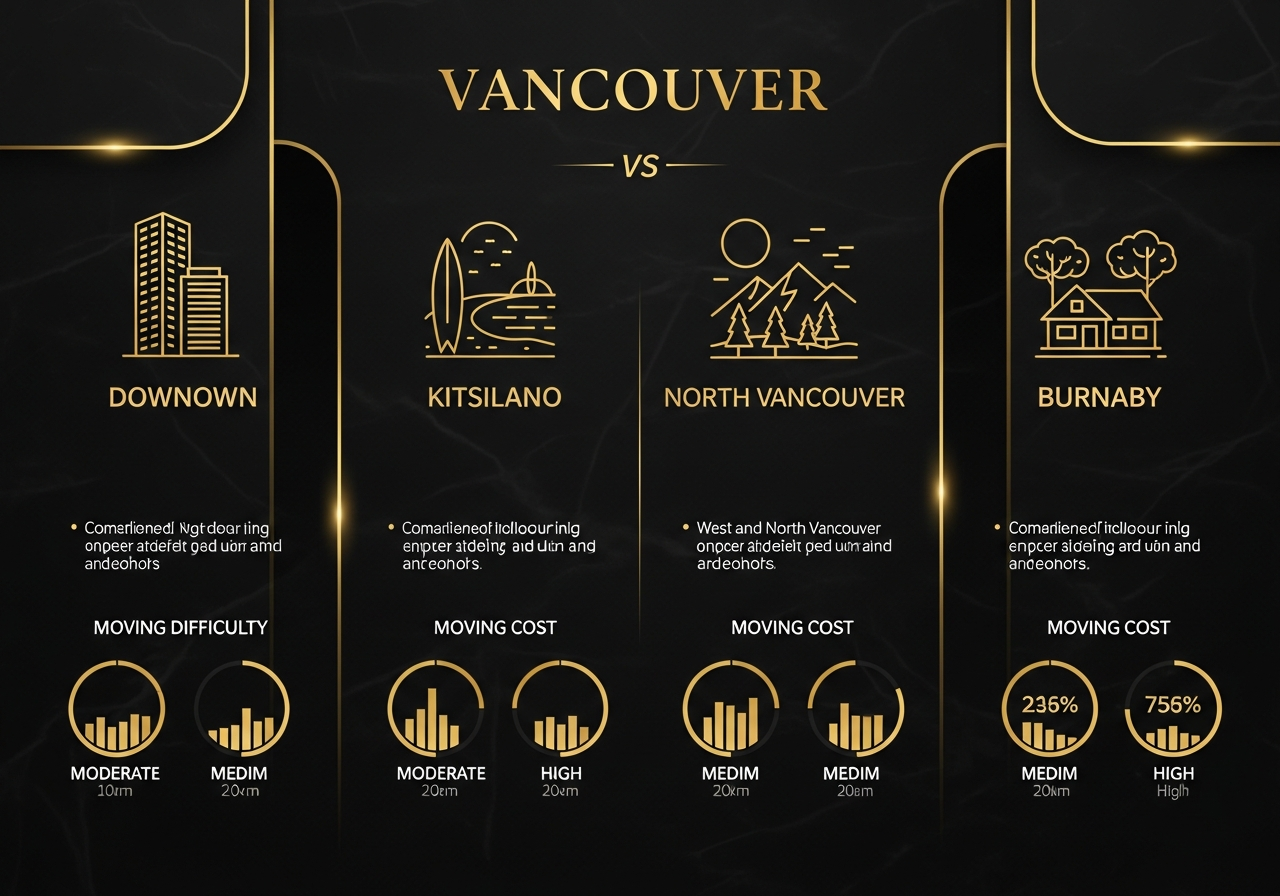
Standard Strata Requirements
- Move-in/move-out form: Submitted to building management 1–2 weeks before move date.
- Elevator reservation: Typically 3–4 hour blocks; some buildings limit moves to specific weekdays only.
- Refundable damage deposit: $300–$1,000 paid to strata before move; refunded after damage inspection.
- Certificate of Insurance (COI): From the mover, naming the strata corporation as additional insured. Most reputable movers in Vancouver can issue these within 24 hours.
- Move-in fee: Some buildings charge $100–$300 non-refundable.
- Elevator padding: Either provided by the building or installed by the mover.
Premium Building Additional Requirements
Top-tier buildings (Shangri-La, Fairmont Pacific Rim residences, Vancouver House, One Burrard Place) often require:
- Concierge approval of the moving crew list 4 weeks in advance
- White-glove protocols (specific gloves, equipment, floor protection)
- $2,000–$5,000 damage deposits
- Restricted moving hours (often weekday business hours only)
Working with a Vancouver moving company that has documented experience in your specific building eliminates virtually all of these risks.
Frequently Asked Questions
Which Vancouver neighbourhood is hardest to move in?
Downtown Vancouver high-rises — especially Coal Harbour, Yaletown and West End — are the most logistically complex due to strata requirements, elevator booking, insurance certificates, and tight loading bays. West Vancouver estate homes are the most expensive due to size and specialty handling.
How do I find Vancouver movers experienced with my specific building?
Ask the mover directly which buildings they have worked in your neighbourhood. Reputable local Vancouver movers keep records of every building they have moved into and can usually name specific buildings, elevator dimensions, and strata managers from memory.
Do I need a parking permit for my Vancouver move?
Most residential streets in the West End, Mount Pleasant, Kitsilano and downtown require a temporary parking permit ($48 from the City of Vancouver) for moving trucks. Strata buildings with loading bays do not require street permits. Your mover should confirm in advance.
How long does it take to complete a Vancouver downtown condo move?
A 1-bedroom downtown condo typically takes 3–5 hours including elevator wait time. A 2-bedroom typically takes 5–7 hours. Add 1–2 hours if your elevator block is restricted or shared with other moves on the same day.
Are Vancouver moving costs higher than other Canadian cities?
Yes. Vancouver runs 15–25% higher than Calgary or Edmonton and 10–15% higher than Toronto for equivalent home sizes, primarily due to strata complexity, parking challenges, and high property/insurance costs. Suburban Metro Vancouver (Surrey, Langley, Richmond) is generally 15–25% cheaper than central Vancouver.
Which Vancouver neighbourhoods are best for first-time movers?
Richmond, Burnaby (outside high-rise areas), Surrey, and Langley are the most forgiving — wide streets, easy parking, straightforward access. Downtown Vancouver, the West End, and Coal Harbour are the most demanding and reward experienced professional movers in Vancouver.
Do I need a Certificate of Insurance for my Vancouver move?
Almost universally, yes — for any strata building. The COI names the strata corporation as additional insured on the mover's liability policy. Reputable Vancouver movers issue COIs within 24 hours. Single-family homes generally do not require a COI.
What is the best day of the week to move in Vancouver?
Mid-week (Tuesday, Wednesday, Thursday) is the cheapest and easiest. Weekday moves cost 10–20% less than Saturday moves and traffic is significantly lighter. Many downtown strata buildings prohibit Saturday or Sunday moves entirely.
For neighbourhood-specific advice and a free written quote from a fully insured Vancouver moving company familiar with your building or area, request a consultation at least 2–3 weeks before your target move date.