Why You Might Need Storage During an Ottawa Move
Most people don't plan for storage when they start a move — but a surprising number end up needing it. Closing dates don't always line up. New homes need renovation before move-in. Apartments are smaller than the previous home. Family members need temporary space during life transitions. Storage bridges the gap between leaving one home and settling into the next.
The good news: Ottawa has a robust ecosystem of storage solutions, from traditional self-storage facilities to integrated mover-provided storage, climate-controlled premium units, and short-term portable container options. Understanding the differences saves money and protects your belongings.
The best moving and storage services in Ottawa integrate transportation and storage into one seamless package — saving you the labour of unloading at storage and reloading for delivery. For longer storage needs (1+ months), this integration significantly reduces costs and damage risk.
Common Reasons Ottawa Movers Need Storage
- Closing date gaps: Selling on July 15th, buying with August 1st possession.
- Renovation transitions: Moving in eventually, but the new home needs work first.
- Downsizing: New home is smaller than belongings warrant; need to store furniture for adult children or future use.
- Long-distance moves: Shipment arrives at destination city before new home is ready.
- Snowbird transitions: Spending winter in warmer climates, need household storage.
- Estate transitions: Inherited belongings need temporary storage during distribution.
- Renovation overlap: Furniture stored during home renovation projects.
- Job relocation timing: Job starts before housing arranged.
- University storage: Students storing summer/winter break belongings.
- Military and government postings: Temporary storage during overseas or interprovincial postings.
Types of Moving and Storage Solutions in Ottawa
Ottawa offers several distinct categories of storage. Choose based on duration, item value, access frequency, and budget:
Self-Storage Facilities
Traditional rented storage units. You access your unit, load/unload as needed, manage your own organization. Common operators in Ottawa: Public Storage, U-Haul, Apple Self Storage, Storage Mart, Sentinel Storage.
Best for:
- Customers who want regular access (monthly or more).
- Storage durations of 1 month to several years.
- DIY-friendly customers comfortable with self-loading.
- Lower-cost storage needs.
Mover-Provided Storage
Integrated storage offered by your moving company. Items are loaded into the moving truck, transported to the mover's warehouse, stored in palletized vault containers, and re-delivered when ready.
Best for:
- Customers who don't need access during storage period.
- Storage durations of days to several months.
- Bridging closing date gaps.
- Long-distance moves with delayed destination availability.
- Customers who want zero physical labour.
Climate-Controlled Storage
Premium storage units that maintain consistent temperature (typically 18–22°C) and humidity (35–55%) year-round. Critical for items sensitive to Ottawa's seasonal extremes.
Best for:
- Wood furniture, especially antiques.
- Leather furniture.
- Pianos and musical instruments.
- Electronics.
- Photographs, artwork, and important documents.
- Wine collections.
- Delicate fabrics and textiles.
- Any storage longer than 30 days.
Portable Container Storage (POD-Style)
Companies like PODS deliver a sealed shipping container to your home for loading. Once loaded, the container is transported to the company's storage facility (or directly to your destination). Available in Ottawa.
Best for:
- Long-distance moves with extended timeline.
- Customers who want to load on their own schedule.
- Bridging closing date gaps with self-pack capability.
Vehicle Storage
Specialized storage for cars, motorcycles, RVs, and boats. Often climate-controlled. Common during snowbird seasons or interprovincial postings.
Storage Costs in Ottawa: Complete 2026 Pricing
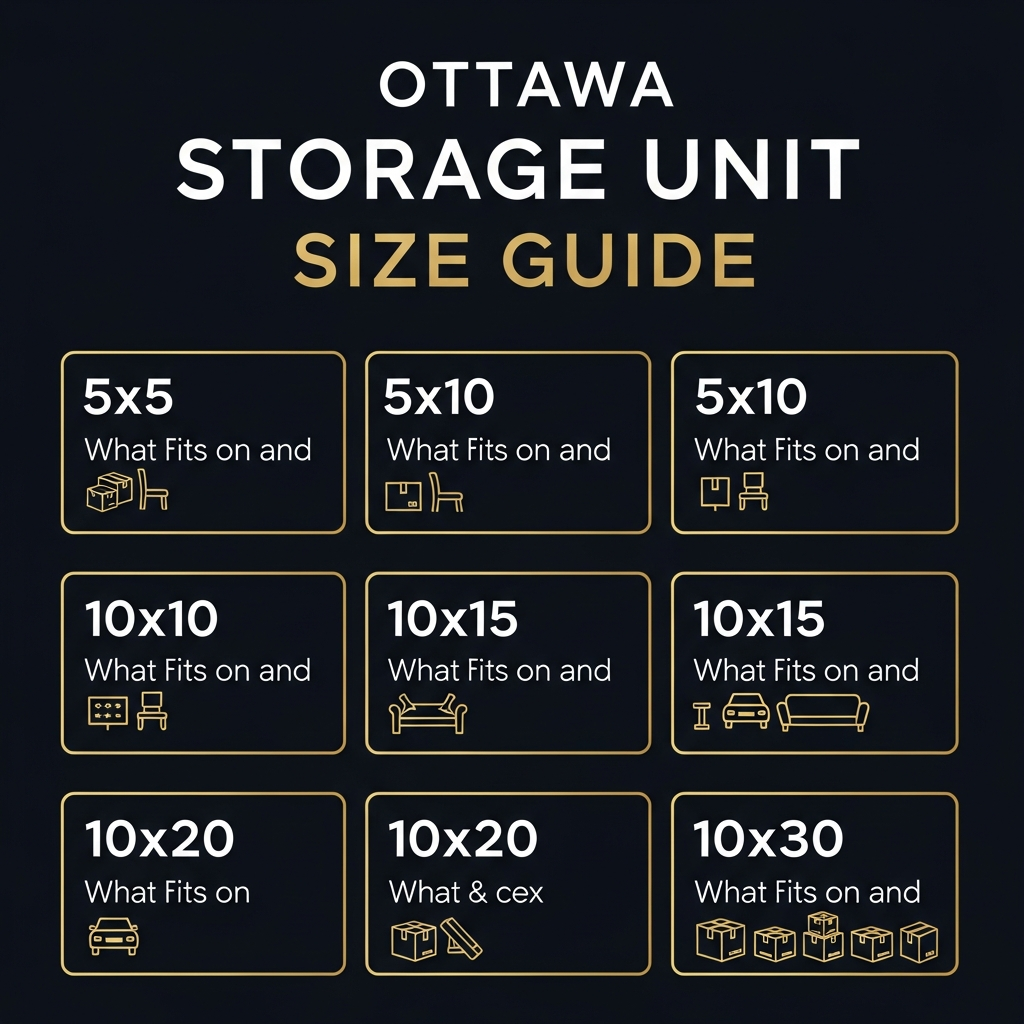
Self-Storage Unit Costs in Ottawa (2026, Per Month):
- 5×5 (25 sq ft) — Locker size: $60 – $130
- 5×10 (50 sq ft) — Walk-in closet size: $90 – $200
- 10×10 (100 sq ft) — 1-bedroom apartment: $140 – $280
- 10×15 (150 sq ft) — 2-bedroom apartment: $200 – $380
- 10×20 (200 sq ft) — 3-bedroom house: $260 – $480
- 10×30 (300 sq ft) — Large 4-bedroom house: $380 – $650
Climate-Controlled Premium
Climate-controlled units typically add 30–50% to standard pricing. Worth every dollar for any storage longer than 30 days, especially in Ottawa's extreme seasonal climate.
Mover-Provided Storage
Ottawa moving companies offering integrated storage typically charge:
- 1-bedroom shipment: $80–$150/month
- 2-bedroom shipment: $130–$220/month
- 3-bedroom shipment: $200–$320/month
- 4+ bedroom shipment: $300–$500/month
What's Typically Included
- Storage facility rent.
- Pickup and delivery (mover-provided storage).
- Inventory tracking.
- Climate control (where specified).
- Basic security (locked facility, surveillance).
What's Typically Extra
- Insurance for stored items (always purchase additional coverage).
- Packing supplies.
- Re-delivery fees (mover-provided storage usually charges separately for delivery out of storage).
- Long-term contract discounts may require commitment penalties for early termination.
- Access fees (some self-storage facilities charge for after-hours access).
Cost-Saving Tips
- Annual prepayment discounts: Most facilities offer 5–15% discounts for paying upfront for 12 months.
- First-month-free promotions: Common at self-storage facilities. Negotiate or shop around.
- Right-size your unit: Renting a unit too large is wasted money. Use a size estimator before booking.
- Off-peak booking: Storage demand peaks in summer (along with moving). Winter rates are often lower.
Climate-Controlled vs Standard Storage: What You Actually Need
Climate control is one of the most overlooked decisions in storage. Ottawa's climate ranges from -25°C in January to +30°C in July, with humidity swinging from 20% (winter dry) to 90% (summer humid). Items stored in standard (uninsulated) storage units experience these full extremes — and many items cannot survive them.
What Climate Control Actually Means
- Temperature: Maintained 18–22°C year-round.
- Humidity: Maintained 35–55% year-round (varies by facility).
- Ventilation: Active air circulation prevents stagnant air and mould.
- Insulation: Building insulation prevents thermal extremes.
Items That MUST Have Climate Control
- Wood furniture: Cracks, warps, and joint failures from temperature/humidity swings.
- Leather furniture: Stiffens and cracks in cold; mildews in humid heat.
- Pianos and musical instruments: Soundboards crack, glue joints fail.
- Antiques: Veneer separation, finish damage, structural failure.
- Electronics: Condensation damage when items move from cold storage to heated home.
- Photographs and documents: Fading, sticking, mould growth.
- Artwork (paintings, prints): Canvas warping, paint cracking, frame damage.
- Wine collections: Heat ruins wine permanently.
- Vinyl records: Heat causes warping.
- Fabric items (curtains, rugs, clothes): Mildew and pest damage.
- Books: Pages stick, covers warp, bindings fail.
Items That Can Tolerate Standard Storage
- Garden tools and equipment.
- Outdoor furniture (designed for weather).
- Sports equipment (most).
- Holiday decorations.
- Plastic storage bins of non-fragile items.
- Metal items (some — be wary of rust in humid storage).
The 30-Day Rule
For storage longer than 30 days, climate control is almost always worth the extra cost. Short-term storage (under 30 days) can sometimes use standard units if items are well-packed and the season is mild.
⚠️ Hidden Cost of Standard Storage: A homeowner stores $20,000 of antique furniture in a $130/month standard unit for 8 months ($1,040 in storage fees). Items sustain $4,000 in temperature/humidity damage. The $50/month climate control upgrade ($400 over 8 months) would have prevented all damage. Don't be that homeowner. Trusted Ottawa moving and storage providers default to climate control for valuable items.
Storage Unit Sizes: How Much Space Do You Need
5×5 (25 sq ft) — Closet Equivalent
What fits: Small dresser, boxes, suitcases, mattress, sports equipment, holiday decorations.
Best for: Studio apartment storage during transition, dorm room belongings, seasonal item storage.
5×10 (50 sq ft) — Half Studio
What fits: Bedroom set (bed, dresser, nightstand), couch, multiple boxes, smaller appliances.
Best for: Studio apartment full storage, partial 1-bedroom, business document storage.
10×10 (100 sq ft) — Full 1-Bedroom
What fits: 1-bedroom apartment contents (bed, couch, dining set, dresser, kitchen items, 30+ boxes).
Best for: Full 1-bedroom apartment storage, partial 2-bedroom storage.
10×15 (150 sq ft) — Full 2-Bedroom
What fits: 2-bedroom apartment or condo (bedroom set, living room, dining, kitchen, appliances, 50+ boxes).
Best for: 2-bedroom condo storage, partial 3-bedroom storage.
10×20 (200 sq ft) — Full 3-Bedroom House
What fits: 3-bedroom house contents (multiple bedroom sets, full living and dining, kitchen, appliances, 80+ boxes).
Best for: Full 3-bedroom house storage, family transitions, snowbird storage.
10×30 (300 sq ft) — Large House or Vehicle
What fits: 4-bedroom house contents, or 1 vehicle plus boxes, or small business inventory.
Best for: Full house storage, vehicle storage with belongings, small business inventory.
How to Estimate Your Needs
- Walk through your home and inventory major furniture.
- Count moving boxes (typical homes have 30–80 boxes worth of contents).
- Add 20–30% buffer for awkward shapes and stacking limitations.
- Use online size estimator tools provided by storage facilities.
- When in doubt, size up — running out of space mid-move is far worse than paying for a slightly larger unit.
Mover-Provided Storage vs Self-Storage Facilities
Mover-Provided Storage Advantages
- Single-vendor convenience: One company handles transport and storage.
- Reduced handling: Items loaded once into vault containers, stored intact, delivered without re-handling.
- Insurance continuity: Coverage often extends from move into storage.
- Climate control standard: Most professional moving companies use climate-controlled warehouses.
- Inventory tracking: Detailed records of every item stored.
- No physical labour: Customer never lifts a box.
Mover-Provided Storage Disadvantages
- Limited access: Cannot easily retrieve specific items mid-storage.
- Per-month pricing can add up: Long-term storage is more expensive than self-storage.
- Re-delivery fees: Charges for moving items back out of storage.
Self-Storage Advantages
- Full access: Visit your unit whenever you need anything.
- Lower long-term cost: Significantly cheaper for storage over 6 months.
- Pay-as-you-go: Month-to-month flexibility.
- Self-management: Organize as you prefer.
Self-Storage Disadvantages
- Multiple handling events: Items loaded, transported to storage, unloaded, stored, reloaded for delivery — each handling event increases damage risk.
- Customer responsibility: Loading, unloading, organizing, and security all on you.
- Insurance complexity: Mover insurance typically ends when items leave the truck. Storage insurance is separate.
- Climate control varies: Some facilities have it, many don't.
Which Is Right for Your Situation?
- Choose mover-provided storage if: Storage period is under 6 months, you don't need access, or you're bridging a closing date gap.
- Choose self-storage if: Storage period is over 6 months, you need regular access, or you're significantly cost-sensitive.
Long-Term Storage: Best Practices for 6+ Months
Long-term storage requires extra planning because items will sit untouched for months or years. The same packing that survives a move may not survive long-term storage. Apply these best practices:
Climate Control Is Non-Negotiable
For any long-term storage, climate-controlled facilities are essential. Ottawa's seasonal extremes guarantee damage to most items in standard storage over 6+ months.
Furniture Preparation
- Clean all surfaces thoroughly before storage. Food residue attracts pests.
- Wax wood furniture before long-term storage to protect finishes.
- Treat leather with conditioner before storage.
- Disassemble what can be disassembled — store flat to maximize space and reduce stress on joints.
- Cover all furniture with breathable cotton sheets, not plastic (plastic traps moisture).
- Place wood furniture on pallets or bricks — never directly on concrete (moisture wicks up).
Mattress and Upholstery Storage
- Use breathable mattress covers, not plastic bags (long-term plastic causes mildew).
- Store mattresses flat if possible. If standing, rotate every 2–3 months.
- Vacuum upholstered furniture thoroughly before storage.
Clothing Storage
- Wash and fully dry all clothing before storage. Stains attract pests.
- Use vacuum-seal bags for bulky items (saves space, prevents pest access).
- Use cedar blocks or lavender sachets for natural pest deterrent.
- Avoid mothballs — chemicals can transfer to clothing.
Document and Photo Storage
- Use acid-free archival boxes for important documents.
- Store photos in archival photo boxes, not regular cardboard.
- Climate control essential — humidity destroys photos and paper.
- Consider digitizing important documents before long-term storage.
Electronics and Appliances
- Remove batteries — they leak over time and damage devices.
- Wrap in original packaging when possible, or anti-static bubble wrap.
- Refrigerators and freezers must be fully cleaned, dried, and stored with doors slightly ajar (prevents mould).
- Electronics in climate-controlled storage to prevent condensation damage.
Pest Prevention
- Choose facilities with active pest control programs.
- Avoid storing food items (even sealed) — attracts rodents.
- Use sealed plastic bins instead of cardboard boxes for long-term storage.
- Inspect units monthly when possible.
Packing Supplies Ottawa: What to Buy and Where
Packing supplies determine how well your items survive both moving and storage. Quality matters — and the difference between good and bad supplies isn't always obvious.
Essential Packing Supplies
- Boxes: Small (1.5 cu ft), medium (3 cu ft), large (4.5 cu ft), extra-large (6 cu ft).
- Specialty boxes: Dish-pack (double-walled), wardrobe (hanging clothes), mirror cartons (framed art).
- Tape: Heavy-duty packing tape (3M or Scotch). Avoid cheap dollar-store tape.
- Bubble wrap: For fragile items.
- Packing paper (unprinted): Newsprint can transfer ink onto items.
- Mattress bags: Heavy plastic, sealed.
- Stretch wrap: Industrial film for furniture and grouped items.
- Quilted moving blankets: For furniture protection.
- Foam pouches: For glassware and dishes.
- Permanent markers: For labelling boxes.
- Box cutters and scissors: For unpacking.
Where to Buy in Ottawa
- U-Haul (multiple Ottawa locations): Wide selection, can be expensive but convenient.
- Home Depot, Canadian Tire, Walmart: Basic supplies at competitive pricing.
- Uline: Bulk pricing, requires online ordering.
- Local moving suppliers (e.g., Rugged Packaging Ottawa): Specialty packaging supplies.
- Your moving company: Often offers comprehensive packing supply kits at competitive prices.
- Free sources: Liquor stores (sturdy boxes), Costco (large boxes), grocery stores, Facebook Marketplace and Buy Nothing groups.
What to Spend Money On
- Quality tape — cheap tape fails and boxes burst open.
- Dish-pack boxes — protect kitchenware properly.
- Mattress bags — cost $10–$20, save $300+ in mattress damage.
- Wardrobe boxes — save hours of pressing and ironing later.
- Bubble wrap for true fragiles — newspaper isn't enough for valuable items.
Where to Save Money
- Standard moving boxes — free from grocery stores or liquor stores.
- Padding for non-fragile items — use towels, sheets, and clothing as packing material.
- Bulk packing paper — Uline pricing significantly cheaper than U-Haul.
- Markers and labels — basic supplies from any office supply store.
Security Features Every Storage Facility Should Have
Storage facilities are not all equal in security. Before booking, verify these essential features:
Required Security Features
- Gated access: Electronic keypad entry, individual access codes per customer.
- Video surveillance: 24/7 recording with multiple cameras covering hallways, exits, and unit doors.
- Individual unit alarms: Premium facilities have alarm sensors on each unit door.
- Bright interior lighting: Continuous lighting in hallways for safe access.
- Fire suppression systems: Sprinklers in interior corridors.
- On-site management: During business hours minimum.
- Climate control monitoring: For climate-controlled facilities, real-time monitoring of temperature and humidity.
Insurance Considerations
Self-storage facilities typically include very limited insurance (often $5,000–$10,000 per unit). For high-value items, purchase additional storage insurance:
- Through the facility: Often available as add-on, $10–$50/month.
- Through your homeowner's or renter's insurance: Many policies cover off-premises items, but verify with your insurer.
- Through specialty storage insurance: Companies like Storsmart offer dedicated coverage.
Access Hours
Some facilities offer 24/7 access; others restrict to business hours. Match access hours to your needs — pay extra for 24/7 only if you'll actually use it.
Pest Control
Active pest control programs are essential, especially for long-term storage. Ask facilities about their pest management protocols before booking.
How to Pack Items for Storage (Not Just Moving)
Packing for storage is different from packing for a move. Storage items will sit untouched for months — sometimes years. Apply storage-specific techniques:
Use Plastic Bins Instead of Cardboard for Long-Term Storage
Cardboard boxes degrade over time, especially with humidity. For storage over 6 months, transparent plastic bins with sealed lids are far superior — see-through for inventory, sealed against pests and moisture, stackable.
Wrap Furniture Properly
- Cotton sheets first (breathable), quilted blankets second.
- Avoid plastic stretch wrap directly on leather or wood for long-term storage (traps moisture).
- Stretch wrap on top of blankets is fine for short-term storage.
- Disassemble what can be disassembled.
Elevate Items Off the Floor
Place all items on pallets, plastic shelving, or wooden boards. Never store furniture or boxes directly on concrete floors — moisture wicks up through concrete and damages items.
Leave Aisle Space
If you need access during the storage period, leave a clear aisle from front to back. If you've added items by date, you'll be glad you left walking room.
Don't Pack to the Ceiling
Stack items high but leave 6–12 inches of clearance from the ceiling. Air circulation matters, and pest inspections require visual access.
Inventory Everything
Keep a master inventory list of what's in storage with photos. For mover-provided storage, the company maintains this for you. For self-storage, you're responsible.
Items NOT to Store
- Perishable food (attracts pests).
- Hazardous materials (paint, propane, solvents — many facilities prohibit these).
- Firearms and ammunition (separate storage required).
- Live animals.
- Plants.
- Wet items.
- Highly valuable jewellery, cash, or important documents (keep with you).
Combining Moving Services with Storage
The most efficient approach to moving with storage is choosing a mover that integrates both services. Here's how the typical integrated process works:
Step 1: Initial Consultation
Discuss your timeline, storage duration, items requiring climate control, and access needs with your moving company. They'll recommend the right storage approach.
Step 2: Pickup Day
Crew arrives, packs (if you've chosen full-service), loads the truck, and transports items to the company's storage facility (typically a warehouse with palletized vault containers).
Step 3: Storage Period
Items remain in sealed vault containers for the duration of your storage. Climate control, security, and inventory tracking all handled by the moving company.
Step 4: Delivery Day
You notify the company when ready for delivery. Items are loaded back onto the truck and delivered to your new home.
Pricing Structure
- Initial pickup and load: standard moving rates.
- Storage: monthly rate per shipment.
- Re-delivery: typically a separate charge ($300–$1,500 depending on size and distance).
Insurance Continuity
One major advantage of integrated mover-storage is that your insurance covers items continuously from pickup through delivery — no gap during storage. Self-storage requires separate insurance arrangements.
Key Takeaway: For storage durations under 6 months — especially when bridging closing date gaps or managing renovations — integrated mover-provided storage is almost always the most efficient option. Professional moving and storage solutions in Ottawa save the labour, complexity, and damage risk of multiple handling events. For very long-term storage (1+ years), self-storage facilities typically become more cost-effective.
Frequently Asked Questions About Moving and Storage
How much does storage cost per month in Ottawa?
Self-storage in Ottawa ranges from $60/month (5×5 unit) to $650/month (10×30 unit). Climate-controlled adds 30–50%. Mover-provided storage typically runs $80–$500/month depending on shipment size.
Do I need climate-controlled storage for my furniture?
Yes — for any storage longer than 30 days, especially in Ottawa's seasonal extremes. Wood, leather, electronics, and antiques all require climate control. The 30–50% premium is far cheaper than the cost of damaged items.
What's the cheapest storage in Ottawa?
Standard self-storage (no climate control) at facilities further from the urban core typically offers the lowest prices. However, "cheap" storage often costs more in damaged items than the savings justify. For valuable items, climate-controlled is always worth the extra cost.
Can my mover store my belongings during a move?
Yes — most professional Ottawa moving companies offer integrated storage services in their warehouses. This is typically the most convenient option for storage under 6 months, especially when bridging closing date gaps.
How long can I store furniture in storage?
With proper climate control and pest management, furniture can be stored indefinitely. Without climate control in Ottawa, expect noticeable damage within 6–12 months and significant damage within 2 years.
What size storage unit do I need for a 2-bedroom apartment?
A 10×15 unit (150 sq ft) typically holds a complete 2-bedroom apartment. Smaller 10×10 units may suffice for sparsely furnished apartments.
What can't I store in self-storage?
Perishable food, hazardous materials (paint, propane, solvents), firearms and ammunition, live animals, plants, and wet items are typically prohibited. Most facilities provide a complete prohibited items list.
Where can I buy moving boxes in Ottawa?
U-Haul, Home Depot, Canadian Tire, and Walmart sell moving boxes at varying prices. Bulk online ordering from Uline often offers better pricing. Free boxes are available from grocery stores, liquor stores, and Costco.
How do I prepare appliances for storage?
Clean thoroughly, dry completely, defrost refrigerators and freezers 24+ hours in advance, store with doors slightly ajar to prevent mould, and remove batteries from any battery-operated appliances.
Are storage units insured?
Self-storage facilities typically include limited insurance ($5,000–$10,000 per unit). For higher-value items, purchase additional coverage through the facility, your homeowner's policy, or specialty storage insurance.
Can I access my storage unit anytime?
Depends on the facility. Some offer 24/7 access; others restrict to business hours. Mover-provided vault storage typically requires advance notice (24–72 hours) for retrieval. Verify access hours before booking.
What's the best moving and storage company in Ottawa?
Look for companies with on-site climate-controlled warehouses, integrated transportation and storage services, comprehensive insurance coverage, transparent monthly pricing, and verifiable customer reviews. Reputable Ottawa moving and storage companies handle the entire process from pickup through long-term storage to final delivery seamlessly.
Ready to Combine Moving and Storage in Ottawa? Whether you need bridge storage between closing dates, long-term storage during a renovation, or specialty storage for valuable items, the right moving and storage solution makes all the difference. Call (613) 600-4000 for a free, no-obligation quote, or visit our free quote page to get pricing in under 2 minutes.