Moving From Ontario to Nova Scotia: Overview

Moving from Ontario to Nova Scotia — or anywhere in the Maritimes — has surged in popularity as more Canadians chase ocean coastline, charming communities, slower pace, and (historically) lower housing costs than Toronto and Ottawa. Whether you are relocating to Halifax for healthcare or naval work, retiring to the South Shore, or settling in New Brunswick or PEI, the eastern route is one of the more straightforward long-distance moves in the country.
Unlike the mountain-heavy western routes, the Ontario-to-Nova Scotia haul is comparatively short and follows well-developed highway corridors through Quebec and New Brunswick. That makes it more affordable and more predictable than a cross-country move to BC, with tighter delivery windows and fewer weather variables outside of winter.
This guide covers the entire journey: kilometres and transit days, realistic 2026 cost ranges in Canadian dollars by home size, what defines this route, and the Atlantic Canada paperwork waiting on arrival. Working with experienced long distance movers who serve the Maritimes regularly keeps everything on schedule. For broader context, read it with our guide to long distance moving costs in Canada.
Distance, Route & Transit Time
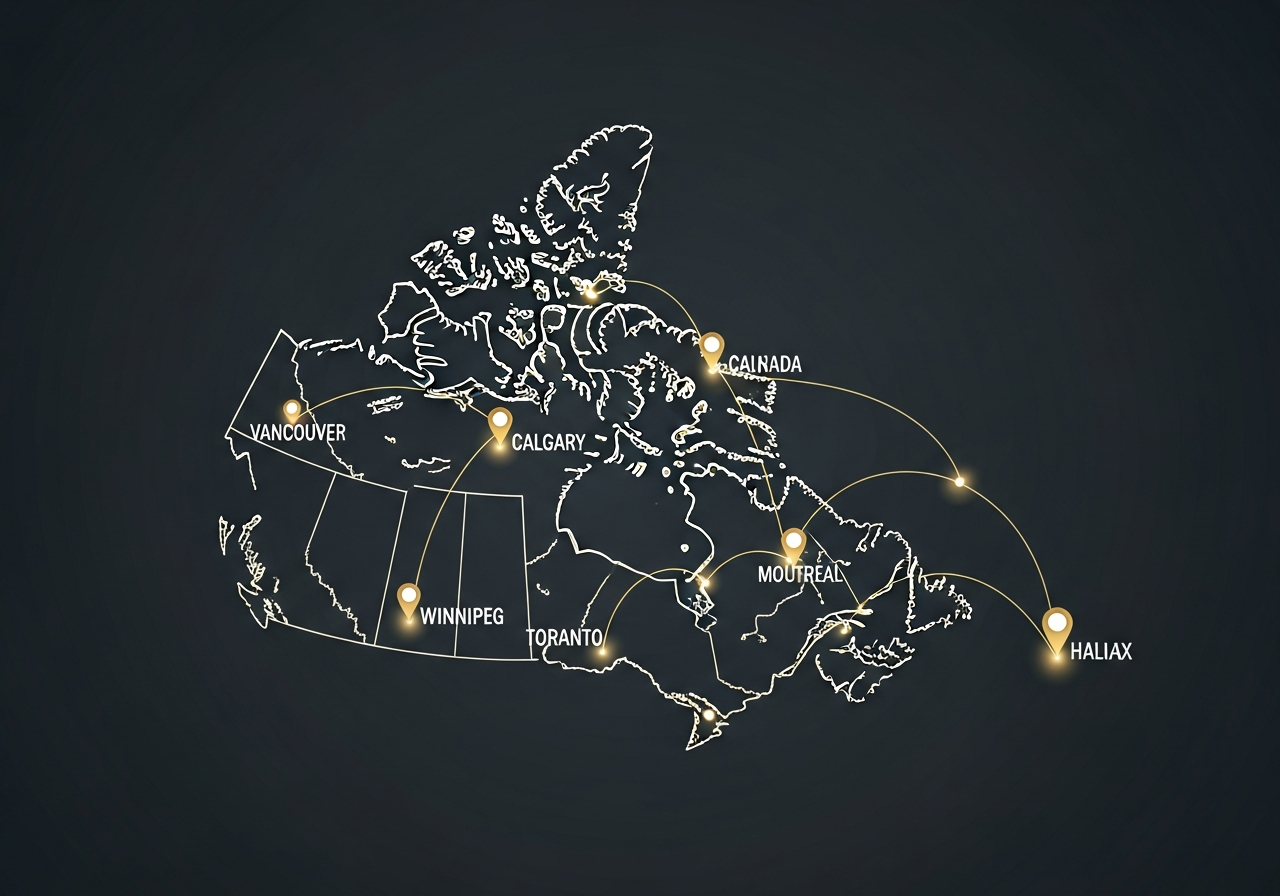
The driving distance from southern Ontario to Halifax is roughly 1,700 to 1,900 kilometres. A Toronto-to-Halifax run is about 1,800 km; from Ottawa you trim a few hundred kilometres. The route heads east through Quebec, follows the Trans-Canada through New Brunswick, and crosses into Nova Scotia near the Isthmus of Chignecto.
Typical transit time
Expect a 3 to 4 day delivery window on a dedicated truck, and 5 to 9 days for consolidated loads. This is one of the shorter long-distance moves in Canada, which keeps both cost and scheduling tighter than western routes.
What the route looks like
- Ontario to Quebec: Busy, well-serviced highway corridor through Montreal.
- New Brunswick: Forested Trans-Canada driving with good services.
- Into Nova Scotia: A short final leg to Halifax and the South Shore; onward to PEI via the Confederation Bridge.
One practical advantage of the eastern route is its density of services. Unlike the long, remote stretches of northern Ontario on a westbound move, the Quebec and New Brunswick corridor is dotted with fuel stops, rest areas, and towns, which makes scheduling more reliable and reduces the risk of weather stranding a crew far from support. The main exception is winter, when Maritime storms can briefly close highways.
Because the haul is shorter, many carriers can run it on a dedicated truck rather than a consolidated load, which tightens your delivery window and reduces handling. If your timeline is firm — for example, you need to be in Halifax for a job start date — ask specifically whether your mover can commit to a dedicated truck and what that adds to the quote.
A dependable cross-country moving company provides GPS tracking and a realistic window. For a city-level breakdown of this corridor, see our guide to Toronto to Halifax movers.
Cost Breakdown by Home Size
Because the eastern route is shorter, Ontario-to-Nova Scotia moves are generally the most affordable of the major long-distance corridors. The ranges below reflect realistic 2026 full-service pricing in Canadian dollars.
Studio / 1-bedroom apartment
Typical cost: $2,200 - $3,800 CAD. Small loads do well on consolidated shipments.
2-bedroom home or condo
Typical cost: $3,500 - $6,000 CAD. A common size for couples and downsizers heading east.
3-bedroom home
Typical cost: $5,500 - $9,500 CAD. Usually needs dedicated truck space and a full crew.
4-bedroom home
Typical cost: $8,500 - $14,000 CAD. Greater volume plus any specialty items add to the base.
5+ bedroom or luxury home
Typical cost: $12,000 - $23,000+ CAD. Premium handling, custom crating, and white-glove service.
The shorter distance does more than lower the headline price — it also compresses the labour and fuel components and reduces the number of handling points where damage can occur. That said, the basics of a fair quote do not change with distance. Each estimate should clearly separate line-haul transport, loading and unloading labour, packing materials, fuel surcharges, valuation coverage, and any specialty items such as pianos or appliances. Comparing those line items side by side is the only reliable way to tell whether a low number reflects genuine value or simply leaves costs to be added later.
Even on the cheapest major route, weight still drives price. Declutter before you pack and request written, binding or not-to-exceed estimates from any long distance moving services provider you shortlist.
For a full understanding of how movers calculate these figures, read our long distance moving cost guide and compare at least three written quotes.
What Makes the Ontario to Maritimes Route Special
The eastern route has its own character that affects planning, even though it is shorter than the western corridors.
Through Quebec and New Brunswick
Your goods pass through Quebec and the forested highways of New Brunswick. The corridor is well-serviced, but winter weather in the Maritimes — including coastal storms and nor'easters — can be intense.
Island destinations add a step
If you are continuing to Prince Edward Island, your shipment crosses the Confederation Bridge. If you are heading to Newfoundland, a ferry is involved, which is a separate logistical layer covered in our dedicated guide.
A maritime climate
Nova Scotia's coastal climate brings salt air, humidity, and significant storm activity. Protect wood, metal, and electronics from moisture during transit, and plan for damp conditions on delivery day. Fog is common along the coast through spring and early summer, and the region sees its share of hurricane-season weather in late summer and fall, so building a little schedule flexibility into your delivery window is wise even outside the depths of winter.
💡 Pro Tip: Coastal humidity and salt air can affect stored goods over time. If you are using storage on arrival, choose a climate-controlled facility.
Migration data from Statistics Canada shows strong recent movement from Ontario to the Maritimes, so established nationwide moving company crews run this lane often and can offer competitive consolidated rates.
Best Time of Year to Make the Move
The Maritimes have a distinct seasonal rhythm that affects both pricing and conditions.
Late spring through early fall
May to October is ideal, with comfortable driving and broad mover availability. The shoulder months offer better pricing than the July-August peak.
Summer peak
July and August are the busiest and most expensive months, often adding 20 to 30 percent. Book 8 to 12 weeks ahead for summer dates.
Winter
Maritime winters bring heavy snow, ice, and powerful coastal storms. Base rates are lowest, but nor'easters can delay delivery. A flexible window is essential. Even on this shorter route, the Quebec and New Brunswick legs can see serious winter weather.
⚠️ Winter Caution: Atlantic nor'easters can dump large amounts of snow quickly and close highways. Build flexibility into any December-to-March delivery window.
Line up your paperwork timing alongside our guide to changing your address when moving provinces so mail and benefits follow you east smoothly.
Packing & Preparation for the Eastern Haul
A 1,800 km move is shorter than a cross-country haul, but quality packing still protects your goods through multiple handling points and humid coastal conditions.
Pack with the coast in mind
- Add moisture protection for the humid maritime climate.
- Double-box and cushion fragiles for the multi-day trip.
- Disassemble large furniture and keep hardware labelled.
- Use sturdy, uniform boxes for a stable load.
Prepare an essentials kit
With delivery windows of several days, keep a labelled essentials box and a suitcase containing documents, medications, chargers, basic kitchen items, and weather-appropriate clothing.
Key Takeaway: Coastal humidity is the eastern route's hidden challenge. Good moisture protection during transit and storage keeps wood, metal, and electronics safe.
For a complete packing system, follow our long distance moving cost guide and consider professional packing services for fragile and valuable items.
Storage-in-Transit & Delivery Windows
Coordinating your Ontario closing date with your Nova Scotia possession date is rarely perfect, which is where storage-in-transit (SIT) helps.
When SIT applies
If your Ontario home closes before your Maritime home is ready, your mover can hold your goods in a secure, ideally climate-controlled warehouse and deliver when you take possession. This is common when buying and selling dates do not line up.
Understanding the window
Even on this shorter route, carriers quote a delivery window of several days rather than a single date, reflecting driving rules and weather. Winter storms in the Maritimes are the main variable.
Confirm SIT pricing, free-day allowances, and access rules in writing in advance, and prioritize climate-controlled storage given the coastal humidity.
See how storage fits into the budget in our long distance moving cost guide, and verify any carrier through the Canadian Association of Movers before booking.
Settling In: Nova Scotia Admin Tasks & Address Changes
Arriving in Nova Scotia triggers a checklist of administrative tasks. Handle them promptly to avoid coverage gaps.
Health coverage
Register with Nova Scotia's Medical Services Insurance (MSI) as soon as you become a resident. New residents may face a wait period before coverage begins, so keep your Ontario OHIP active during the transition.
Driver's licence and vehicle registration
Nova Scotia requires new residents to exchange their licence and register their vehicle within 90 days. Auto insurance is private in Nova Scotia, so shop multiple insurers and bring your Ontario claims history. Other Maritime provinces have similar timelines and private insurance markets.
Mail, taxes, and address updates
- Arrange Canada Post mail forwarding before leaving Ontario.
- Update your address with the CRA to keep benefits flowing.
- Transfer banking, utilities, insurance, and subscriptions.
Our detailed walkthrough on changing your address when moving provinces orders every notification so nothing slips through the cracks.
Shipping Your Vehicle & Moving Pets

Drive or ship your vehicle?
The Ontario-to-Nova Scotia drive is manageable at roughly 1,800 km, making a road trip realistic in good weather. Driving adds fuel, lodging, and wear, while auto transport typically costs $900 - $1,800 CAD on this shorter route. Remember Nova Scotia's 90-day registration deadline.
Moving with pets
A few days on the road is easier on pets than a week-long western haul, but still plan frequent breaks and pet-friendly accommodation, and never leave animals in extreme temperatures. If flying, confirm airline crate rules. Update microchip and tag information for your new Maritime address.
💡 Pro Tip: Pets must never ride in the moving truck. Keep them with the family or use a dedicated pet-transport service.
For vehicle equipment standards and regulations, consult Transport Canada, and budget for new insurance and registration on arrival.
How to Choose the Right Long Distance Mover
Even on a shorter route, the right carrier makes all the difference. Vet your options carefully.
What to confirm
- Proper interprovincial licensing and insurance.
- Documented experience serving the Maritimes.
- Membership in the Canadian Association of Movers and a clean Better Business Bureau record.
- Written, binding or not-to-exceed estimates.
Red flags
Watch for large cash deposits, quotes far below competitors, no physical address, and refusal to provide written terms.
⚠️ Scam Watch: A lowball quote that inflates on delivery day is the most common moving scam. Insist on a binding or not-to-exceed estimate in writing.
A reputable interprovincial moving company will answer these questions openly. When you are ready, request a free moving quote and compare it against at least two others.
Smart Ways to Reduce Your Moving Budget
The eastern route is already the most affordable major corridor, and a few strategies trim it further.
Reduce shipment weight
Weight drives price. Sell, donate, or recycle anything not worth the trip east. Bulky, low-value items are rarely worth hauling 1,800 km.
Time it well
Off-season, mid-month, mid-week moves beat summer month-end weekends and can save 15 to 25 percent.
Use consolidated shipping
For small or flexible loads, sharing truck space with other eastbound shipments is the most economical option.
Key Takeaway: Weight, timing, and service level are your three biggest levers. On an already affordable route, optimizing them can make the move very budget-friendly.
For the full set of tactics, read our long distance moving cost guide and gather several written quotes before committing.
Choosing Your Nova Scotia Community: Halifax, the Valley & the South Shore
Nova Scotia packs remarkable variety into a compact province, and the community you choose changes your commute, your housing budget, and your daily relationship with the ocean. Settling this question before your Ontario goods head east means your crew can unload at a confirmed address instead of routing everything into storage.
Halifax and the urban core
Roughly 45 percent of Nova Scotians live in the Halifax region, the province's economic engine, with a growing tech sector, two major hospitals, naval employment, and several universities. Halifax has been one of Canada's fastest-appreciating housing markets in recent years, so expect benchmark prices well above the provincial average — often in the $500,000-$650,000 range for a single-family home — and a tight rental market. Line up housing early rather than house-hunting after you land.
Beyond Halifax
- The Annapolis Valley (Wolfville, Kentville): Wine country and farmland, milder and drier than the open coast, popular with families and retirees.
- The South Shore (Lunenburg, Mahone Bay, Bridgewater): Postcard fishing towns with strong tourism and some of the province's most charming heritage homes.
- Cape Breton (Sydney, Baddeck): The most affordable housing in the province and dramatic Highlands scenery, in exchange for longer drives to major services.
- Truro and the central corridor: The well-connected hub of the province, handy for commuting and onward travel to New Brunswick or PEI.
Coastal living realities
Wherever you settle near the water, budget for the maritime climate: higher home-insurance premiums in storm-exposed areas, salt-air maintenance on vehicles and exteriors, and the occasional hurricane-remnant storm in late summer and fall. Inland Valley and central communities trade ocean views for milder, more sheltered weather.
💡 Pro Tip: Set up mail forwarding from your Ontario address through Canada Post about a week before you leave, so stray bills, renewals, and government letters follow you east while you finish your address changes.
First-month money math
Plan for a security deposit (capped at half a month's rent under Nova Scotia rules), a power hookup with Nova Scotia Power, and internet installation, which can carry longer lead times in rural areas. Nova Scotia applies a 15 percent HST — higher than Ontario's 13 percent — so factor the difference into any furniture or appliance purchases you make after arrival.
Key Takeaway: Decide between Halifax's urban convenience, the sheltered Valley, the scenic South Shore, or affordable Cape Breton before booking delivery — and budget for coastal insurance and the 15 percent HST.
Frequently Asked Questions
How much does it cost to move from Ontario to Nova Scotia?
Expect roughly $2,200-$3,800 for a one-bedroom, $5,500-$9,500 for a three-bedroom home, and $12,000-$23,000+ for a large or luxury home. The shorter eastern route makes this generally the most affordable major long-distance corridor, though weight and season still drive the price.
How long does the move take?
Plan for a 3-4 day delivery window on a dedicated truck across roughly 1,800 km, or 5-9 days for a consolidated load. This is one of the shorter long-distance moves in Canada.
When should I book?
Book 8-12 weeks ahead for summer and 4-6 weeks for off-season. Late spring and early fall offer the best balance of good driving conditions and pricing.
How soon do I need a Nova Scotia licence and health card?
Nova Scotia gives new residents 90 days to exchange their licence and register their vehicle. Register with Medical Services Insurance promptly, since coverage may begin after a wait period — keep your Ontario coverage active in the meantime.
Should I drive my car or ship it?
At about 1,800 km, driving is realistic in good weather and a manageable road trip. Auto transport typically costs $900-$1,800 and lets you fly. Choose based on time, budget, and weather.
What should I know about the maritime climate?
Nova Scotia's coastal climate brings salt air, humidity, and powerful storms including nor'easters. Use moisture protection during transit and choose climate-controlled storage if you need to store goods on arrival.
What if I'm continuing to PEI or Newfoundland?
PEI involves crossing the Confederation Bridge, while Newfoundland requires a ferry — a separate logistical step covered in our dedicated Newfoundland moving guide. Confirm any island-specific arrangements with your mover in advance.