Moving From Ontario to Alberta: Overview

Ontario to Alberta is one of Canada's busiest interprovincial moving corridors, and for good reason. Alberta's energy, technology, agriculture, and trades sectors draw workers from across Ontario, while the province's lower cost of living, no provincial sales tax, and proximity to the Rockies appeal to families and retirees alike. Whether you are heading to Calgary's downtown core, Edmonton's growing tech scene, or a smaller community in between, this is a well-travelled route that experienced movers run constantly.
The good news is that the Ontario-to-Alberta haul is one of the more predictable long-distance moves in the country. Most of the journey is flat, fast Prairie driving with reliable highway infrastructure. That predictability translates into competitive pricing and tighter delivery windows than a mountain route — provided you plan ahead and hire crews who know the corridor.
This guide covers the full picture: kilometres and transit days, realistic 2026 cost ranges in Canadian dollars by home size, the route's distinctive features, and the Alberta-specific paperwork waiting for you on arrival. Working with seasoned long distance movers who run this lane weekly is the simplest way to keep your move on budget and on schedule. For broader context, pair this with our overview of long distance moving costs in Canada.
Distance, Route & Transit Time
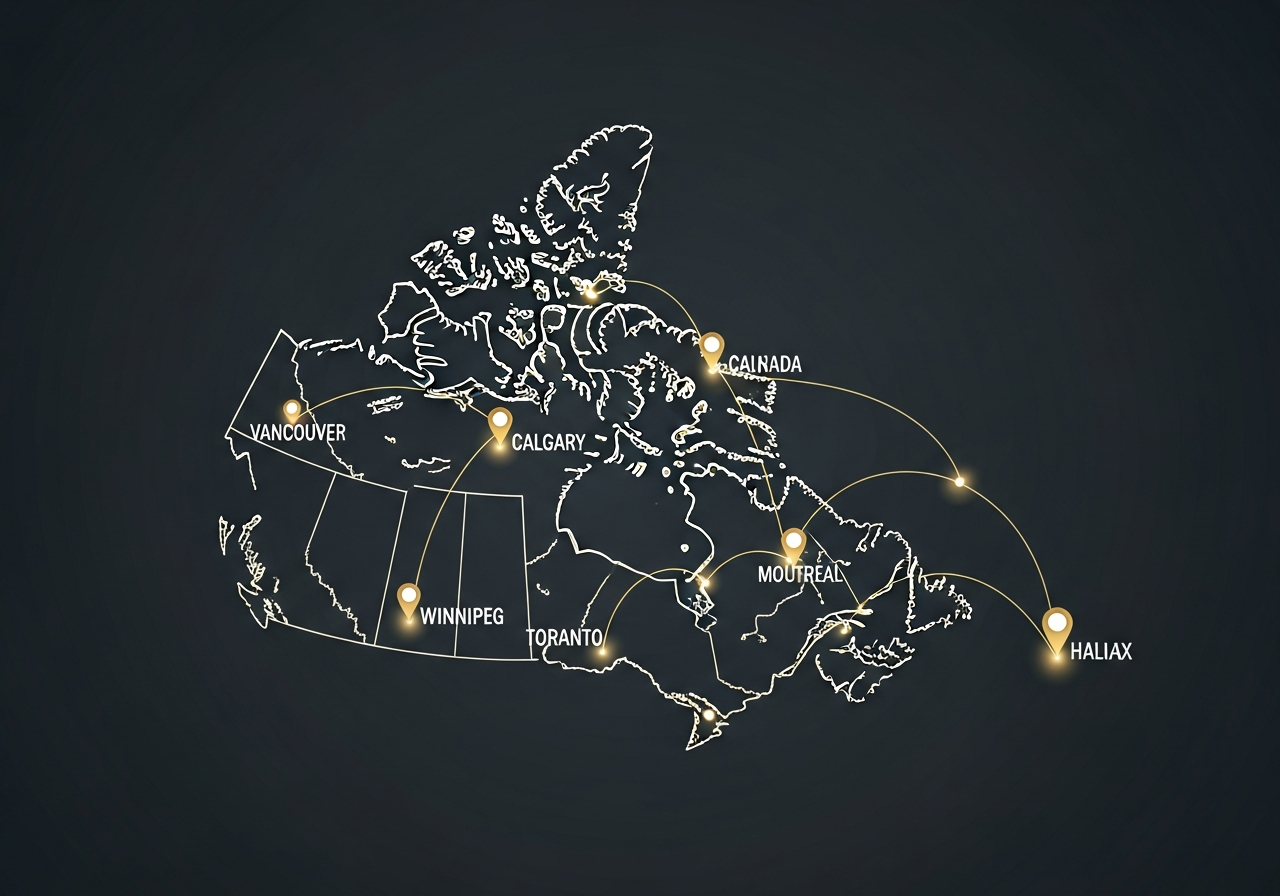
The driving distance from southern Ontario to Alberta's major cities is roughly 3,300 to 3,600 kilometres. A Toronto-to-Calgary run is about 3,400 km; Toronto-to-Edmonton is closer to 3,500 km. From Ottawa, add a few hundred kilometres on the eastern end. The standard route runs west on the Trans-Canada and Highway 17 across northern Ontario, then southwest across Manitoba and Saskatchewan before reaching Alberta.
Typical transit time
Expect a 4 to 6 day delivery window on a dedicated truck, and 7 to 12 days for consolidated loads sharing truck space. The flat Prairie terrain keeps the back half of this trip fast and on schedule compared with the mountain routes farther west.
What the route looks like
- Northern Ontario: The longest, most remote stretch, with extended gaps between fuel and rest stops.
- Manitoba and Saskatchewan: Open, flat, efficient driving on well-maintained Prairie highways.
- Alberta approach: Smooth highway access into both Calgary and Edmonton.
A reputable long distance moving company will give you GPS tracking and a delivery window rather than a single date — the honest way to schedule a multi-day haul. For a city-specific breakdown, see our guide to Toronto to Calgary movers.
Cost Breakdown by Home Size
Ontario-to-Alberta pricing is shorter and flatter than a coastal move, which generally makes it more affordable than an Ontario-to-BC relocation. The ranges below reflect realistic 2026 full-service pricing in Canadian dollars.
Studio / 1-bedroom apartment
Typical cost: $2,800 - $4,800 CAD. Small loads do well on consolidated shipments at the lower end of the range.
2-bedroom home or condo
Typical cost: $4,500 - $7,500 CAD. A very common move size for workers relocating to the energy and tech sectors.
3-bedroom home
Typical cost: $6,800 - $11,500 CAD. Generally needs dedicated truck space and a full crew.
4-bedroom home
Typical cost: $10,000 - $16,000 CAD. More volume and often specialty items add to the base.
5+ bedroom or luxury home
Typical cost: $14,500 - $27,000+ CAD. Premium handling, custom crating, and white-glove service.
The flatter, shorter route helps, but weight is still the dominant cost driver. Declutter ruthlessly and request written, binding or not-to-exceed estimates from any nationwide moving company you shortlist.
To see exactly how carriers build these numbers, read our breakdown of long distance moving costs in Canada and gather at least three comparable quotes.
What Makes the Ontario to Alberta Route Special
Compared with the mountain-heavy routes to BC, the Ontario-to-Alberta corridor is defined by distance and weather rather than terrain difficulty — and that shapes how you should plan.
Predictable Prairie driving
Once past northern Ontario, the route is flat and fast. This reliability means fewer weather-related surprises in summer and tighter, more dependable delivery windows than a coastal move.
Northern Ontario is the wild card
The stretch between Sault Ste. Marie and Thunder Bay is the most remote part of the trip, with long gaps between services and weather that can turn quickly. Experienced drivers plan fuel and rest carefully through this section.
Climate change at the destination
Alberta's continental climate brings cold, dry winters and warm summers, plus the famous Chinook winds in the south that can swing temperatures dramatically. Pack and plan for a drier climate than Ontario's, and protect humidity-sensitive items accordingly.
💡 Pro Tip: Alberta has no provincial sales tax, so big-ticket replacement purchases after your move — furniture, appliances — can be noticeably cheaper than buying and hauling them from Ontario.
Strong, sustained migration from Ontario to Alberta — well documented in Statistics Canada data — means established cross-country moving company crews run this lane frequently and can often offer competitive consolidated rates.
Best Time of Year to Make the Move
Alberta's seasons strongly influence both pricing and driving conditions on this route.
Late spring through early fall
May to early October offers the most comfortable driving and broadest mover availability. Shoulder months like May, September, and October combine good weather with softer pricing than the summer peak.
Summer peak
July and August are the busiest and priciest months, often adding 20 to 30 percent. Book 8 to 12 weeks ahead if summer is your only option.
Winter moves
Alberta winters are cold and can bring sudden Prairie blizzards and icy highways. Base rates are lowest, but you trade savings for weather risk. Check 511 Alberta for live road conditions before and during a winter move.
⚠️ Winter Caution: Prairie blizzards and ground blizzards can reduce visibility to near zero and close highways with little warning. A flexible delivery window is essential for any December-to-February move.
Whatever date you choose, line up your paperwork early using our guide to changing your address when moving provinces so benefits and mail follow you smoothly.
Packing & Preparation for the Prairie Haul
A 3,400 km journey still demands serious packing discipline, even on a flatter route. Vibration over long distances and multiple handling points can damage poorly packed goods.
Pack to survive the distance
- Use sturdy, uniform boxes so the crew can build a stable, shift-resistant load.
- Double-box and cushion fragiles generously.
- Disassemble large furniture and bag hardware to each piece.
- Account for Alberta's dry climate — wood furniture can dry and crack, so avoid extreme exposure during loading and unloading.
Prepare an essentials kit
With delivery windows of several days, keep a labelled essentials box and a suitcase of must-haves with you: documents, medications, chargers, basic kitchen items, and warm clothing for Alberta's climate.
Key Takeaway: Good packing is cheap insurance. On a multi-day haul, the difference between intact arrival and breakage almost always comes down to box quality and load stability.
For a complete system, follow our broader guidance on long distance moving in Canada and consider professional packing services for fragile and high-value items.
Storage-in-Transit & Delivery Windows
Aligning your Ontario closing date with your Alberta possession date is rarely perfect, which makes storage-in-transit (SIT) a useful tool.
When SIT helps
If you move out of your Ontario home before your Alberta home is ready, your mover can hold your goods in a secure warehouse and deliver when you take possession. This is routine on cross-country moves where dates seldom line up.
Understanding the delivery window
Long-haul carriers quote a window of several days rather than one guaranteed date, reflecting driving-hour limits and weather. The Prairie portion is fast and reliable, but northern Ontario and winter storms can still introduce variability.
Confirm SIT rates, free-day allowances, and access terms in writing before signing. Unexpected storage fees are a frequent hidden cost on long moves.
See how SIT fits a full budget in our long distance moving cost guide, and verify any carrier's credentials through the Canadian Association of Movers before you commit.
Settling In: Alberta Admin Tasks & Address Changes
Arriving in Alberta means a focused list of administrative tasks. Handle these promptly to avoid coverage gaps.
Health coverage
Register with the Alberta Health Care Insurance Plan (AHCIP) as soon as you become a resident. Unlike some provinces, Alberta coverage generally begins on your date of establishing residency, but you must register promptly with proof of residency and identity. Keep your Ontario OHIP active until you are confirmed.
Driver's licence and vehicle registration
Alberta requires new residents to obtain an Alberta licence and register their vehicle within 90 days. Licensing and registration are handled at provincial registry agent offices. Alberta's auto insurance is private, so shop multiple insurers and bring your Ontario claims history.
Mail, taxes, and address updates
- Arrange Canada Post mail forwarding before leaving Ontario.
- Update your address with the CRA to protect benefits and tax correspondence.
- Transfer banking, utilities, insurance, and subscriptions.
Our complete walkthrough on changing your address when moving provinces sequences every notification so you do not miss a deadline.
Shipping Your Vehicle & Moving Pets
Drive or ship your vehicle?
The Ontario-to-Alberta drive is long but mostly flat, making it a manageable road trip in good weather. Driving adds fuel, lodging, and vehicle wear over 3,400-plus kilometres. Auto-transport carriers typically charge $1,200 - $2,400 CAD for this route, letting you fly instead. Remember that Alberta requires registration within 90 days of arrival.
Moving with pets
Plan pet welfare carefully on a multi-day trip. If driving, schedule frequent breaks and pet-friendly accommodations, and never leave animals in extreme heat or cold. If flying, confirm airline crate requirements ahead of time. Update microchip and tag information with your new Alberta address.
💡 Pro Tip: Pets must never ride in the moving truck. Keep them with the family or arrange a dedicated pet-transport service for the journey.
For full vehicle logistics and equipment regulations, consult Transport Canada and budget realistically for registration and insurance changes on arrival.
How to Choose the Right Long Distance Mover
Even on a predictable route, the carrier you hire determines whether your move is smooth or stressful. Vet your options carefully.
What to verify
- Interprovincial licensing and proper insurance.
- Documented experience on the Ontario-to-Alberta corridor.
- Membership with the Canadian Association of Movers and a solid Better Business Bureau record.
- Written, binding or not-to-exceed estimates — never an off-the-cuff phone number.
Warning signs
Large cash deposits, unusually low quotes, missing physical addresses, and refusal to put terms in writing are all red flags worth walking away from.
⚠️ Scam Watch: The classic cross-country scam is a lowball estimate that inflates on delivery day. A binding or not-to-exceed estimate in writing is your best protection.
A professional professional long distance movers team will answer every one of these questions readily. When you are ready to compare, request a free moving quote and weigh it against at least two others.
Smart Ways to Reduce Your Moving Budget
The Ontario-to-Alberta route is already cheaper than a coastal move, and a few smart moves can trim the total further.
Reduce your shipment weight
Weight drives price. Sell, donate, or recycle anything not worth hauling 3,400 km. With Alberta's no-PST advantage, replacing some bulky, low-value items after arrival can be cheaper than shipping them.
Choose the right season and date
Off-season, mid-month, mid-week moves are noticeably cheaper than summer month-end weekends. Shifting from peak to shoulder season can save 15 to 25 percent.
Use consolidated shipping for small loads
If your load is modest and your timeline flexible, sharing truck space is the most economical option on this corridor.
Key Takeaway: Weight, timing, and service level are your three biggest levers. Optimize all three and the difference can be thousands of dollars.
For the full set of savings strategies, read our long distance moving cost guide and collect multiple written quotes before deciding.
Choosing Where to Live in Alberta: Calgary, Edmonton & Beyond
One decision shapes your entire Alberta move more than any other: where, exactly, you put down roots. The province is far more varied than its energy-and-ranching reputation suggests, and the community you choose changes your housing budget, your commute, and even the weather you wake up to. Sorting this out before the truck rolls west saves you from an expensive in-province move later.
Calgary versus Edmonton
Calgary and Edmonton are the two anchors, separated by roughly 300 km of Highway 2 (the QEII), about a three-hour drive. Calgary sits at around 1,045 metres of elevation in the foothills, an hour from Kananaskis and 90 minutes from Banff; expect more sunshine, regular winter chinooks that briefly melt the snow, and slightly higher home prices, with benchmark single-family homes often in the $600,000-$750,000 range in 2026. Edmonton, the capital, generally runs 10-20 percent cheaper on housing, anchored by strong public-sector, healthcare, and trades employment and a famously busy festival calendar.
Beyond the big two
- Red Deer: Midway between the cities, popular with families wanting lower prices and a small-city pace.
- Lethbridge: Sunny southern Alberta, a university town with some of the province's most affordable housing.
- Airdrie, Okotoks & Cochrane: Fast-growing Calgary commuter towns with newer builds and family amenities.
- Canmore: Mountain living for those who can absorb resort-town real-estate prices.
Alberta has led the country in interprovincial in-migration for several years running, which keeps rental markets tight in the major centres. You can review current population and migration figures yourself at Statistics Canada to gauge how fast your prospective community is growing — and how competitive its housing may be when you arrive.
First-month money math
Alberta's lack of a provincial sales tax is the headline saving, but build a realistic first-month budget: a security deposit (capped at one month's rent), utility hookups for power and natural gas, and auto-insurance premiums that are often higher than what you paid in Ontario. Renters should also note the province has no cap on rent increases between tenancies, so confirm every lease term in writing before you commit.
💡 Pro Tip: If you are job-hunting on arrival, target communities with diversified economies — Edmonton's public sector or Calgary's growing tech and logistics base — rather than tying yourself entirely to energy-sector hiring cycles.
Whichever community you choose, lock in your rental or possession date before confirming your delivery window so your crew can unload directly instead of routing your goods into storage. To see how these Alberta numbers compare nationally, our long distance moving cost guide puts the corridor in context.
Key Takeaway: Pick your Alberta community before you book delivery. Calgary buys you mountains and chinooks at a premium; Edmonton and the smaller cities stretch your housing dollar further — and the no-PST advantage helps everywhere.
Frequently Asked Questions
How much does it cost to move from Ontario to Alberta?
A full-service move runs roughly $2,800-$4,800 for a one-bedroom, $6,800-$11,500 for a three-bedroom home, and $14,500-$27,000+ for a large or luxury home. The flatter, shorter route makes it generally cheaper than an Ontario-to-BC move, but weight and season still dominate the price.
How long does the move take?
Plan for a 4-6 day delivery window on a dedicated truck across the roughly 3,400-3,500 km route, or 7-12 days for a consolidated load. The flat Prairie terrain keeps the back half of the trip fast and reliable.
When should I book?
Book 8-12 weeks ahead for summer and 4-6 weeks for off-season dates. Late spring and early fall offer the best combination of good weather and competitive pricing.
How quickly do I need an Alberta licence and health card?
Alberta gives new residents 90 days to get an Alberta licence and register their vehicle at a registry agent. Register with the Alberta Health Care Insurance Plan promptly on becoming a resident, and keep your Ontario coverage active until you are confirmed.
Should I drive my car or ship it?
The drive is long but mostly flat and manageable in good weather. Auto transport typically costs $1,200-$2,400 and lets you fly. Choose based on time, budget, and comfort with long-distance and winter driving.
Is Alberta really cheaper to live in than Ontario?
Alberta has no provincial sales tax and often lower housing costs than major Ontario centres, which is a key reason for the strong migration. That can also make replacing bulky items after the move cheaper than hauling them across the country.
What about winter moves to Alberta?
Winter brings the lowest base rates but real weather risk from Prairie blizzards and icy highways. If you move in winter, monitor 511 Alberta for road conditions and build a flexible delivery window into your plan.