Why Hiring Movers in Vancouver Is Different
Hiring movers in Vancouver is not the same as booking a moving crew in most other Canadian cities. The combination of dense urban density, narrow streets in heritage neighbourhoods, strict strata building rules, mountain-meets-ocean geography and one of the highest property values in North America creates a moving environment where small mistakes turn into very expensive ones.
If you are relocating across the Lower Mainland — whether you are moving from a high-rise in Yaletown to a heritage home in Kitsilano, or transitioning from a townhouse in Burnaby to a single-family home in West Vancouver — the moving company you choose can be the single biggest factor in how your day actually unfolds. Experienced movers in Vancouver understand that this city demands more careful planning, more permits, more elevator bookings and more route knowledge than almost any other market in the country.
Quick stat: According to the 2026 BC Real Estate Association migration report, more than 71,000 households relocate within Metro Vancouver every year, and roughly 1 in 3 involves a high-rise or strata-controlled building with formal move-in and move-out procedures.
The purpose of this guide is to give you a complete, no-nonsense picture of what it costs, what to expect, how to choose, and how to avoid the most common — and most expensive — mistakes Vancouver homeowners make when they hire a moving company in 2026.
Average Cost of Movers in Vancouver (2026)
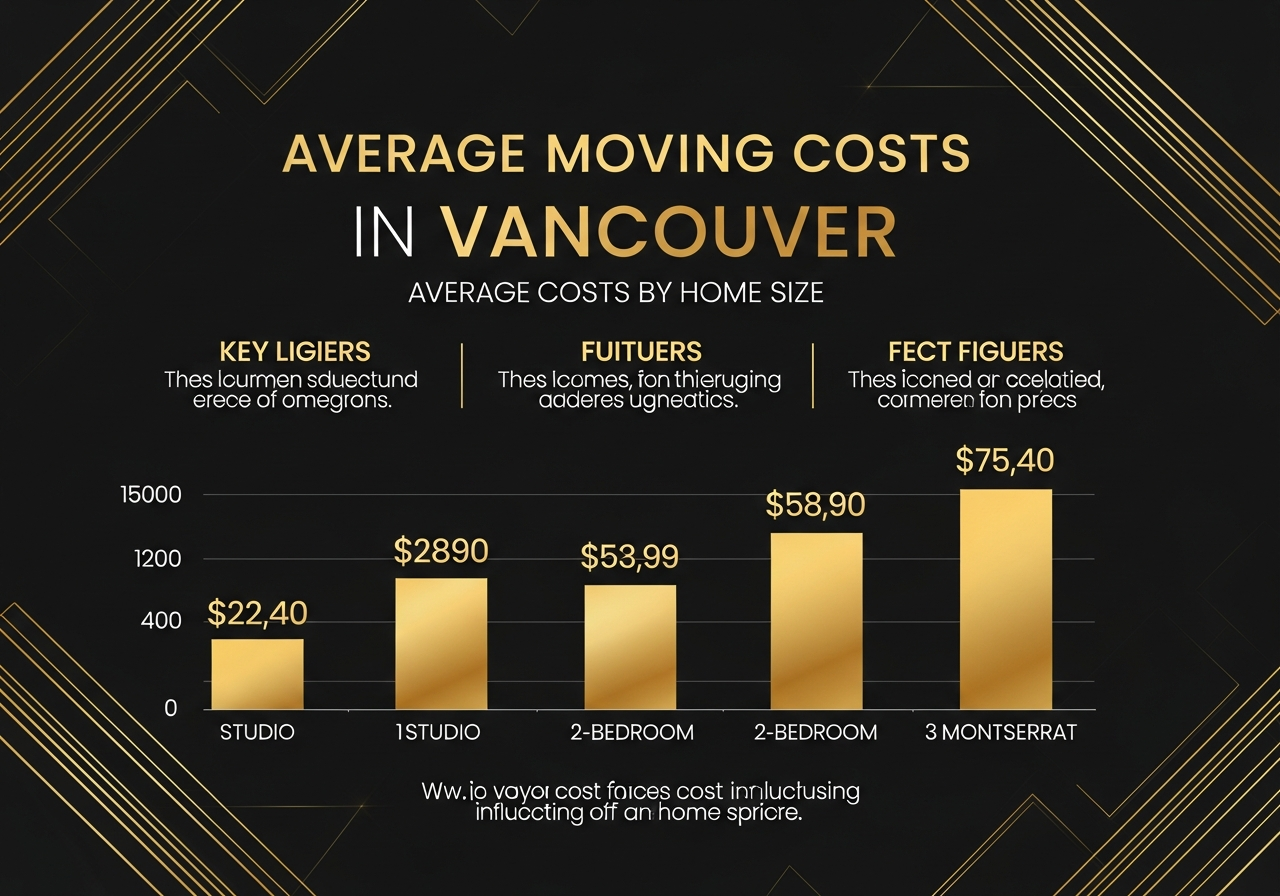
Moving costs in Vancouver have continued to climb in 2026 as fuel, labour and insurance prices rise across British Columbia. Based on aggregated data from hundreds of completed moves across the Lower Mainland over the last twelve months, here is what the average homeowner can realistically expect to pay for a professional, fully insured local move:
Average Vancouver Local Moving Costs (2026):
- Studio / 1-bedroom apartment: $650 – $1,100
- 2-bedroom condo: $1,100 – $1,800
- 3-bedroom house: $1,600 – $2,800
- 4+ bedroom home: $2,500 – $4,500+
- West Vancouver / luxury homes: $3,500 – $7,000+
These ranges assume a fully insured crew, a properly equipped truck, basic furniture protection (moving blankets, stretch wrap, mattress bags), and standard loading and unloading time. They do not include packing services, specialty item handling (pianos, hot tubs, gun safes), strata damage deposits, or temporary storage.
Compared to other major Canadian markets, Vancouver tends to run 15–25% higher than Calgary or Edmonton for the same size of home, and roughly 10–15% higher than Toronto when you factor in the city's notoriously difficult parking and elevator booking requirements. Choosing experienced professional movers in Vancouver who know the city's quirks is what keeps your final invoice close to the original quote.
Hourly Rates vs Flat-Rate Pricing Explained
Most local Vancouver moves are billed by the hour, but the way different companies structure that hourly rate varies dramatically. Understanding the model your chosen mover uses is essential before you sign any paperwork.
Typical Vancouver Hourly Rates (2026)
- 2 movers + truck: $150 – $190 per hour
- 3 movers + truck: $190 – $250 per hour
- 4 movers + truck: $240 – $320 per hour
- Specialty crew (piano, fine art): $280 – $400 per hour
The clock typically starts when the crew arrives at your origin address and stops when the last item is placed at your destination. Some companies add a travel-time charge (usually 0.5 to 1.0 hour) to cover the drive from their warehouse to your home — always ask if this is included or extra.
When Flat-Rate Pricing Makes Sense
Flat-rate (binding) quotes are most common for long-distance moves, large estate relocations, and complex strata buildings where the mover wants to guarantee a price up front. The advantage is predictability; the disadvantage is that flat rates often build in a 10–20% safety buffer that you absorb even if the move runs smoothly.
💡 Pro Tip: For straightforward apartment and condo moves under 5 hours, hourly pricing is almost always cheaper. For homes over 3 bedrooms, complex builds, or long-distance routes, request a binding flat-rate quote from a reputable Vancouver moving company after an in-home or video survey.
What Professional Vancouver Movers Actually Include
One of the biggest sources of confusion — and disputes — between Vancouver homeowners and moving companies is what is actually included in the base price versus what gets billed as an extra. A truly professional crew should provide all of the following without surprise charges:
- A clean, properly equipped truck: Sized appropriately for your home (16-, 20-, or 26-foot) with a working lift gate, ramps, and clean cargo area.
- Standard protective materials: Heavy-duty moving blankets, stretch wrap, mattress bags, floor runners and door jamb protectors.
- Basic furniture disassembly and reassembly: Bed frames, dining tables, modular sofas, and standard IKEA furniture.
- Loading, transport and unloading: Including reasonable carry distances from the truck to your door.
- Basic released-value liability coverage: $0.60 per pound per article (the legal minimum in BC).
- A signed bill of lading and inventory: Documenting condition and contents at pickup.
Items that are almost always quoted separately include full-value replacement insurance, packing labour and supplies, long-carry fees beyond 75 feet, stair charges in walk-up buildings, shuttle service when a 26-foot truck cannot access your street, and specialty handling for pianos, safes and oversized art.
⚠️ Watch out: Some low-cost Vancouver movers list a "competitive" hourly rate and then add separate fees for blankets, tape, stretch wrap and even the lift gate. Always ask for a written, itemized quote before booking.
How to Choose the Right Vancouver Moving Company
With more than 300 registered moving companies operating in Metro Vancouver, narrowing the field can feel overwhelming. Use these five criteria to filter quickly and confidently:
- BC business registration and a real address. Verify the company is registered with the BC Corporate Registry and operates from a commercial address — not a P.O. box or residential driveway. You can confirm registration through BC Registry Services.
- WorkSafeBC coverage. Any crew entering your home must be covered by WorkSafeBC. If a mover is injured on your property and the company is not covered, you can be held personally liable. Verify status through WorkSafeBC's online tool.
- Comprehensive cargo and liability insurance. The basic $0.60/lb coverage is essentially worthless for valuables. Reputable local Vancouver movers offer full-value replacement protection as a paid upgrade.
- Verifiable reviews across multiple platforms. Google, the Better Business Bureau, and the Canadian Association of Movers (CAM) directory should all corroborate quality.
- A written, itemized estimate. Any quote provided over the phone without seeing your home is a guess. For homes over 2 bedrooms, insist on an in-home or video survey.
Key Takeaway: The cheapest quote is almost never the cheapest move. Vancouver is full of stories of homeowners who saved $300 on a quote and lost $3,000 in damaged furniture, hostage situations, or surprise charges at delivery. Always pay a small premium for credentials, insurance and verifiable reputation.
Vancouver Neighbourhood Logistics You Need to Know
Vancouver's neighbourhoods each present unique moving challenges. A crew that has never worked in your specific area can lose hours to parking issues, elevator problems, and access restrictions. Here is what experienced movers in Vancouver know about the city's most common moving zones:
Downtown, Yaletown and Coal Harbour
High-rise concrete towers dominate. Almost every building requires elevator booking 1–2 weeks in advance, a refundable damage deposit ($300–$1,000), proof of insurance naming the strata as additional insured, and a strict moving window (usually 8 AM – 5 PM weekdays only). Loading bays are tight and often shared with three or four neighbouring buildings.
Kitsilano, Mount Pleasant and Commercial Drive
Heritage homes, character conversions and walk-up apartments. Narrow streets, tight doorways, and steep staircases are the norm. Many homes have unique entry quirks — sunken living rooms, basement suites with low ceilings, and back-lane access only — that experienced crews handle without losing time.
West Vancouver and the British Properties
Long driveways, steep grades, security gates and high-value furniture. Crews need to know which streets accommodate a 26-foot truck versus which require a shuttle. Specialty handling for fine art, wine collections, and luxury vehicles is common.
North Vancouver and the North Shore
Lions Gate and Ironworkers Memorial Bridge traffic can add 60–90 minutes to a move if not properly timed. Reputable crews schedule pickups and deliveries to avoid bridge rush hour.
Burnaby, Richmond, Surrey and Beyond
More sprawling, more single-family homes, easier parking — but longer travel time, which affects your hourly charge. Always confirm whether travel time is included or billed extra.
Seasonal Pricing and the Best Time to Move in Vancouver
Vancouver's mild coastal climate makes year-round moving feasible, but pricing fluctuates significantly by season.
Vancouver Moving Season Cost Multipliers (2026):
- Peak (May 1 – September 30): +20% to +35% over base rates
- Shoulder (October & April): Base rates
- Off-peak (November – March): -15% to -25% below base rates
- End-of-month spikes: Last 3 and first 3 days of every month run 10–15% higher
If your schedule is flexible, booking a mid-month, mid-week move in November, January or February can save you 25–40% compared to a Saturday move in July. Winter rain is the most common concern, but professional crews come equipped with floor protection, shoe covers and tarps. Snowfall in Vancouver is rare — typically only 3–5 days per year — but when it happens, mountainside neighbourhoods (West Vancouver, North Shore) can become temporarily inaccessible.
A growing number of established professional movers in Vancouver now offer "off-peak guarantees" — locking in winter rates as long as you book at least 30 days in advance.
Hidden Costs Most Vancouver Homeowners Miss
Even a thorough quote can be blown apart by surprise charges. Being aware of these potential extras protects your budget:
- Strata damage deposits: $200–$1,000, refundable after the building manager inspects common areas. Almost always required in downtown high-rises.
- Certificate of Insurance (COI) issuance fees: $25–$75 per certificate. Many buildings demand the strata be named as additional insured.
- Elevator reservation fees: Some buildings charge $50–$150 to dedicate an elevator for your move.
- Parking permits: The City of Vancouver charges $48 for a temporary parking permit, often required for moves on metered or restricted streets.
- Shuttle service: If a 26-foot truck cannot access your destination, a smaller shuttle vehicle runs $300–$600 extra.
- Long carry fees: $1–$2 per foot beyond the standard 75 feet.
- Stair charges: $75–$150 per flight beyond the first.
- Disposal fees: If you ask the crew to remove unwanted furniture, dump fees can run $100–$300.
💡 Pro Tip: Ask your mover for a written list of every possible additional charge before signing. A professional Vancouver moving company will provide this without hesitation.
Red Flags: How to Spot a Bad Vancouver Mover
The BC Consumer Protection office receives hundreds of complaints about moving companies every year. Most could have been avoided by recognizing these warning signs before booking:
- No physical office or warehouse address. If the only address you can find is a P.O. box or a residential driveway, walk away.
- Quote provided over the phone without seeing your home. For any move larger than a studio, this is a guarantee of surprise charges.
- Demands a large cash deposit. Reputable companies accept credit cards and never demand more than 10–20% up front.
- No written contract or blank bill of lading. Every detail — date, time, crew size, hourly rate, all charges — must be in writing before the truck leaves.
- Unbranded trucks or rented U-Haul vehicles. Legitimate companies invest in their own branded fleet.
- No proof of WorkSafeBC coverage. Ask for a clearance letter and verify it independently.
- Unusually low quotes. If one quote is 30% below the others, the company is either inexperienced or planning to extort you at delivery.
- Pressure tactics. "We have a truck in your area tomorrow only — book now" is a classic high-pressure scam pattern.
The Canadian Association of Movers maintains a national list of moving scams and warning signs that is updated regularly. Cross-reference any company you are considering.
Pre-Move Checklist for a Vancouver Relocation
A successful Vancouver move starts 6–8 weeks before moving day. Use this condensed checklist as your master timeline:
6–8 Weeks Before
- Get 3 written estimates from licensed residential movers in Vancouver
- Begin decluttering room by room
- Notify your landlord (if renting) or list your home (if selling)
- Book your moving date and confirm in writing
4 Weeks Before
- Book elevator at both origin and destination strata buildings
- Order parking permits from the City of Vancouver if needed
- Submit Certificate of Insurance request to both strata managers
- Start packing seasonal items, books and decor
2 Weeks Before
- Notify utilities (BC Hydro, FortisBC, Telus/Shaw, ICBC)
- Update your address with CRA, banks, MSP, insurance, employer
- Arrange mail forwarding through Canada Post
- Pack non-essential rooms
1 Week Before
- Confirm crew arrival time, truck size and final price with your mover
- Pack an essentials box (medications, chargers, toiletries, snacks, important documents)
- Defrost freezer 24 hours before move
- Take final meter readings
Moving Day
- Walk the crew through both homes before loading begins
- Keep cash or e-transfer ready for tips ($20–$50 per crew member is standard in Vancouver)
- Take photos of high-value items before they are loaded
- Do a final walkthrough of your old home before locking up
Frequently Asked Questions
How much do movers cost in Vancouver per hour?
In 2026, two-person crews with a truck typically charge $150–$190 per hour, three-person crews charge $190–$250 per hour, and four-person crews run $240–$320 per hour. Specialty crews for pianos, fine art, or luxury homes can charge $280–$400 per hour. Most companies enforce a 3- or 4-hour minimum.
How far in advance should I book Vancouver movers?
For a peak-season move (May through September), book at least 6–8 weeks in advance. For off-peak winter moves, 2–3 weeks is usually sufficient. End-of-month and end-of-lease dates (June 30, August 31) book up earliest.
Do Vancouver movers handle strata building requirements?
Reputable movers in Vancouver are familiar with virtually every major strata building in the city and will help you complete the required Certificate of Insurance, elevator booking forms, and damage deposit paperwork. Inexperienced crews often arrive without proper documentation and get turned away at the lobby — costing you the entire deposit.
Is it cheaper to move on a weekday in Vancouver?
Yes — significantly. Tuesday, Wednesday and Thursday moves typically run 10–20% less than Saturday moves. Combine a weekday move with a mid-month, off-peak date (e.g., a Wednesday in February) and you can save 30–40% compared to a peak-season Saturday.
How much should I tip Vancouver movers?
The Vancouver standard is $20–$50 per crew member for a half-day move and $50–$100 per crew member for a full-day move. Tipping is not mandatory but is widely appreciated. Adjust based on the complexity of your move, the weather, and the quality of service.
Can Vancouver movers help with long-distance moves out of BC?
Many local Vancouver companies also operate as long-distance and interprovincial carriers. Verify that the company holds interprovincial operating authority and full cross-border cargo insurance before booking a move to Calgary, Toronto, or beyond.
What is the cheapest way to move in Vancouver?
The cheapest legitimate option is a mid-week, mid-month, off-peak move with a 2-person crew, full self-packing, and a flexible arrival window. Avoid "cheap" U-Haul-style unbranded crews advertising rock-bottom rates — these are the source of the vast majority of scam complaints in BC.
Do I need insurance beyond what the mover provides?
The default $0.60/lb released-value coverage is essentially worthless for valuables. For any move involving electronics, art, or furniture worth more than $5,000, purchase full-value replacement protection from your mover, or arrange a separate moving insurance policy. Check your tenant or homeowner policy as well — some extend coverage to goods in transit.
For a free, no-obligation written quote from a fully licensed and insured Vancouver moving company that specializes in residential and condo moves across Metro Vancouver, contact a reputable local crew today and book early — especially for summer dates.