What Furniture Movers in Ottawa Actually Do
When people search for furniture movers in Ottawa, they usually fall into one of two camps: those who only need a single heavy item moved (a sectional, a piano, a wardrobe), and those who need an entire household of furniture professionally relocated. Both are valid reasons to call a specialist — and both are reasons to avoid the cheapest option you can find.
Furniture moving is its own discipline. While general residential movers handle boxes and standard household goods, furniture specialists deal with weight, awkward shapes, fragile finishes, and irreplaceable items. A 600-lb sectional sofa that won't fit through a doorway. An IKEA wardrobe that needs to come apart and go back together. A grandmother's mahogany dining table that cannot be scratched. An LG washer/dryer stack that needs to be unhooked, transported, and reinstalled.
A professional furniture moving company in Ottawa handles four core services: heavy lifting and transport, custom protection, disassembly and reassembly, and specialty handling for antiques, electronics, and appliances. The best companies bundle these into one seamless service so you never have to coordinate between multiple vendors.
Here's what falls under the umbrella of furniture moving services in the National Capital Region:
- Single-item furniture transport: Moving one large piece — a couch, dresser, treadmill, china cabinet, or armoire — from one address to another.
- Whole-house furniture moves: Comprehensive transport of all furniture during a household relocation.
- Furniture pickup and delivery: Picking up a furniture purchase from a store, marketplace seller, or auction and delivering it to your home.
- In-home furniture moves: Rearranging or relocating heavy items within the same home (basement to upstairs, room to room).
- Furniture disposal and donation: Removing unwanted furniture for donation, recycling, or junk removal.
- Furniture assembly: Building flat-pack and modular furniture (IKEA, Wayfair, Article).
- Antique and high-value piece relocation: Specialized handling of irreplaceable or fragile pieces.
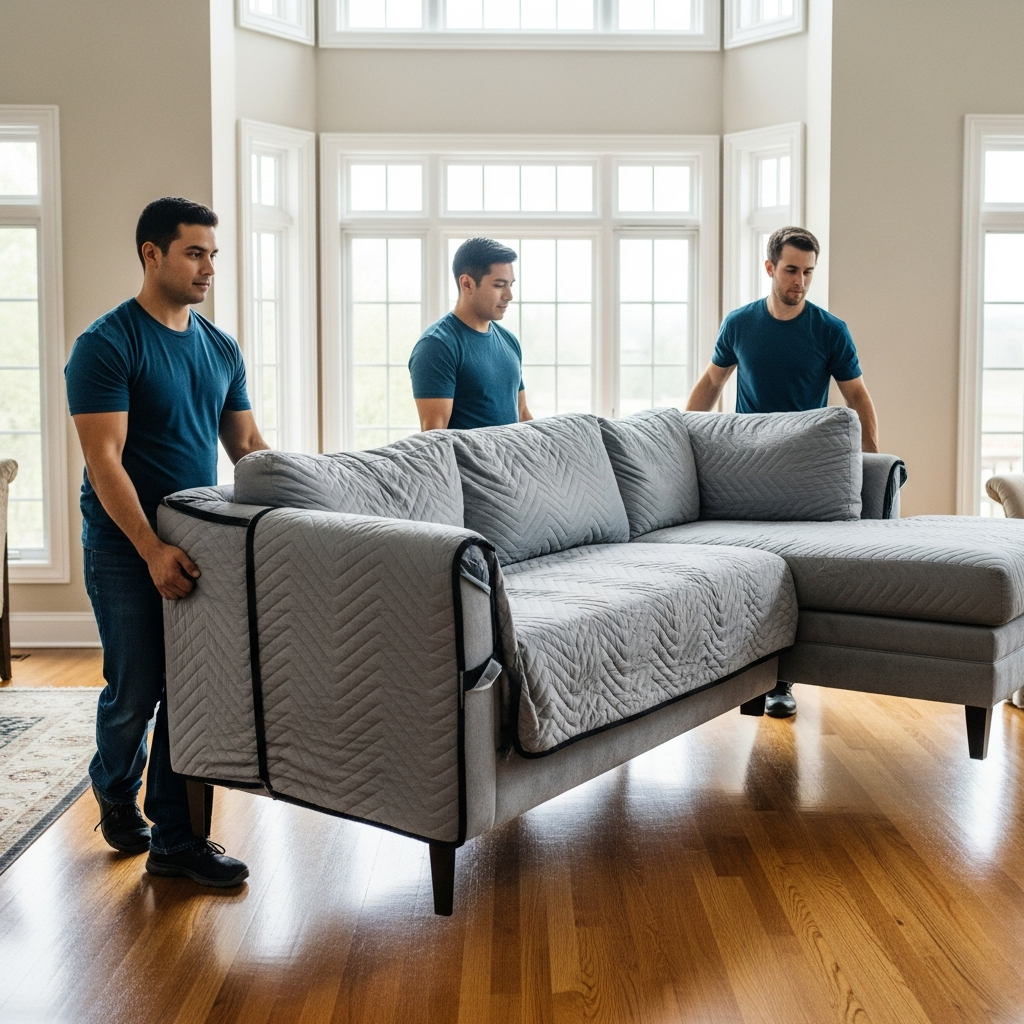
When You Need Specialist Furniture Movers (Not Generalists)
Not every move requires a furniture specialist. If you're moving a 1-bedroom apartment with mostly small items and standard furniture, a general residential mover is fine. But there are five specific situations where you absolutely need movers with furniture expertise:
1. Heavy or Oversized Items
Sectional sofas, sleeper sofas, treadmills, pool tables, gun safes, large armoires, china cabinets, and oversized desks all weigh 200+ lbs and require proper lifting equipment, dollies, and a crew of at least 3. Generalist movers often try these with 2 people and end up dropping, scratching, or injuring themselves.
2. Tight Access or Narrow Doorways
Many Ottawa heritage homes in Centretown, The Glebe, and Westboro have narrow doorways, tight staircase turns, and small landings. Furniture specialists know how to remove doors from hinges, turn furniture on its end, hoist items through windows, and disassemble pieces that won't fit otherwise.
3. Antiques, Heirlooms, or High-Value Furniture
If you have a piece worth more than $2,000 — antique chest of drawers, signed contemporary art piece, designer dining table, vintage piano — you need movers with specific antique training and additional insurance riders.
4. Appliances Requiring Professional Disconnection
Refrigerators, washers, dryers, dishwashers, and gas stoves require proper disconnection and reconnection. Improper handling causes water damage, gas leaks, or destroyed compressors.
5. Long Distance Furniture Moves
If you're moving furniture from Ottawa to Toronto, Montreal, Vancouver, or anywhere outside the NCR, you need movers who specialize in long-haul furniture transport — air-ride trucks, custom crating, GPS-tracked shipments, and full-value protection insurance.
💡 Pro Tip: If you're unsure whether you need a furniture specialist, ask the company two questions: "Do you have a 4-wheel furniture dolly, appliance dolly, and stair-climbing equipment?" and "How do you protect hardwood floors and door jambs?" The answer tells you everything about their professionalism. Reputable professional furniture movers in Ottawa answer both instantly with specifics.
Furniture Moving Costs in Ottawa: Complete 2026 Pricing
Furniture moving costs vary based on the number of pieces, weight, distance, access, and any specialty handling required. Here's a realistic 2026 breakdown:
Single-Item Furniture Moving Costs in Ottawa (2026):
- Standard couch or loveseat (local): $150 – $300
- Sectional sofa (local): $250 – $500
- Large dresser or armoire: $200 – $400
- Treadmill or large exercise equipment: $300 – $600
- Pool table (slate, requires disassembly): $600 – $1,500
- Gun safe (300+ lbs): $400 – $1,000
- Refrigerator or washer/dryer (per appliance): $200 – $400
- Antique high-value pieces: $400 – $1,500+ depending on value and complexity
Whole-House Furniture Moves
For comprehensive furniture moves as part of a residential move:
- 1-bedroom apartment furniture: $400 – $750
- 2-bedroom condo or townhouse: $700 – $1,400
- 3-bedroom house: $1,200 – $2,500
- 4+ bedroom house with extensive furniture: $2,200 – $4,500
What Drives Furniture Moving Costs
- Weight and bulk: Heavier and bulkier pieces require larger crews and more equipment.
- Stairs: Each flight typically adds $50–$150 per heavy piece.
- Distance: Local moves are flat-rate or hourly; longer distances shift to per-kilometre pricing.
- Disassembly/reassembly: Bunk beds, sectionals, and modular furniture often need disassembly. Add $50–$200 per item.
- Protection materials: Custom crating, mattress bags, dish-pack boxes, and mirror cartons add $25–$150 depending on requirements.
- Insurance upgrade: Full-value protection or musical instrument riders typically add $50–$300.
- Time of year: May through September peak season carries 15–30% premium pricing.
Hourly vs Flat Rate Furniture Moving
Most Ottawa furniture movers offer two pricing models. Hourly rates typically run $130–$220 per hour for a 2-person crew with truck. Flat-rate pricing locks in a price upfront and is preferable for moves with predictable scope. For a complete breakdown, see our guide to hourly vs flat rate moving in Ottawa.
Professional Furniture Protection Techniques
The difference between an amateur move and a professional move comes down to protection. Furniture damage during a move is almost always preventable with the right materials and techniques. Here's what real furniture movers in Ottawa actually do:
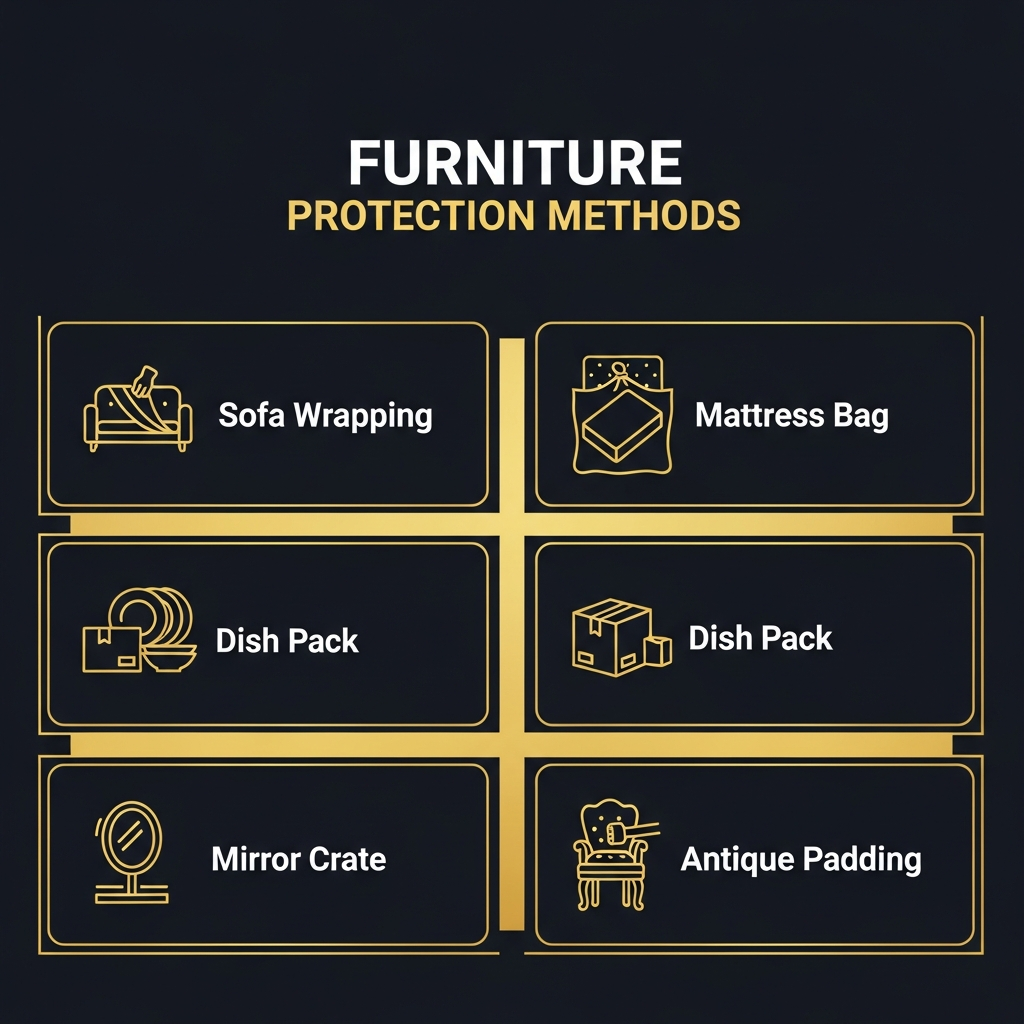
Quilted Moving Blankets
Heavy commercial-grade quilted blankets — not the thin grey blankets sold at hardware stores — are the foundation of furniture protection. Each blanket is roughly 6'×6' and weighs 7+ lbs. Multiple blankets fully wrap each piece of furniture, secured with rubber bands or industrial stretch wrap. The goal is full surface coverage with zero exposed wood, leather, or upholstery.
Stretch Wrap (Industrial Plastic Film)
Industrial stretch wrap is used over blankets to lock the padding in place, but never directly on leather or fabric for extended periods (it can leave residue). Stretch wrap is essential for sectional cushions, dresser drawers, and any piece with loose components.
Mattress Bags
Heavy plastic mattress bags protect mattresses from dirt, moisture, and tearing. King and queen mattresses always go in bags — anything else is a stain or rip waiting to happen. The Better Business Bureau cites mattress damage from improper transport as one of the most common moving complaints.
Custom Crates for Glass and Marble
Glass tabletops, marble countertops, and large mirrors require custom wood crates — not blankets and not boxes. Premium movers build crates on-site or ship pre-built crates for valuable items.
Mirror and Picture Cartons
Telescoping cardboard cartons designed specifically for framed art, mirrors, and TV screens. These adjust to multiple sizes and provide impact protection that wrapping alone cannot match.
Floor and Wall Protection
Hardwood floors are protected with neoprene runners or Masonite boards. Carpet on the move route is covered with non-slip film. Door jambs are wrapped in foam padding. Walls in tight corridors get corner guards. Skipping any of these is the leading cause of post-move damage claims to your home.
⚠️ Red Flag: If a moving crew arrives without quilted blankets, stretch wrap, mattress bags, mirror cartons, and floor protection materials — refuse the move. These are the basic tools of the trade. Their absence guarantees damage.
Moving Antiques and High-Value Pieces
Antiques and high-value furniture demand a level of care that most general movers cannot provide. A 200-year-old Quebec armoire, a signed Stickley sideboard, a marble-top Victorian table — these pieces are irreplaceable, and their value lies as much in condition as in provenance.
What Qualifies as a "High-Value Piece"
- Any piece valued over $2,000.
- Antiques over 100 years old.
- Signed designer furniture (Eames, Saarinen, Stickley, Knoll).
- Hand-carved wood pieces.
- Marble, stone, or glass-topped furniture.
- Pieces with original finishes that cannot be restored if damaged.
Specialist Techniques for Antiques
- Cotton blanket wrap first: A breathable cotton layer goes on before quilted blankets to prevent oil transfer or finish marring.
- Custom crating: Most antiques over $5,000 are crated rather than blanket-wrapped.
- Climate-controlled transport: Antique wood should never be exposed to extreme cold (Ottawa winter) or extreme heat without insulated truck transport.
- Documentation: Detailed photos and condition reports before the move provide a baseline for any future claim.
- Insurance riders: Standard moving insurance pays $0.60 per pound. A 200-lb antique armoire would receive $120 in compensation if destroyed. Always declare antique values and pay for the appropriate rider.
Working with Appraisers
For pieces over $10,000, get an appraisal from a member of the Canadian Personal Property Appraisers Group before moving. The appraisal becomes the basis for declared-value insurance. Without it, claim disputes default to the mover's assessment of value, which is rarely in the homeowner's favour.
Trusted Ottawa furniture relocation specialists with antique experience will walk through your home before the move, identify high-value pieces, recommend appropriate protection, and provide written documentation for insurance purposes.
Appliance Moving: Refrigerators, Washers, and Dryers
Appliances are some of the trickiest items in any move. They're heavy, they have water, gas, or electrical connections, and they have internal components that can be damaged by improper handling. Here's what professional appliance movers in Ottawa handle:
Refrigerators and Freezers
- Empty completely 24 hours before the move and let defrost.
- Disconnect water line (for ice maker / water dispenser).
- Secure or remove shelves and drawers to prevent shifting.
- Tape doors closed for transport.
- Transport upright whenever possible. If laid down, the refrigerator must sit upright for at least 4 hours before being plugged in to allow compressor oil to settle.
- Use an appliance dolly with straps — never a furniture dolly.
Washers and Dryers
- Disconnect water hoses and electrical/gas connections (gas dryers require a licensed technician).
- Drain water from washer hoses.
- Install transit bolts on front-load washers (these prevent drum damage during transport — your owner's manual includes the original shipping bolts; if missing, they can be ordered).
- Stack washer/dryer combos require careful disassembly of the stacking kit.
- Reconnect at destination, level the appliances, and run a test cycle before crew leaves.
Dishwashers and Built-In Appliances
Built-in dishwashers, under-counter beverage fridges, and integrated appliances often require removal from cabinetry. Disconnection involves shutting off water supply lines, electrical, and (for gas appliances) gas lines. This is where general movers get into trouble — improper disconnection causes water damage or gas leaks.
Stoves and Cooktops
- Gas stoves require a licensed gas technician for disconnect/reconnect (Ontario law).
- Electric ranges can be unplugged and moved with appliance dollies.
- Glass cooktops need protective covers and extra padding.
- Wall ovens and built-in microwaves require careful removal from cabinet enclosures.
💡 Pro Tip: If you have gas appliances, schedule the disconnect/reconnect with a licensed Ontario gas technician separately from your move. Most professional Ottawa moving companies maintain referral relationships with local gas technicians who can handle this — ask for a recommendation when booking your move.
Furniture Disassembly and Reassembly Services
Many pieces of furniture cannot be moved in one piece. Bunk beds, large sectionals, modular wardrobes, table extensions, and most flat-pack furniture all require disassembly for transport and reassembly at the destination.
What's Typically Disassembled
- Bed frames (queen and king especially).
- Bunk beds and loft beds.
- Large sectional sofas (modular pieces separated).
- Tables with removable legs (dining tables, conference tables).
- Modular wardrobes and closet systems.
- Bookcases over 6 feet tall.
- Office desks (especially L-shaped or U-shaped configurations).
- Cribs and changing tables.
- Treadmills and elliptical machines.
What Doesn't Need Disassembly
- Standard couches and loveseats (unless oversized).
- Dressers and chests of drawers.
- Coffee tables and end tables.
- Standard chairs.
- Smaller bookcases.
The Right Way to Disassemble
Professional furniture movers follow a process: photograph the piece from multiple angles before starting, label each component with painter's tape, bag and label all hardware, place hardware bags inside the largest component for transport, and store the piece's instruction manual or assembly diagrams with the hardware. At the destination, the process runs in reverse with all hardware accounted for.
Flat-Pack Furniture Considerations
IKEA, Wayfair, and Article furniture often cannot be safely disassembled and reassembled — particle board strips its threads after one or two reassemblies. For flat-pack furniture older than 2 years, expect significant degradation if disassembled. The best approach is often to discard old flat-pack and replace at the destination, or to move the piece intact even if it requires extra effort.
Most professional moving services in Ottawa include basic disassembly and reassembly in their hourly rate. Complex pieces like bunk beds, modular sectionals, and large dining tables often add $50–$200 per piece.
Long Distance Furniture Moving from Ottawa
Moving furniture across the country — Ottawa to Toronto, Montreal, Vancouver, or Calgary — is a fundamentally different operation than a local move. The risks multiply with distance, time in transit, and number of handling events.
Key Differences Between Local and Long Distance Furniture Moves
- Truck quality matters more: Air-ride suspension trucks are essential for long-haul. Without it, vibration over hundreds of kilometres causes loose joints and rattled finishes.
- Weight-based pricing: Long distance furniture moves are typically priced per pound, not per item. Heavier furniture costs more to ship.
- Loading patterns: Furniture must be loaded with padding between every piece — no exceptions. Items shift over hundreds of kilometres of road.
- Insurance increases in importance: The longer the trip, the more handling events, the higher the chance of damage. Always upgrade to full-value protection.
- Climate control: Temperature-controlled trailers protect wood and leather furniture during multi-day transit through extreme weather.
Costs for Long Distance Furniture Moves from Ottawa
- Ottawa to Toronto (450 km): $1,200–$3,500 for whole-house furniture moves; $300–$800 per major item.
- Ottawa to Montreal (200 km): $900–$2,800 for whole-house; $250–$700 per major item.
- Ottawa to Vancouver (4,400 km): $4,500–$12,000 for whole-house; consolidated shared loads available.
- Ottawa to Calgary (3,400 km): $4,000–$10,000 for whole-house.
- Ottawa to Halifax (1,400 km): $2,500–$6,500 for whole-house.
For comprehensive long distance moving guidance, see our complete Ottawa long distance movers guide.
Key Takeaway: Long distance furniture moves from Ottawa require movers with interprovincial licensing, full-value protection insurance, and air-ride trucks. The cheapest quote is almost always the worst choice — damage on a 4,000 km journey is exponentially more likely than on a 4 km one. Hire long distance movers from Ottawa with documented experience on your specific route.
How to Prepare Your Furniture for Moving Day
Proper preparation makes the move faster, safer, and cheaper. Most movers charge by the hour, so every minute they spend doing prep work you could have done yourself adds to your bill.
One Week Before
- Photograph every major piece of furniture from multiple angles. These photos become evidence for any damage claim.
- Empty drawers of all heavy items (drawers can usually stay loaded with light clothing or bedding).
- Remove anything from on top of furniture (lamps, decor, artwork).
- Locate Allen keys and assembly hardware for any pieces you've previously assembled.
- Schedule appliance disconnect appointments (gas, plumbing) if needed.
Day Before
- Remove glass shelves and drawers from china cabinets and bookcases.
- Tape down loose components (drawer fronts, hinged doors, removable cushions).
- Defrost refrigerators and freezers (24-hour minimum).
- Drain washing machine hoses and disconnect.
- Bag and label hardware from any pre-disassembled pieces.
- Clear pathways from each piece of furniture to the front door.
Moving Day Morning
- Be present and reachable. Decisions about door removal, disassembly, or routing require homeowner consent.
- Review the inventory list with the crew lead before any furniture leaves the home.
- Confirm protection materials are in place (floor runners, door jamb padding) before lifting begins.
- Have the binding quote and insurance certificates printed and on hand.
- Provide bottled water for the crew — Ottawa weather is punishing year-round.
At the Destination
- Direct furniture placement room by room.
- Inspect each piece as it comes off the truck — note any new damage immediately.
- Check that all assembly hardware made the trip before the crew leaves.
- Verify appliances function correctly after reconnection.
Common Furniture Moving Mistakes to Avoid
Mistake #1: Loading Drawers with Heavy Items
Movers will refuse to lift dressers full of heavy books or tools. The drawers can fall out, the dresser can tip, or the structural joints can fail. Empty drawers of anything over a few pounds.
Mistake #2: Skipping Furniture Insurance Riders
Released-value protection ($0.60/lb) is woefully inadequate for any quality furniture. Always upgrade to full-value protection or purchase a third-party insurance rider for high-value items.
Mistake #3: Trying to Move Mattresses Without Bags
An unprotected mattress will get dirty, torn, or contaminated. Mattress bags cost $5–$15 each — cheaper than replacing a queen mattress.
Mistake #4: Disassembling Without Photographing
Reassembling furniture from memory is a guarantee for hardware loss and incorrect alignment. Always photograph each step of disassembly and bag/label all hardware.
Mistake #5: Using DIY Friends for Heavy Lifting
Beer-and-pizza moves are responsible for most furniture damage and most moving-day injuries. A 600-lb sectional can crush fingers, drop on toes, or scratch hardwood floors permanently. Insurance won't cover any of it.
Mistake #6: Not Measuring Doorways and Stairwells
Discovering the new sectional doesn't fit through the door after the truck has unloaded is the most preventable disaster in moving. Measure every major piece and every doorway, stairwell, and turn before moving day.
Mistake #7: Ignoring Climate Considerations
Wood furniture exposed to Ottawa winter temperatures (below -10°C) for extended periods can crack and warp. Leather can stiffen and split. Always use climate-controlled trucks for valuable furniture in extreme weather.
⚠️ Worst-Case Scenario: The most common total-loss furniture claims in Ottawa involve antique pieces handled by general movers without proper crating or climate control. A $15,000 antique armoire damaged by improper handling pays out roughly $200 under released-value protection. Don't be that homeowner.
How to Choose the Right Furniture Movers in Ottawa
Use this verification checklist when interviewing furniture movers:
Verification Checklist
- Licensed and insured: Verify CGL ($2M minimum), cargo coverage, and WSIB compliance.
- Owned equipment: Furniture dollies, appliance dollies, four-wheel dollies, mattress bags, custom crates, floor protection. Owned equipment signals commitment.
- Crew minimum: 3 people for any move involving large furniture or stairs. 2-person crews on heavy moves are a red flag.
- Disassembly capability: Confirm in-house assembly/disassembly skills, not just transport.
- Antique experience: If you have antiques, ask specifically about their experience with similar pieces.
- Written binding quote: Insist on a written quote with itemized line items, not vague "starting at" pricing.
- Full-value protection available: Ensure the company offers (and you accept) coverage above default released-value.
- Reviews specific to furniture moves: Search Google reviews for the words "furniture," "antique," "appliance," and "sectional" to confirm real expertise.
Red Flags to Avoid
- Verbal-only quotes by phone without seeing the items.
- Cash-only pricing with no proper invoices.
- Vague answers about insurance coverage.
- No physical Ottawa address listed.
- "Same-day" pricing pressure.
- Crews showing up with only standard furniture dollies and thin blankets.
Experienced furniture movers in Ottawa answer all of these questions confidently and provide documentation upfront. If a company hesitates on any item, move to the next quote.
Frequently Asked Questions About Furniture Moving
How much do furniture movers charge in Ottawa?
Single-item furniture moves typically cost $150–$500 depending on size and complexity. Whole-house furniture moves range from $400 (1-bedroom apartment) to $4,500+ (4+ bedroom homes). Hourly rates run $130–$220 for a 2-person crew with truck.
Do furniture movers disassemble and reassemble furniture?
Yes — most professional Ottawa furniture movers include basic disassembly and reassembly of standard pieces (beds, simple tables) in their hourly rate. Complex pieces like bunk beds, large sectionals, and modular wardrobes typically add $50–$200 per piece.
Can furniture movers move appliances?
Most professional furniture movers handle major appliances (refrigerators, washers, dryers, stoves) but require disconnection in advance. Gas appliance disconnect/reconnect requires a licensed Ontario gas technician — not the movers themselves.
How do I move antique furniture safely in Ottawa?
Hire furniture movers with documented antique experience, request custom crating or cotton-then-quilted blanket wrapping, ensure climate-controlled truck transport, and purchase full-value or declared-value insurance riders. Photograph antiques before the move for claim baseline.
What's the best way to move a heavy sectional sofa?
Disassemble modular sections if possible, wrap each piece in quilted blankets and stretch wrap, use a 4-wheel furniture dolly for transport, and a 3-person minimum crew. Measure doorways and stairwells in advance — many sectionals require door removal.
How do I prepare my furniture for movers?
Empty drawers of heavy items, remove items from tops of furniture, photograph each piece, secure loose components with tape, defrost appliances, and clear pathways. The more prep done, the lower your bill.
Can movers transport furniture long distance from Ottawa?
Yes — professional Ottawa furniture movers offer long-distance services to Toronto, Montreal, Vancouver, Calgary, and other Canadian cities. Long-distance furniture moves require interprovincial licensing, air-ride trucks, and full-value protection insurance.
Do I need to tip furniture movers?
Tipping is appreciated but not required. Standard practice is $20–$50 per crew member for typical moves, $50–$100 per person for particularly heavy or difficult moves. See our complete tipping guide for Ottawa movers.
What's the difference between movers and furniture movers?
Generalist movers handle boxes and standard household goods. Furniture specialists invest in heavier equipment (appliance dollies, furniture dollies, custom crating), specific training for antiques and high-value pieces, and insurance riders that cover replacement value of furniture damaged in transit.
How far in advance should I book furniture movers?
Two to four weeks is ideal for non-peak moves. During the May–September peak, book 4–6 weeks in advance. Same-day single-item moves are sometimes available with premium pricing.
Can movers help with furniture assembly?
Yes — many Ottawa moving companies offer furniture assembly services for IKEA, Wayfair, Article, and similar flat-pack furniture. Pricing is typically $50–$100 per hour or per piece depending on complexity.
What if my furniture is damaged during the move?
Document the damage immediately with photos, notify the moving company within 24 hours in writing, and request the claims process documentation. With proper full-value or declared-value coverage, repairs or replacement up to the declared amount are covered.
Ready to Move Your Furniture in Ottawa? Whether you need a single sectional moved across town or your entire home's furniture relocated across the country, the right furniture moving company makes all the difference. Call (613) 600-4000 for a free, no-obligation furniture moving quote, or visit our free quote page to get pricing in under 2 minutes.